The Hidden Costs of Thailand's Infrastructure Drive
A contract worker's death in Bangkok highlights systemic vulnerabilities in the push for urban development.
SINGAPORE
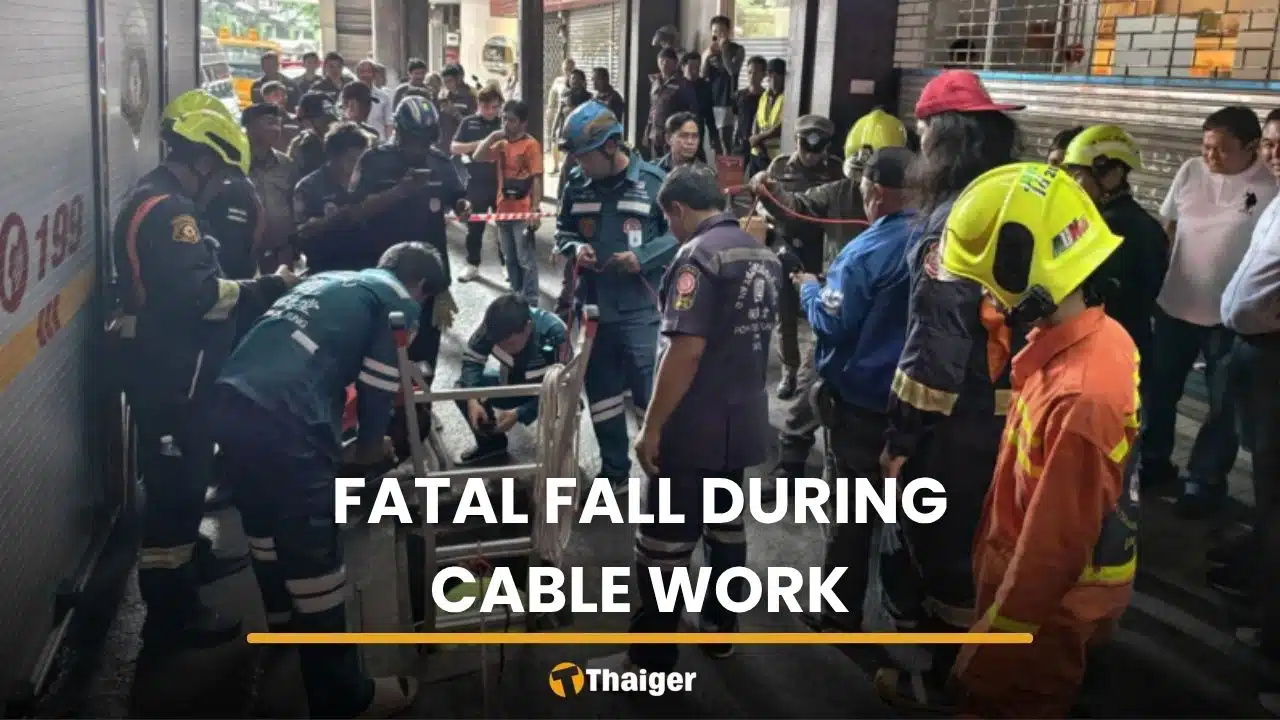
On September 18, a contract worker died after falling into a drainage shaft beneath BTS Punnawithi in Bangkok. The incident occurred during work on an underground electrical cable project. Bangkok’s 199 emergency centre received the report at 7.04am; rescue efforts, including divers from the Poh Teck Tung Foundation, located the worker’s body around 9am in a shaft reportedly 2 to 3 metres deep and containing water. This fatality is not an isolated event but a stark indicator of unresolved structural issues within Thailand's accelerated infrastructure development.
The death of a worker performing routine, yet inherently hazardous, urban infrastructure maintenance and upgrades reflects a consistent pattern. Thailand, like many nations in the Asia-Pacific region, is engaged in a broad push for modernization and expansion of its urban grids. This includes significant investment in public transport, utilities, and communication networks, often involving complex underground work in dense urban environments. The immediate implication of such incidents is the human cost, which is clear. The broader implication concerns the operational integrity and regulatory oversight of these projects.
Policies guiding such extensive public works are inherently multi-faceted. The Thai government has prioritized infrastructure as a driver for economic growth, which is a common strategy across the region. However, the consistent occurrence of fatalities in these projects suggests that the policy framework, or its enforcement, may not adequately account for worker safety. The question is not whether work is being done, but at what sustained cost and under what conditions. The reliance on contract workers, a common practice for large-scale projects, further complicates accountability. These individuals often operate with less direct employment protection and potentially fewer standardized safety protocols than direct employees of major utility providers or state enterprises.
Some might argue that accidents are an unavoidable consequence of large-scale construction, especially in challenging urban environments. They might point to the sheer volume of ongoing projects and the inherent risks of working underground or with high-voltage electrical systems. This perspective, however, overlooks the structural capacity of an economy to mitigate such risks through stringent regulation, consistent enforcement, and adequate investment in safety training and equipment. It also implies an acceptable level of fatality, which is a position few governments or project stakeholders would openly endorse.
While the direct beneficiaries of improved infrastructure are the general public and the economy, the costs are disproportionately borne by the most vulnerable segment of the workforce. The structural pattern remains: economic development objectives are pursued, and individual safety standards are periodically compromised. This incident, while tragic for the individual and his family, primarily serves as a reminder that the decision-making power concerning worker safety often rests with project managers and subcontractors under pressure to meet deadlines and control costs. Until the enforcement mechanisms for safety protocols are as robust as the deadlines for project completion, such incidents are likely to persist.
Sources
Newsletter
Pacific Daily
A curated briefing from Thailand, Asia-Pacific and the world.