Kao Initiative Signals Structural Shift in Thai Corporate Social Programmes
A new school hygiene program in Chonburi highlights a move from general philanthropy to targeted, ESG-aligned interventions, potentially reshaping the landscape of corporate influence in education.
SINGAPORE
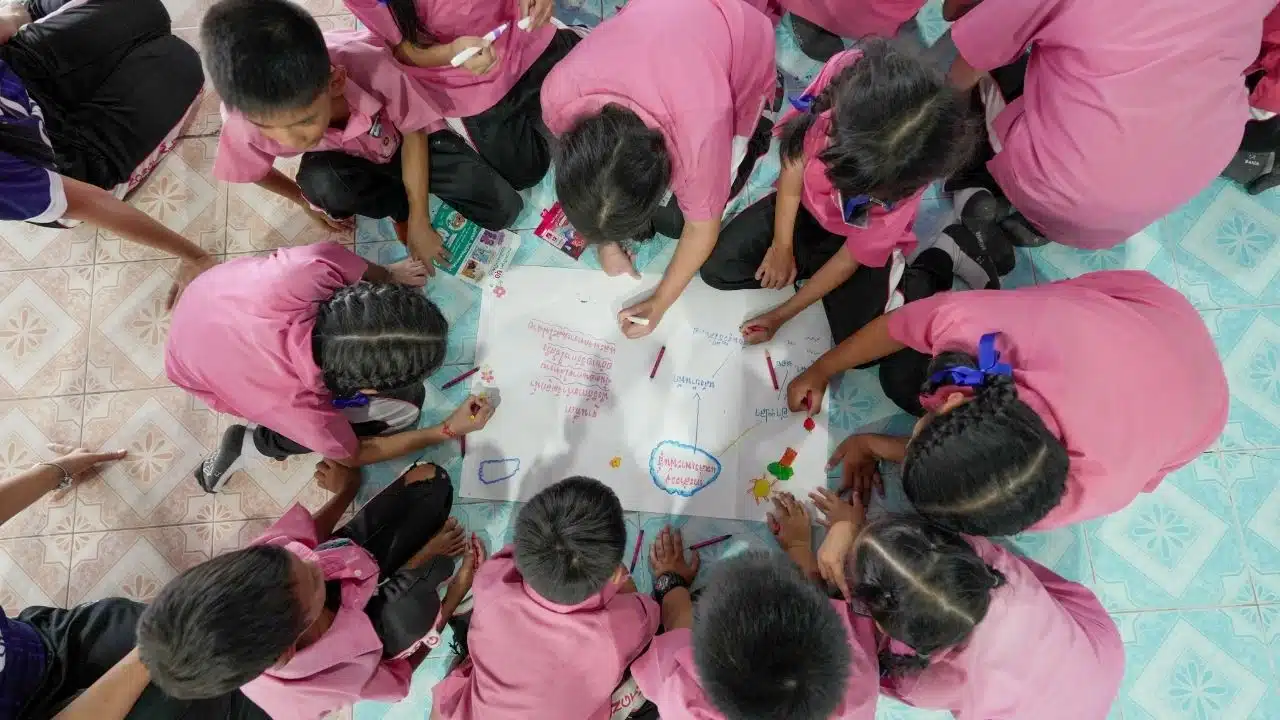
Kao Industrial (Thailand) Co., Ltd., a Japanese manufacturer of consumer products and chemicals, launched its Kao Care & Protect School Program on September 17, 2026. This initiative, developed in partnership with the CONNEXT ED Foundation, marks Kao's first dedicated effort to support healthier school environments. The program focuses on hygiene and environmental education, alongside assisting schools in creating clean and safe surroundings. While presented as a social outreach, its integration into Kao’s Kirei Lifestyle Plan, an ESG strategy, suggests a structural recalibration of corporate engagement in Thailand.
Previously, corporate social responsibility in the region often manifested as broad philanthropic gestures with less explicit strategic alignment. The Kao program, however, positions its educational support directly within its Environmental, Social, and Governance framework. This indicates a shift where company initiatives are not merely charitable acts but integral components of long-term business strategy and public positioning. The pilot phase involves three schools near Kao's manufacturing plant in Chonburi province: Phutthayakhom Kindergarten School (Wat Khao Bang Sai) and Choomchon Wat No. This geographical focus links the program directly to the company's operational footprint, potentially mitigating local concerns while generating goodwill.
The Strategic Imperative of ESG in Local Engagement
The pivot to an ESG-driven approach for community engagement carries specific implications. For Kao, it provides a measurable framework to demonstrate social value creation, which can be reported to stakeholders and consumers. This contrasts with less structured philanthropic models, offering a more defensible narrative of impact. The partnership with CONNEXT ED Foundation also centralises expertise, potentially streamlining implementation and increasing the program's reach within the educational sector. The program’s stated goal of supporting hygiene and environmental education aligns with broader public health objectives, yet its specific design—helping schools create clean and safe surroundings—demonstrates a practical, rather than purely theoretical, intervention.
However, this model also centralises decision-making regarding local educational support within corporate and foundation structures, potentially reducing direct community agency. While the stated goal is to support children's learning and growth, the specific curriculum and resource allocation are dictated by the program’s designers. This raises questions about who ultimately defines educational needs and priorities within such partnerships. The limited scope of the pilot—three schools near the manufacturing plant—while practical for initial rollout, also limits its immediate reach across Chonburi or the wider Asia-Pacific region. The long-term scalability and independence of these schools from corporate support after the initial phase remain unaddressed.
Ultimately, Kao's program signals a new mode of corporate influence. It represents a more disciplined, strategically integrated approach to social engagement. The unresolved constraint lies in the potential for corporate ESG strategies to shape public service provisions, determining who holds the decision-making power over educational content and infrastructure in areas proximate to industrial operations.
Sources
Newsletter
Pacific Daily
A curated briefing from Thailand, Asia-Pacific and the world.