Extradition in Phuket Signals Shifting Enforcement Landscape
The recent arrest of an American fugitive on Thai soil reflects changes in transnational legal cooperation, impacting foreign residents and local jurisdictions alike.
PHUKET
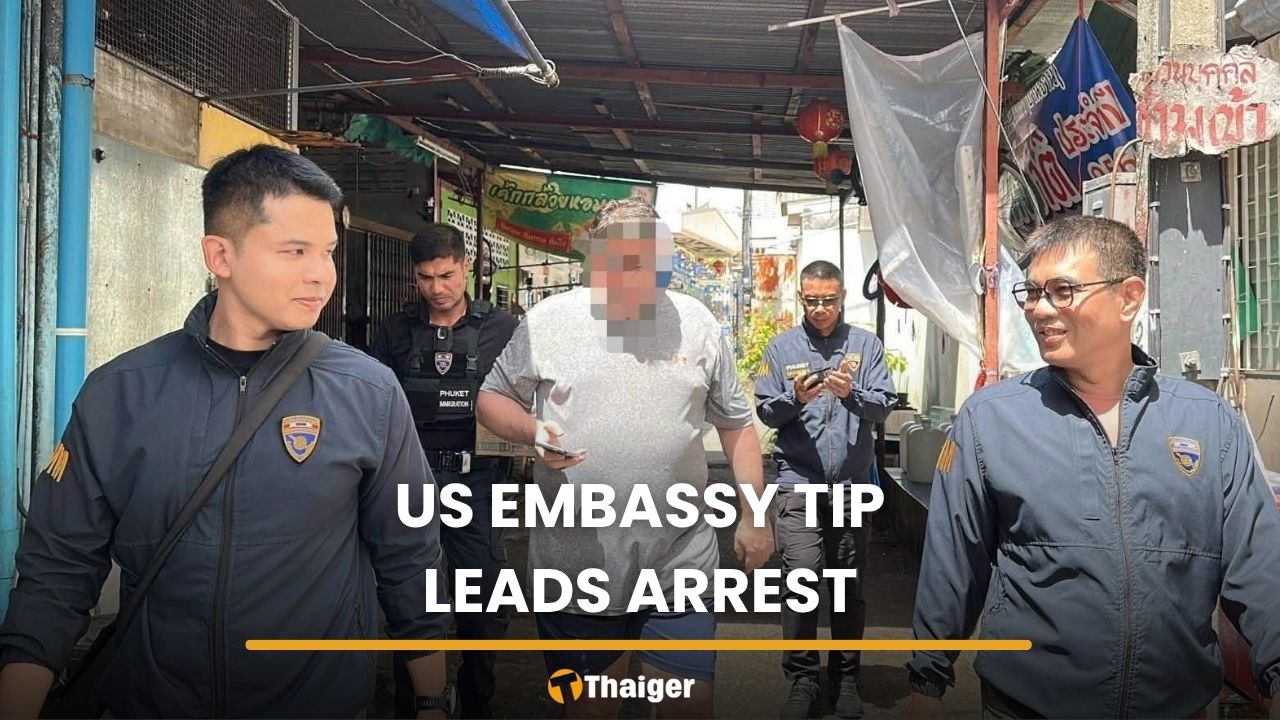
The arrest of an American national in Phuket on September 9, identified by Phuket Immigration only as Brad, marks a significant procedural shift in Thailand’s approach to foreign fugitives. Phuket immigration officers, acting on information from the US Embassy, detained the 48-year-old in Talat Nuea. A Texas court issued a warrant for Brad on May 26, 2022, for an alleged domestic violence offense involving strangulation. US officials reportedly revoked his passport prior to the arrest. The individual did not possess an original passport, according to Phuket Immigration.
This event, while specific, indicates a broader structural change in how international judicial warrants are executed within Thailand. Historically, the process for extraditing foreign nationals, particularly those without high-profile political or financial implications, has been perceived as protracted. The direct involvement of the US Embassy providing actionable intelligence to local immigration authorities, leading to a swift detention, suggests an increased efficiency in cross-border law enforcement collaboration.
The implication for foreign residents in Thailand, particularly those with unresolved legal issues in their home countries, is clear: the perceived sanctuary offered by Thai borders may be diminishing. Thailand, as a popular destination for expatriates and tourists, has long contended with issues related to foreign nationals overstaying visas or escaping legal troubles. This incident illustrates a heightened capacity and willingness on the part of Thai authorities to act on foreign warrants, especially when supported by specific intelligence.
A counterargument might suggest that this is an isolated incident, reflecting a singular focus on a specific type of alleged offense rather than a systemic change. The alleged crime, domestic violence involving strangulation, carries severe weight in many jurisdictions, including Thailand. The US Embassy’s proactive involvement might stem from the nature of the alleged crime itself, rather than a generalized shift in all transnational law enforcement. However, even if driven by the severity of the specific case, the successful execution demonstrates an established operational channel.
The constraint that remains unresolved is the consistent application of this intensified cooperation across the spectrum of international legal requests. While this arrest involved a direct embassy lead, the question persists whether similar efficiency can be maintained for all types of international warrants or if it is contingent on the level of engagement and resource allocation from the requesting country. The outcome now depends on whether this case establishes a repeatable precedent for other nations and offenses, signaling a more robust and responsive enforcement environment in Thailand.
Sources
Newsletter
Pacific Daily
A curated briefing from Thailand, Asia-Pacific and the world.