Defending Titles in Professional Golf Exposes the Fragility of Individual Tour Continuity
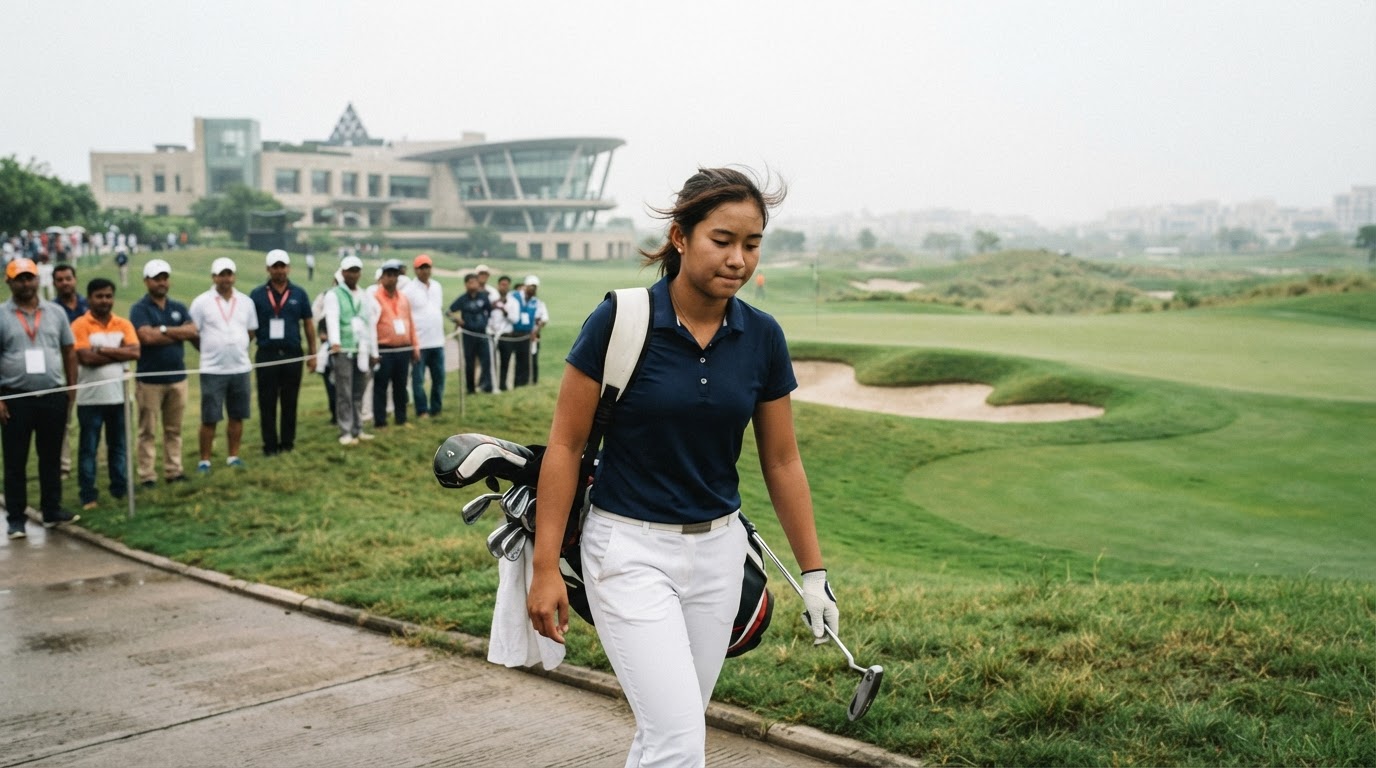
Shannon Tan finishing third at the Hero Women’s India Open shows how tournament play resists consolidation around single competitors.
SINGAPORE
Defending an individual championship across overseas stops tests athletic endurance against structural variables that national sporting federations rarely control. Shannon Tan returned to the Hero Women’s India Open in October 2026 carrying the obligations of a defending champion. Her eventual third-place finish demonstrated how narrow the margins remain in competitive women’s golf. A podium outcome confirms consistent performance, yet conceding the title underscores the shifting operational realities confronting players who balance sports funding mechanisms with continuous tour travel.
Professional tournament golf functions through distinct financial incentives. National athletic systems, including high-performance programs in Singapore like SpexSG, evaluate success through podium standings and continental milestones, such as appearances at the Asian Games. Individual touring professionals, conversely, operate inside commercial environments governed by weekly purses, travel friction, and fluctuating course conditions across jurisdictions like India and Singapore. When an athlete moves from defending champion to third place, the outcome reflects structural volatility across tournament draws rather than individual decline.
Competitive Pressures Across Continental Circuits
Sporting outcomes in the wider region have historically remained dispersed rather than concentrated. Established hubs like Thailand developed deep training pipelines over past decades, producing athletes who cycle continuously through international competitions. Singapore, by contrast, operates on a focused model that selects fewer individual athletes and concentrates public-private funding behind them. When Shannon Tan captured the tournament title previously, the result suggested that targeted state-backed investment could produce immediate commercial dividends abroad.
Retaining tournament titles requires a different institutional framework. Sustained success demands continuous adaptation to schedule friction, varied grass conditions, and unpredictable local climate factors. In tournaments like the Hero Women’s India Open, visiting champions must counter both local specialists familiar with regional course setups and traveling peers contesting ranking points. A third-place result demonstrates operational consistency, but it also reveals that no single player can easily monopolise professional fixtures across different territories.
Sustained competitive standing on professional golf circuits depends on structural depth rather than isolated individual titles.
Commercial sponsors often seek back-to-back victories to justify long-term brand commitments. Single wins attract immediate public attention, yet corporate investment tracks durable multi-year retention. The challenge for urban sports development frameworks in smaller economies is bridging the divide between nurturing an exceptional athlete and building a cohort capable of absorbing seasonal variance. When an incumbent champion drops back to third place, corporate sponsors assess whether surrounding support architectures provide sufficient stability for consecutive campaigns.
Institutional Limits on Individual Athletic Scale
Skeptics might argue that finishing third remains an elite outcome, confirming that an athlete belongs firmly near the front of any professional draw. Third place remains a notable outcome in professional golf, especially when contending with the scrutiny applied to an incumbent champion. Yet commercial sponsorships and national sporting metrics treat first place as qualitatively distinct from remaining on the podium. Retaining titles creates compounding brand equity, while retaining a place among the top three merely preserves established baselines.
The operational challenge facing sports development bodies lies in scaling athletic infrastructure to withstand tour attrition. Talent programs across Singapore and neighboring centers like Thailand confront rising travel logistics, equipment overheads, and specialized technical coaching expenses. Sustaining competitiveness across stops in India and elsewhere requires continuous capital commitments from corporate and civic backers.
Whether individual players can systematically retain major tournament titles depends on expanding baseline institutional depth. Shannon Tan demonstrated in India that elite talent exists to contest podium positions repeatedly. The outcome now depends on whether national sports programs can assemble the technical bench strength necessary to turn isolated podium appearances into sustained title defenses.
Sources
Newsletter
Pacific Daily
A curated briefing from Thailand, Asia-Pacific and the world.