The Fragility of the European Holiday
Civic friction across France challenges the long-standing assumption that long-haul leisure operates independently of local political life.
SINGAPORE
Long-haul tourism relies on an unspoken contractual fiction. Distant travellers assume that crossing continents entitles them to consume a destination's artistic patrimony without inheriting its domestic political friction. Yet when street confrontations spread across Paris in October 2026, leaving storefronts ransacked and municipal property burning, that convenient buffer between visitor and citizen broke down.
The rupture arrived without warning. Demonstrators, including students from the Ecole du Louvre, blocked public entrances to the Louvre Museum on Monday, October 19, 2026, protesting police repression in solidarity with a wider high school movement. Transport strikes and municipal curfews quickly followed, disrupting travel schedules throughout the capital before spreading toward regional centres such as Lille and Nice. Thousands of anti-government protesters clashed directly with police forces. For outbound travellers, the physical reality of the city abruptly overturned itineraries arranged months beforehand.
Such friction carries asymmetrical consequences for long-haul visitors travelling from Australia and the wider Asia-Pacific region. Short-range travellers can easily postpone weekend crossings. Continental visitors cannot. A journey organized across oceans involves non-refundable bookings, rigid departure schedules and complex multi-city transits. When unexpected museum closures or transit shutdowns halt travel plans, intercontinental visitors possess negligible leverage. Commercial travel advisories typically treat these crises as logistical puzzles, advising tourists on how to bypass demonstrations or rebook transit routes. That consumer advice, however, misinterprets the political meaning of public space.
The Contested Boulevard
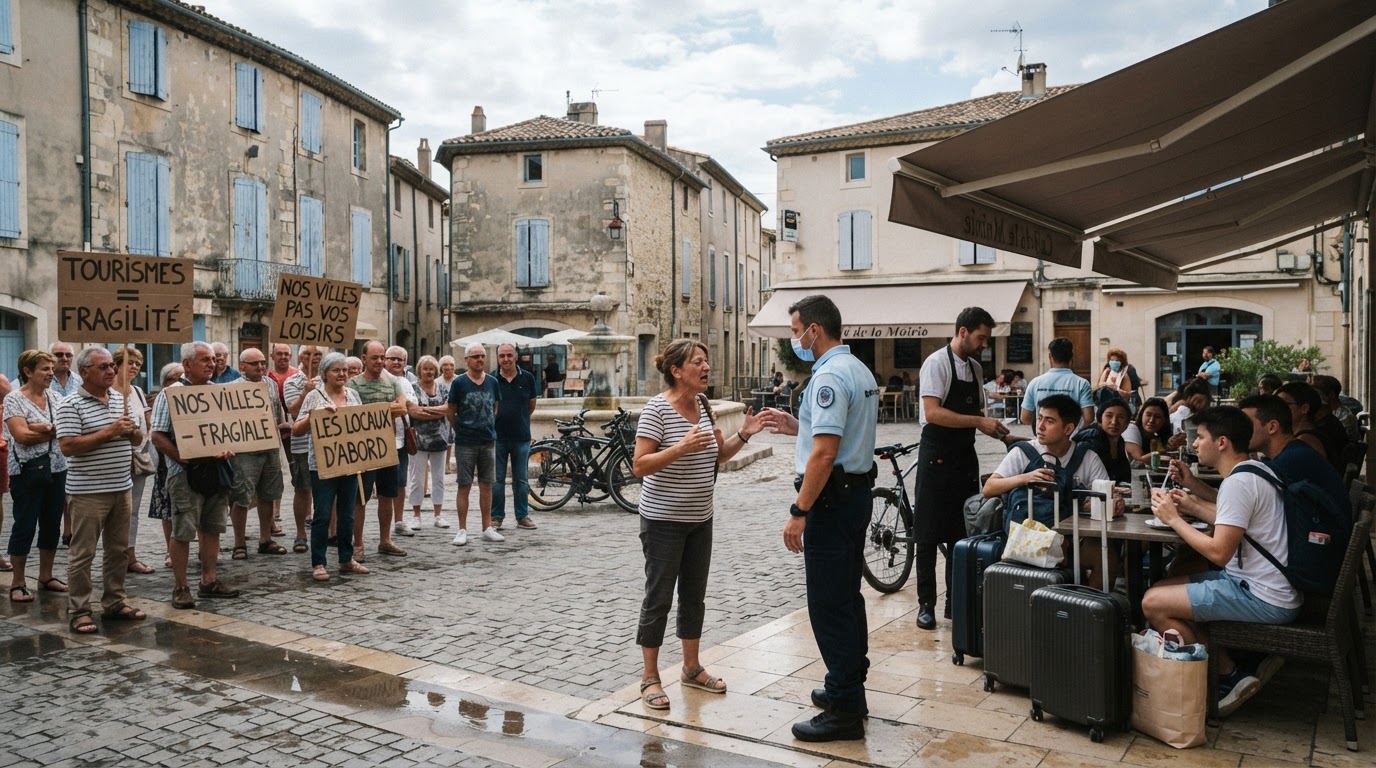
Historic European capitals have spent decades promoting an urban aesthetic where architectural monuments serve as neutral stages for international leisure. Yet historic gathering places such as the Place de la Republique, Concorde, Bastille and Les Halles remain contested ground. They are functional civic arenas rather than decorative backdrops. When domestic grievances trigger street mobilization, those avenues immediately reclaim their original purpose. The consumer fantasy recedes; the political arena returns.
Historic gathering places such as the Place de la Republique, Concorde, Bastille and Les Halles remain contested ground.
Industry defenders argue that major European destinations regularly absorb transport strikes and civil demonstrations without sustaining lasting damage to international tourism receipts. That historical resilience is demonstrable. Paris has navigated recurrent civic strikes for generations, and visitor volumes consistently recover once public transit resumes. Clashes also tend to cluster within identifiable perimeter zones, which suggests that disciplined travellers can usually bypass cordonned quarters and seek out calmer arrondissements without altering their travel dates.
The Limits of the Consumer Shield
That commercial confidence nevertheless misreads the vulnerability facing intercontinental travellers. The friction reported across France was not simply an administrative delay. When museum staff and students actively blockade their own galleries, the demonstration represents a deliberate interruption of the visitor economy to command civic attention. Public squares cease to function as passive scenery when local populations confront state authority over living conditions and governance.
Deployments overseen by the French Interior Ministry may gradually clear boulevards and reopen museum doors. Even so, the fundamental tension remains unresolved: international tourism cannot purchase immunity from the domestic politics of the places it visits. Travellers who cross hemispheres to admire monuments inevitably step onto the stage of host nations that refuse to remain ornamental.
Sources
Newsletter
Pacific Daily
A curated briefing from Thailand, Asia-Pacific and the world.