Cosco's Shipbuilding IPO: Asia's Trade Realignment or a Fleet Too Far?
The proposed listing of Cosco Shipping Heavy Industry signals a bet on global trade that overlooks critical choke points for the Asia-Pacific region.
SINGAPORE
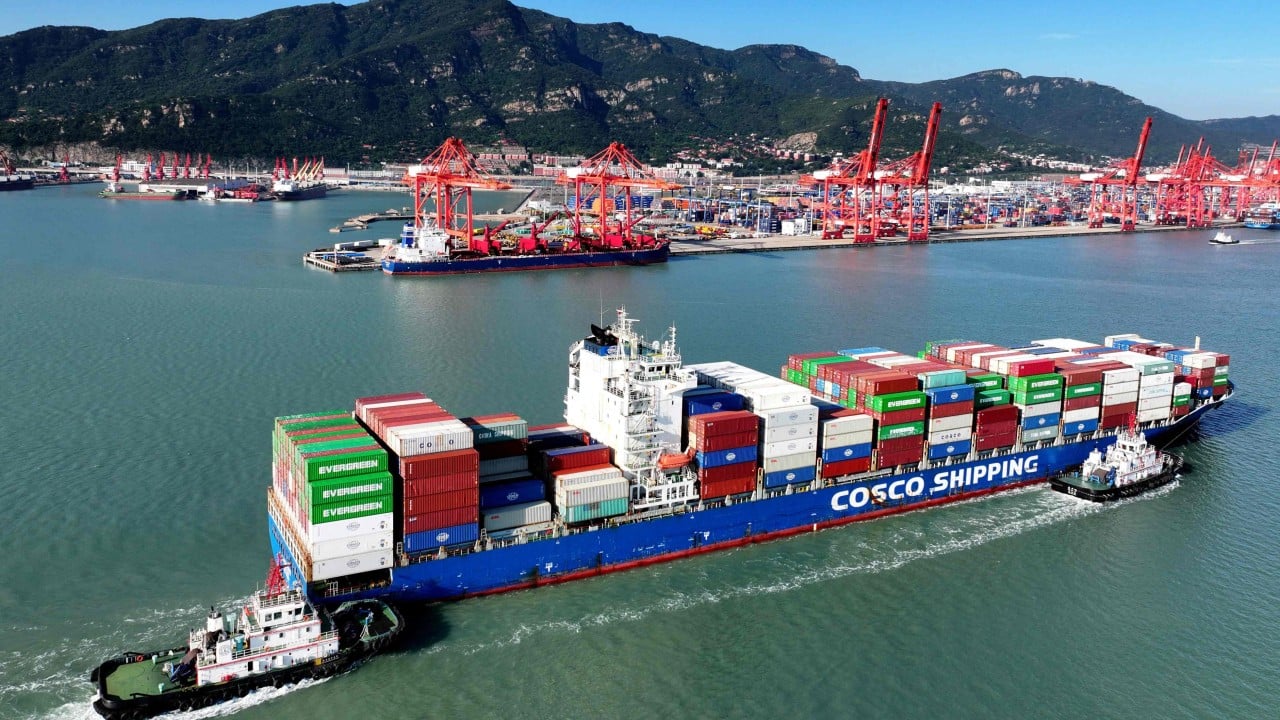
Cosco Shipping Heavy Industry, the shipbuilding and maintenance unit of state-owned China Cosco Shipping, has completed initial public offering (IPO) guidance registration, positioning itself for a domestic listing. This move, reported by SCMP Travel on September 14, 2026, aims to capitalise on what is described as a global shipbuilding boom. The unit specialises in cargo and container vessels, suggesting a clear strategic alignment with maritime trade.
The stated rationale for this IPO—to profit from increased demand for shipbuilding—raises questions about the underlying assumptions regarding global trade flows and, crucially, who ultimately bears the costs and risks. The demand is attributed, in part, to supply chain stress and transit detours [1]. This could imply a need for more vessels to navigate longer routes or compensate for delays. From an investment perspective, this looks like a straightforward play on increased tonnage requirements. However, the market realist must ask at what point this expansion encounters fundamental constraints, especially for the Asia-Pacific.
The global maritime shipping landscape is not without its complexities. China’s extensive investments in port infrastructure, such as the Chancay port in Peru, funded by China and opened by Xi Jinping in November 2024, indicate a long-term strategy to reshape Pacific trade [5]. This project was highlighted by Reuters in January 2024 as widening a 'Silk Road mega port' in South America [6]. East Asia Forum, in February 2026, also noted Peru's ambition for Chancay to reshape Pacific trade [4]. These developments are designed to create new arteries for trade, potentially bypassing existing routes and influencing demand for specific vessel types and sizes.
Yet, even with new infrastructure, the system faces vulnerability. Cosco Shipping itself suspended operations at Panama’s Balboa port in March 2026, as reported by Reuters [3]. While the specific reasons for that suspension are not detailed in the available information, such disruptions underscore the fragility of even major global trade arteries. For Thailand and other Asia-Pacific economies, which rely heavily on efficient sea lanes for imports and exports, the ability of shipping giants to maintain consistent service is paramount. A global shipbuilding boom predicated on detours and supply chain stress suggests a system attempting to build its way out of inefficiencies rather than resolving their root causes.
### The Real Costs of Expansion
The IPO, in essence, is a bet on sustained, profitable demand for new vessels. While a larger fleet might seem to offer more capacity, it does not inherently resolve geopolitical risks, environmental regulations, or the operational costs associated with longer transit times. For a market realist, the cost of capital, particularly with a domestic listing in China, is a key consideration for Cosco Shipping Heavy Industry. The success of this IPO and its subsequent performance will depend on the continued demand for new ships and the ability of global trade to sustain volumes that justify such an expanded fleet. If the 'global shipbuilding boom' is largely a response to inefficiencies rather than a genuine surge in trade, the long-term profitability and occupancy rates of these new vessels become a central concern. Who ultimately pays for this excess capacity, or the increased operational costs of disrupted routes, remains to be seen.
This expansion could further consolidate Chinese influence in global shipping infrastructure, providing more options for direct trade routes but also potentially increasing reliance on a single major player. The outlook depends on whether global trade volumes genuinely expand or merely shift, and whether the underlying causes of supply chain stress are resolved or become a permanent feature requiring ever more tonnage. The investment in new ships is significant, and the profitability hinges on these fundamental trade dynamics, not merely the availability of manufacturing capacity.
Sources
Newsletter
Pacific Daily
A curated briefing from Thailand, Asia-Pacific and the world.