Civic Grass and the Summer Extraction of Urban Space
The elongation of Metro Vancouver's Holland Park festival exposes how public greenspace is systematically converted into commercial real estate
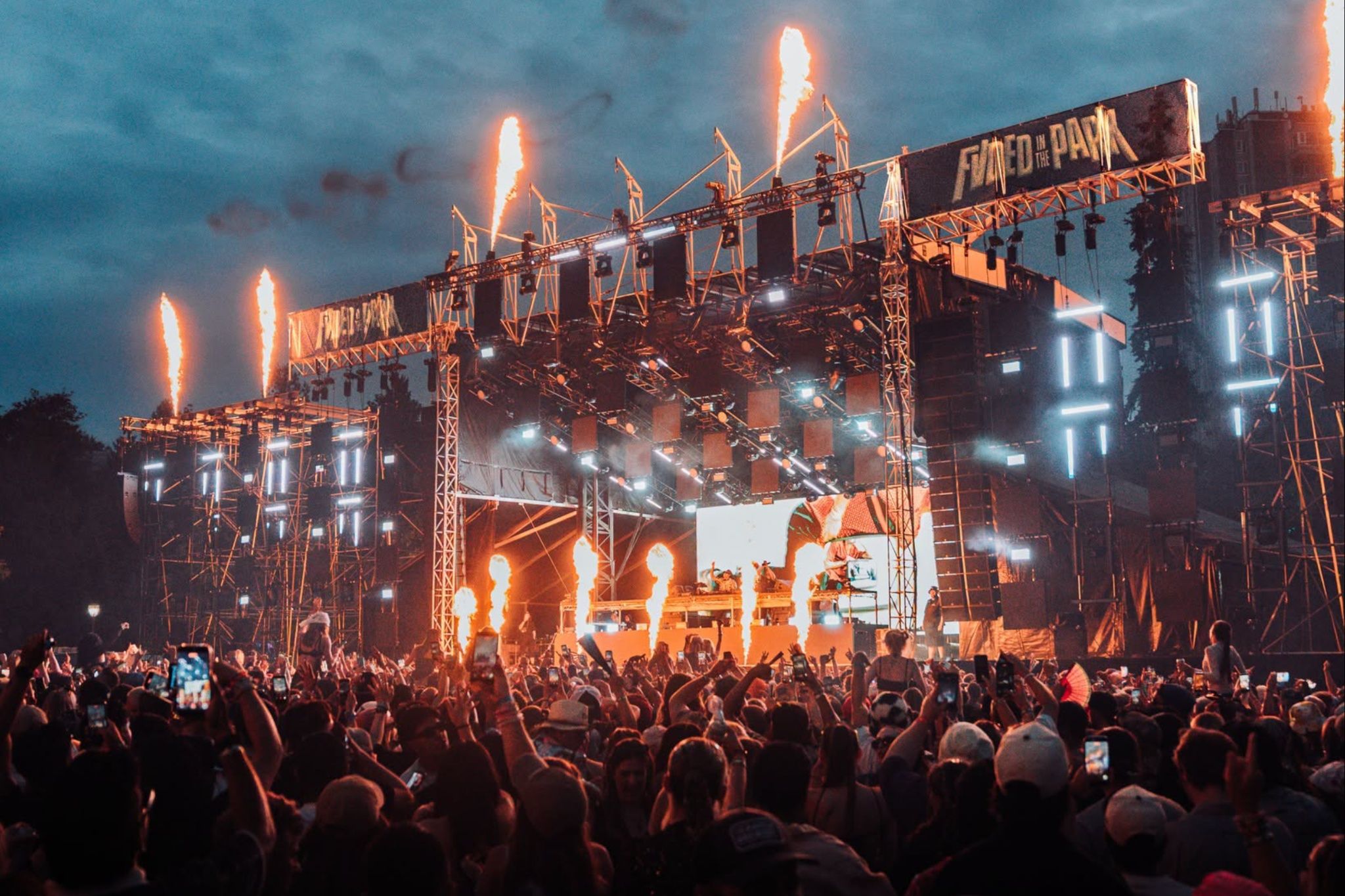
Municipal park turf in Surrey enters late autumn flattened by rain and drained of human friction. Across Holland Park, the grass recovers along its own seasonal schedule, indifferent to municipal borders or corporate ledgers. Yet the civic calendar rarely allows recreational terrain to exist as mere communal shelter. Organisers behind FVDED in the Park announced on a Tuesday in November that the electronic music gathering will expand from its traditional two-day schedule to three full days in July 2027, commemorating its fifteenth anniversary. Live Nation Canada, operating alongside Blueprint, framed the longer weekend as an enlargement of social opportunity and artistic gathering.
Promotional releases predictably describe such schedule revisions as cultural milestones. When commercial entertainment operators add dates to an outdoor calendar, they treat metropolitan land as an infinitely elastic canvas, envisioning summer acreage as an empty clearing waiting for staging infrastructure and perimeter fences. What promoter statements describe as an enhanced celebration points, in spatial terms, to a calculated conversion: public ground established for unmonitored civic decompression is cordoned off under municipal permit.
Public parks across Pacific Rim gateway cities contend with growing pressures to monetise seasonal downtime. Urban councils, facing constrained budgets and maintenance obligations, increasingly view community lawns as revenue generators rather than unencumbered public assets. Holland Park offers an instructive study in this shift. Situated within suburban Metro Vancouver, the site was conceived as accessible territory for dense, transit-connected neighbourhoods. Surrendering that turf to a commercial music promoter for three days entails extended closures for staging construction and subsequent ground recovery. The brief window of public performance routinely displaces neighborhood access for far longer.
The Logic of Enclosure
Commercial scale introduces its own momentum.
Once an outdoor gathering outgrows its original container, contraction becomes commercially unfeasible. Production overheads demand higher gate receipts, and longer perimeter reservations amortise staging expenses over additional ticket shifts. Promoters point to regional visibility and hospitality spending as civic benefits. In their accounting, aggregate economic activity justifies the temporary eviction of everyday users who depend on municipal lawns for unstructured rest.
That calculation assumes metropolitan populations measure community wealth entirely through ticketed entertainment options. Outside commercial gates, public parks perform an unglamorous, restorative function that resists quarterly valuation. They offer unmediated territory where no financial transaction is required for belonging. Transforming civic acreage into commercial enclosures alters the psychological contract between residents and their geography.
Seasonal Boundaries
The debate over outdoor entertainment often pits cultural vitality against quiet suburban preservation. Supporters argue that metropolitan identity requires dense, shared musical gatherings, especially during northern summers when communal energy briefly peaks. Urban centres that banish festival infrastructure risk cultural sterility, pushing youth culture toward distant exurbs. This defence holds weight, yet it sidesteps the structural asymmetry of public asset management. Commercial operators capture the financial yield of the lengthened run, while nearby residents absorb the acoustic spillage and transit disruption.
When July 2027 arrives, Holland Park will register the physical consequence of that trade. Bass frequencies will vibrate through nearby residential towers, and temporary barriers will trace the perimeter where families walk during normal summer evenings. When the stages collapse and the grounds reopen, worn earth will bear the stamp of an enterprise that outgrew its domestic commons. The season will resume its course, but the boundary between civic sanctuary and commercial extraction will have thinned once again.
Sources
Newsletter
Pacific Daily
A curated briefing from Thailand, Asia-Pacific and the world.