Beyond the Table: What Singapore's Upset Means for Asia-Pacific Sports Geography
A shift in table tennis, observed at the Asian Games, reveals underlying currents that could reshape regional sporting narratives.
SINGAPORE
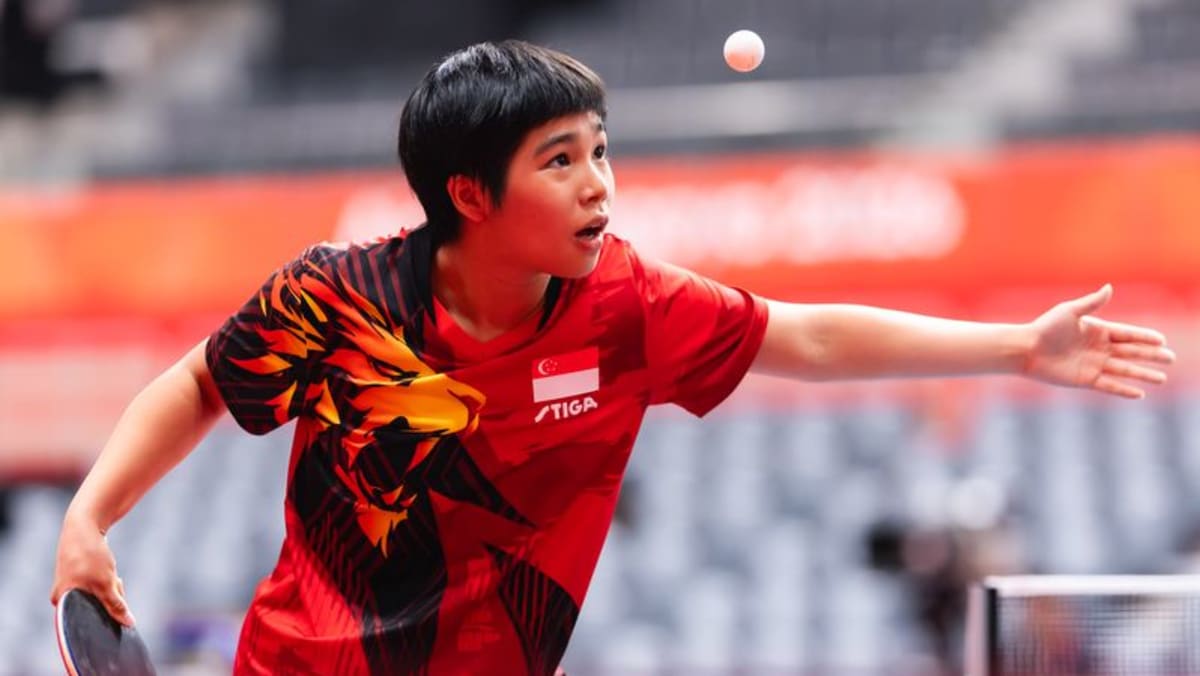
The women’s table tennis team event at the Asian Games on September 22, 2026, presented a scene that, on its surface, might appear as a mere sporting anomaly. Singapore’s national team, ranked 15th globally, achieved a victory against Hong Kong, a team holding the ninth position in world rankings. This outcome, reported by CNA Lifestyle, transcends the immediate sporting result; it hints at a broader recalibration within the competitive landscape of Asia-Pacific athletics.
For decades, the narrative of regional sports has been shaped by established power centers. Certain nations have cultivated reputations for consistent dominance in specific disciplines, fostering a predictable hierarchy. Hong Kong’s higher ranking in table tennis, for example, represents a position built on historical performance and investment. Singapore’s win, therefore, interrupts a familiar pattern, signaling that these established lines of athletic superiority are not immutable.
While the immediate focus falls on the athletes and the match itself — Loy Ming Ying of Singapore was noted in action — the deeper implication concerns the dispersal of competitive strength. Singapore’s table tennis program has shown signs of emergent prowess, with local players causing upsets at the Singapore Smash in February 2026, and a young team explicitly 'gunning for upsets' at the Asian Games, as reported by The Straits Times in August 2026. This is not an isolated incident but part of a documented trajectory.
The established lines of athletic superiority are not immutable.
This shift, if sustained, could reshape how emerging sporting talents are nurtured and recognized across the region. Nations previously seen as secondary contenders might now draw more attention, not just for participation, but for their potential to disrupt the status quo. The season, in this context, is not a cyclical return but a period of development that, away from the marketing spotlight, alters the competitive climate. Such an event suggests a future where sporting success is less concentrated, distributed across a wider geography within the Asia-Pacific.
However, it is also important to acknowledge that a single match, even an upset, does not fundamentally redefine the competitive order. Hong Kong retains its higher global ranking, and the long-term consistency required to displace established powers is substantial. The victory could be an isolated peak rather than a definitive sign of a new baseline. Sustained performance across multiple events and seasons would be necessary to confirm a lasting shift in competitive power. Yet, the possibility remains that this win is a marker, one among several indications, of evolving dynamics. The broader habit it speaks to is the continuous, often quiet, development of athletic programs that eventually challenge long-held assumptions about regional sporting prowess, suggesting a more diversified future for athletic competition across the Asia-Pacific.
Sources
Newsletter
Pacific Daily
A curated briefing from Thailand, Asia-Pacific and the world.