A Pact of Equals at Victoria Harbour
As M+ seals a tripartite alliance with MoMA and the Centre Pompidou, institutional parity masks an unresolved tension between global ambition and local boundaries
SINGAPORE
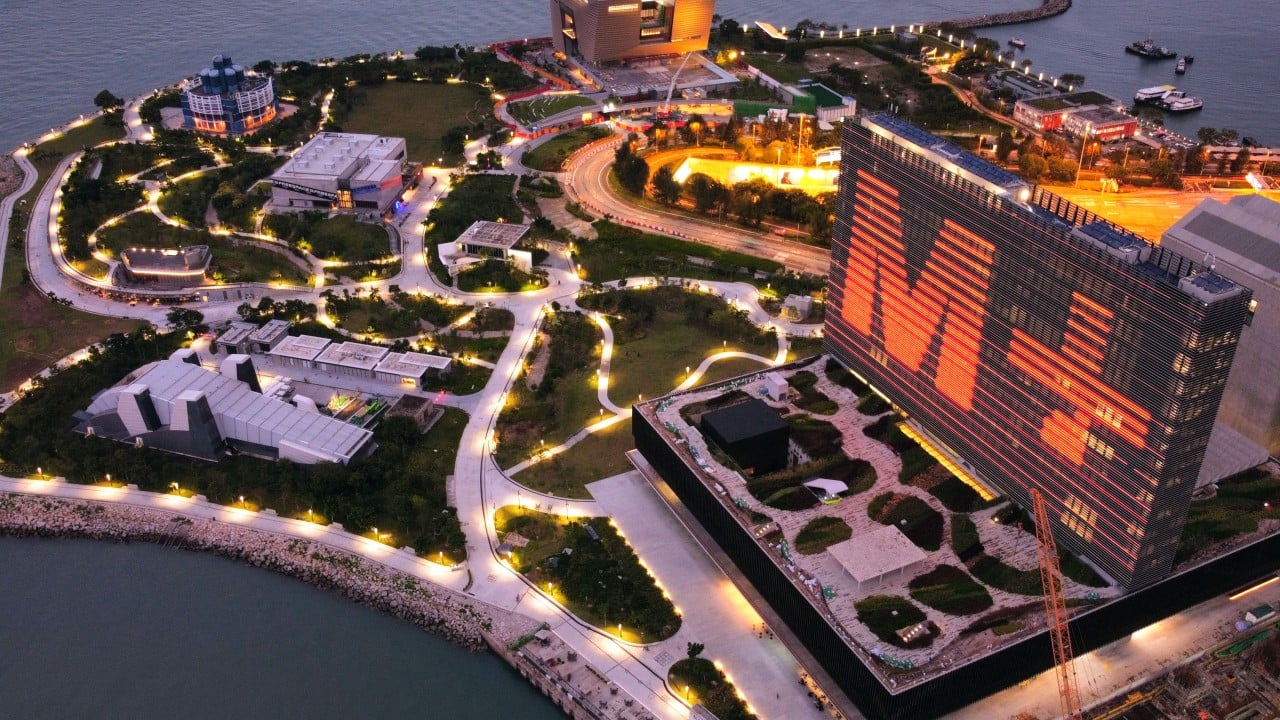
Evening light across Victoria Harbour catches the broad facade of M+, where glassware clinked late into the night on October 31 during an anniversary fundraising gala. Five years into its public life, the Hong Kong museum gathered the leadership of New York’s Museum of Modern Art and Paris’ Centre Pompidou to formalise a tripartite alliance. The agreement establishes a shared framework for collections and joint programming on an equal footing ahead of the institution’s official milestone on November 12.
For an institution marking its fifth birthday, sitting as a sovereign partner beside century-old titans of Western modernism represents a deliberate geopolitical pivot. Modern cultural prestige in the Asia-Pacific has historically run along colonial or market lines, with regional capitals serving as touring outposts for European collections rather than co-architects of global curatorial canons. By securing parity with MoMA and the Pompidou, M+ asserts that East Asian visual culture is no longer an adjunct chapter to be footnoted across Manhattan or Paris.
Institutional Parity and Narrowing Corridors
Yet this diplomatic triumph carries an underlying contradiction. Museum director Suhanya Raffel has spoken of balancing such global ambitions alongside the delicate management of political red lines. While Western institutions operate under their own financial and board pressures, M+ performs its balancing act within a municipal and regional sphere where expressive parameters have tightened considerably.
The alliance confers peer status, yet equal institutional standing abroad cannot erase the domestic tightrope.
Sceptics argue that partnerships of this scale function primarily as reputational insulation. An alliance with the Pompidou and MoMA provides an imprimatur of cosmopolitan continuity, suggesting that cultural trade flows uninterrupted regardless of civic anxieties. But that argument overlooks the genuine curatorial leverage at stake. Gaining reciprocal access to Western archives allows an Asian institution to recontextualise modernist histories on its own terms, projecting regional scholarship westward rather than merely absorbing imported exhibitions.
The Regional Horizon
Across Asia, institutional maturity is accelerating. In Singapore, the Lee Kong Chian Natural History Museum reached its tenth anniversary in 2025 with retrospective evaluations of regional biodiversity. Meanwhile, commercial networks across China, Thailand, and Vietnam continue to redraw cross-border consumer maps. Against this shifting geography, Hong Kong’s gamble rests on maintaining its status as the indispensable translation hub between mainland systems and international cultural capitals.
Whether that translation holds depends on what actually reaches the gallery floor. Joint programming negotiated on paper must survive the scrutiny of disparate boards, funding regimes, and administrative gatekeepers who may interpret political sensitivities very differently. The gala toasts on October 31 signalled an arrival; the coming five years will test how much curatorial autonomy an equal partnership can truly sustain.
Sources
Newsletter
Pacific Daily
A curated briefing from Thailand, Asia-Pacific and the world.