Acoustic Truth and the Cult of Personality in Classical Performance
John Lee’s recital at Hong Kong City Hall exposes the widening gulf between musical substance and personality-driven concert promotion.
SINGAPORE
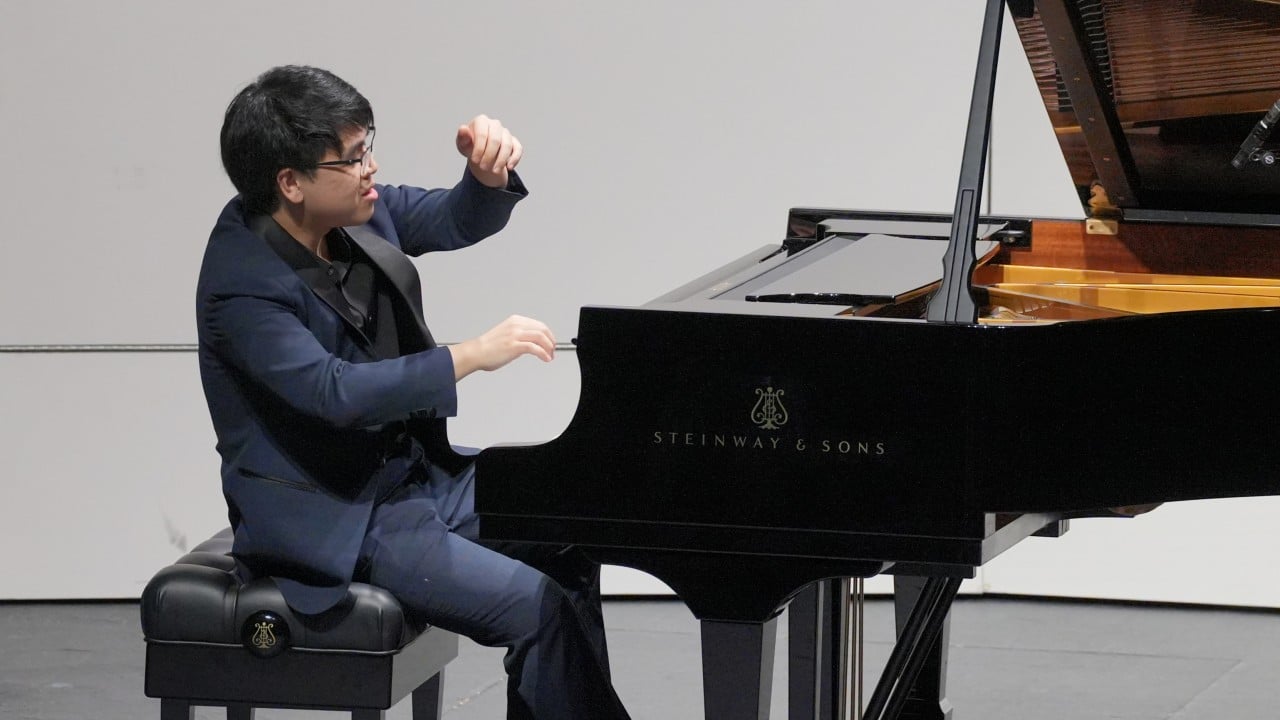
A dry concert hall strips away every illusion of ease, offering an instrumentalist no reverberant cushion to conceal structural hesitation. Hong Kong City Hall Theatre possesses precisely that unsparing clarity, where sound decays abruptly and every keystroke registers on its own merits. When pianist John Lee performed works by Rachmaninov and Puccini there in late October 2026, the performance took place without the softening halo common to modern symphonic architecture. Lee, a graduate of the Hong Kong Academy for Performing Arts who earned a master’s degree with distinction from the Royal College of Music in London and now teaches on the Academy’s faculty, confronted an unforgiving physical room.
His showcase drew attention for its poise and direction. Yet the broader significance of the afternoon lay in the aesthetic contradiction it brought to the surface. Modern concert promotion across the Asia-Pacific region and Europe has tilted heavily toward selling the individual performer rather than the repertoire. Commercial operators routinely prioritize biographical narratives, charismatic visual staging and an ephemeral cult of personality, calculating that persona generates box office interest far more reliably than the rigorous architecture of the score itself.
The Commercial Cult of Character
Concert administrators defend this personality-driven strategy as an economic necessity. Ticket sales face continuous competition, and institutions argue that building an aura around a young soloist creates an accessible bridge for newcomers who might otherwise find standard repertory intimidating. Creating celebrity profiles around soloists has become the default mechanism for ensuring financial solvency. In that framework, musical execution risks becoming an accompaniment to personal mythology, treated as secondary to promotional reach.
That calculation misjudges what serious audiences actually retain from an interpretive encounter. Dramatic gestures and image engineering dissolve quickly inside an acoustic space that refuses to amplify them. Rachmaninov demands muscular endurance, layered voicing and emotional restraint, qualities that collapse into mere noise if a musician attempts to rely on theatrical presentation. Lee’s recital succeeded precisely because it abandoned outward bravura in favor of focused balance, navigating the dry acoustics through disciplined dynamic control.
Institutional training grounds like London’s Royal College of Music and the Hong Kong Academy for Performing Arts spend years inculcating that specific command of timbre and polyphonic clarity. Still, once young artists emerge from elite conservatories into the marketplace, cultural agencies often ask them to perform a persona instead of an interpretation. When marketing departments treat the musician’s image as paramount, they inadvertently train audiences to listen with their eyes, conditioning the public to reward visual spectacle rather than sonic depth.
Reclaiming the Primacy of the Score
Subordinating substance to image carries lasting consequences for regional cultural ecosystems. Asia’s major metropolitan centers have constructed ambitious cultural quarters and expanded institutional faculties, yet programming departments frequently regress into risk-averse commercial shortcuts. Presenters assume local audiences require an influencer’s profile to appreciate late-Romantic complexity, an assumption that quietly undermines regional music education.
Artistic longevity cannot be sustained on personal branding alone. The listener who attends a recital for the performer’s digital sheen is rarely the patron who returns season after season to hear difficult, uncompromising repertoire. The quiet discipline witnessed at City Hall reminds regional presenters of an enduring principle: the ultimate test of classical music takes place not on promotional posters, but in the uncompromising space between the fingers on the keyboard and the ear in the hall.
Sources
Newsletter
Pacific Daily
A curated briefing from Thailand, Asia-Pacific and the world.