The Intermediary Dilemma in the Western Desert
Kitty Hauser’s biography of Geoffrey Bardon exposes the uneasy fault line where sacred Pintupi expression turned into a global commercial asset.
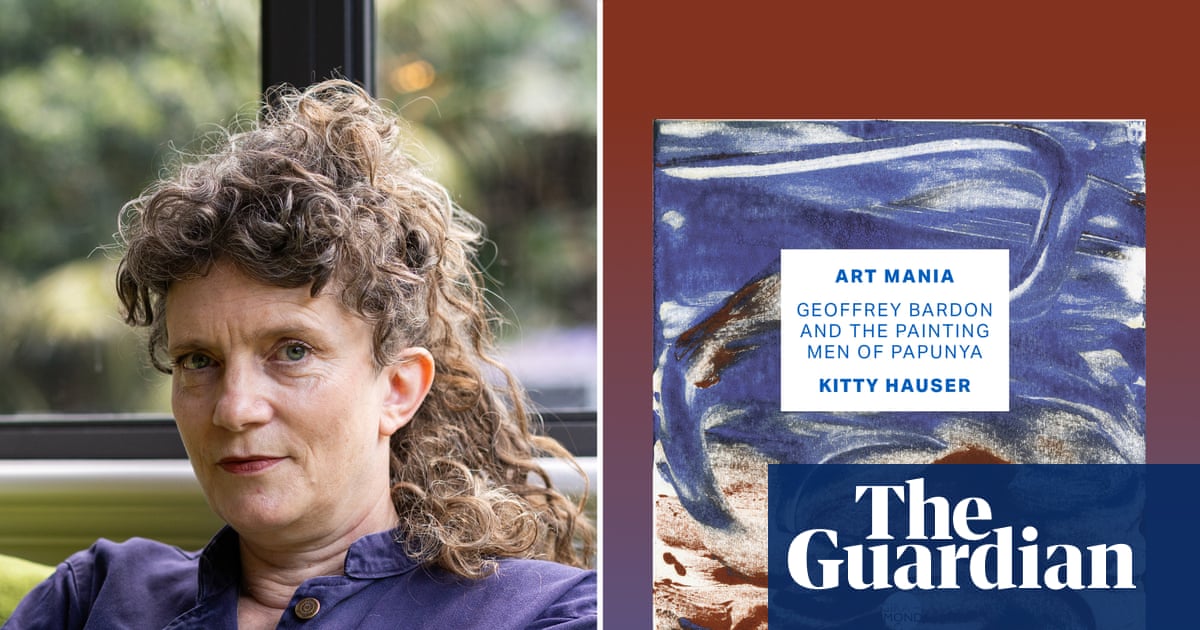
Artistic movements rarely announce their commercial futures at the moment of inception. When Geoffrey Bardon arrived at Papunya in 1971, taking up a post as a thirty-year-old school teacher and artist from Sydney, the remote Northern Territory settlement was hardly viewed as an incubator for global trade. Over eighteen months, Bardon established a painting centre for Aboriginal men, prompting them to transfer ceremonial patterns—previously marked onto sand or living skin—onto transportable surfaces. What followed was the Western Desert art movement and an eventual billion-dollar market. Yet the biographical lens inevitably revives an uncomfortable debate about agency, attribution, and cultural mediation across the Pacific.
In Art Mania, biographer Kitty Hauser examines Bardon as an individual suited to that specific crossing: diffident, curious, and affable. That characterisation provides an entry point into a recurring dynamic across regional arts economies. An outsider arrives with administrative backing from a government-run institution, establishes material conditions for production, and helps ignite a creative wave that quickly outgrows its point of origin. The standard institutional narrative often swings between two extremes, framing such figures either as visionary patrons or as disruptive agents who exposed sacred designs to speculative external capital.
Mediation and Market Pressures
Reality resists both simplifications. The men of Papunya on Pintupi country were not passive recipients of instruction. They made calculated decisions to preserve and share ancestral symbols during a period of state-managed settlement life. Bardon provided acrylics and board, but the authority resided with the painters whose traditions spanned generations. What Hauser’s account brings forward is the structural fragility of that exchange. When ritual forms migrate from ephemeral surfaces to permanent commercial boards, their social meaning undergoes an unavoidable mutation.
Commercial scale introduces demands that local communities rarely control. As Australian Indigenous art evolved into an internationally sought-after commodity, the early collaborative ethos of Papunya faced external financial incentives that neither Bardon nor the painters could fully regulate. The commercial machinery required continuous supply, provenance documentation, and critical categorisation tailored to Western collector sensibilities. This transformation brought economic resources to neglected communities, yet it also established an external market framework where non-Indigenous intermediaries retained substantial influence over pricing, narrative, and distribution.
The Unresolved Custodianship
Admirers of the Papunya story often point out that without Bardon’s intervention, these regional traditions might never have gained immediate recognition beyond the Northern Territory. The counterargument carries weight: institutional access and market literacy are difficult to acquire without initial bridges. However, concentrating too heavily on the biography of the intermediary risks obscuring the Pintupi painters who took the existential risk of recording restricted knowledge.
Hauser’s study of Bardon underlines how dependent modern market appraisal remains on singular personalities. Fifty-five years after Bardon walked into the Papunya schoolhouse, the tension between sacred cultural stewardship and commercial enterprise remains structurally unresolved. Transportable materials made desert art visible across galleries in Sydney and beyond, but the fundamental contradiction persists. A market built on communal, ceremonial knowledge continues to celebrate individual discoverers, leaving the terms of exchange perpetually open to contest.
Sources
Newsletter
Pacific Daily
A curated briefing from Thailand, Asia-Pacific and the world.