ASEAN Oil Reserve Proposal Confronts the Reality of Shared Sovereignty
Calls from the secretariat for a collective petroleum stockpile expose structural frictions between national balance sheets and regional integration.
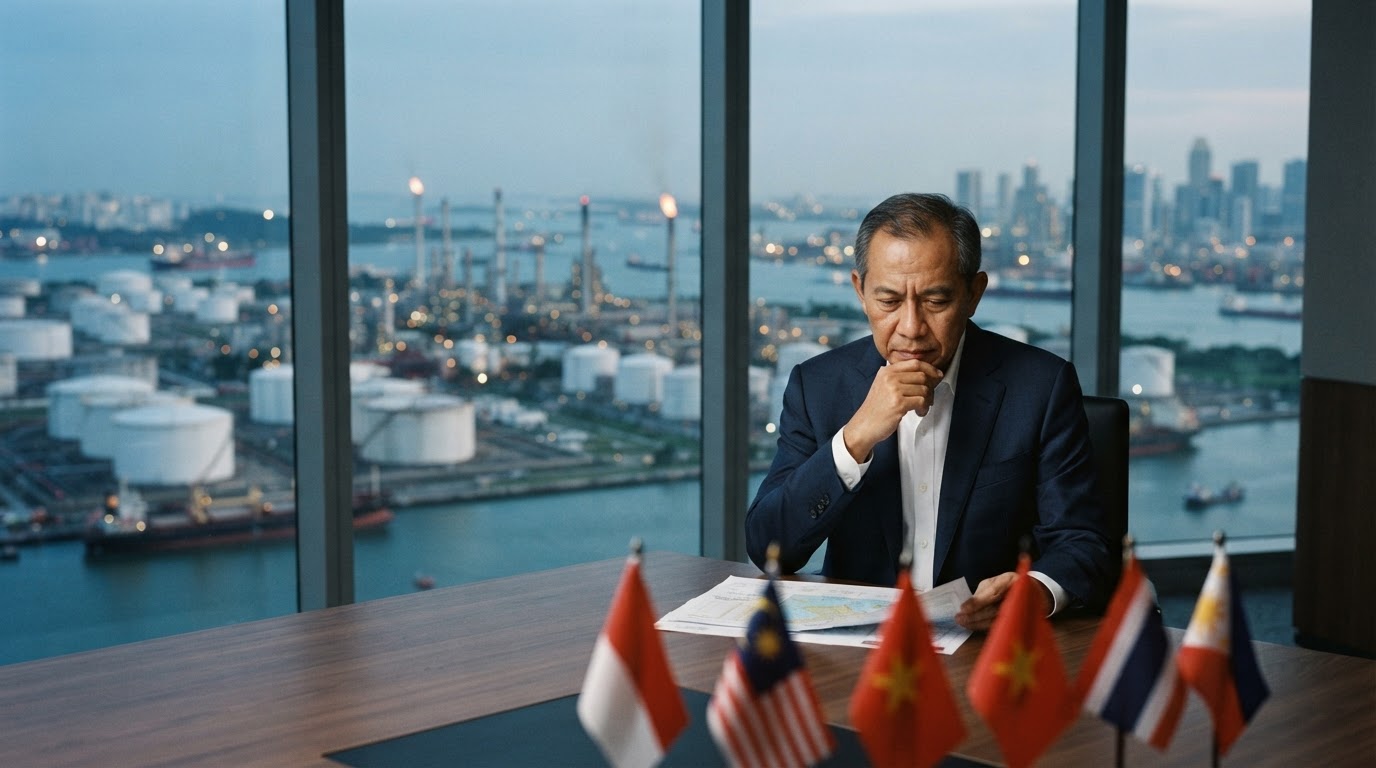
SINGAPORE
Energy security proposals in Southeast Asia rarely fail for lack of urgency. When the ASEAN secretary-general declared that the regional bloc requires a dedicated oil reserve to insulate members from external supply shocks, the diagnostic signal was familiar. Industrial expansion across the region continues to outpace indigenous hydrocarbon output, widening net import exposure and leaving production networks sensitive to disruption. Yet issuing a diplomatic call for a shared petroleum buffer addresses only the collective vulnerability, leaving the underlying architecture of capital expenditure and national sovereignty unmanaged.
Establishing a multilateral stockpile demands an explicit financial mechanism. Commercial refiners and state utilities do not store crude on regional goodwill. Storing oil requires physical storage infrastructure, continuous inventory financing, and contractual clarity regarding drawdown rights during an embargo or market dislocation. In a crisis, the decisive question is operational: which domestic government yields control over its physical allocation to stabilise an import-dependent neighbour?
The Sovereignty Paradox in Strategic Storage
Strategic petroleum reserves operate as sovereign instruments of risk management. Mature consumer blocs manage reserves through legally binding release mechanisms, where national capitals contribute proportional capital and coordinate domestic releases under strict treaty guidelines. Within ASEAN, however, industrial structures diverge sharply between fossil fuel exporters, major refining hubs, and primary commodity processors.
This divergence fractures policy alignment. Exporters face structural incentives to sell directly into volatile global spot markets when prices spike, maximising immediate treasury receipts. Importers prioritize consumer price stability and factory operating margins, seeking subsidised inventory or emergency physical allocations. Reconciling those conflicting domestic fiscal incentives into a regional physical pool has historically stalled cross-border energy initiatives. Without a centralised institutional authority to finance storage assets or mandate emergency releases, individual member states naturally default to bilateral supply agreements and domestic commercial mandates.
Private operators face comparable disincentives. Commercial energy firms holding terminal assets run inventories according to working capital efficiency, not strategic buffer mandates. Forcing domestic energy players to hold surplus stocks beyond operating requirements ties up corporate capital unless public finances subsidise carry costs. If Southeast Asian treasuries must absorb these capital expenditures directly, ministers inevitably face pressure to retain sovereign command over those barrels rather than pool them in an offshore regional depot.
Unresolved Mechanics of Regional Custody
Coordination rhetoric frequently outruns logistical reality. Even if ASEAN members agree on the conceptual utility of an oil reserve, assigning physical custody creates an immediate distribution impasse. Concentrating regional reserves within primary transit corridors creates physical single points of failure, while dispersing smaller facilities across multiple archipelagoes elevates maritime transit risks and freight costs precisely when maritime lanes face distress.
National security imperatives reinforce this hesitation. A collective petroleum reserve functions only if each participating state trusts that emergency release rules will operate mechanically, immune to diplomatic leverage or bilateral disputes. That level of institutional delegation does not exist within the bloc. Energy policy across Southeast Asia remains intensely nationalised, treated as a pillar of regime legitimacy and industrial competitiveness rather than a traded regional commons.
Moving an ASEAN oil reserve from an executive recommendation into functioning steel storage will require resolving who carries inventory risk during periods of high interest rates. Until capital outlays and physical release authorities are legally defined, regional storage proposals will remain an aspirational declaration. The test is not acknowledging the vulnerability of regional fuel supplies, but deciding which treasury pays to insure them.
Sources
Newsletter
Pacific Daily
A curated briefing from Thailand, Asia-Pacific and the world.