Bayern Munich and the Commercial Geometry of Pacific Rim Football
Club interest in Mexico City reveals how European football capital calculates cross-Pacific market expansion through broadcast footprint and post-tournament infrastructure.
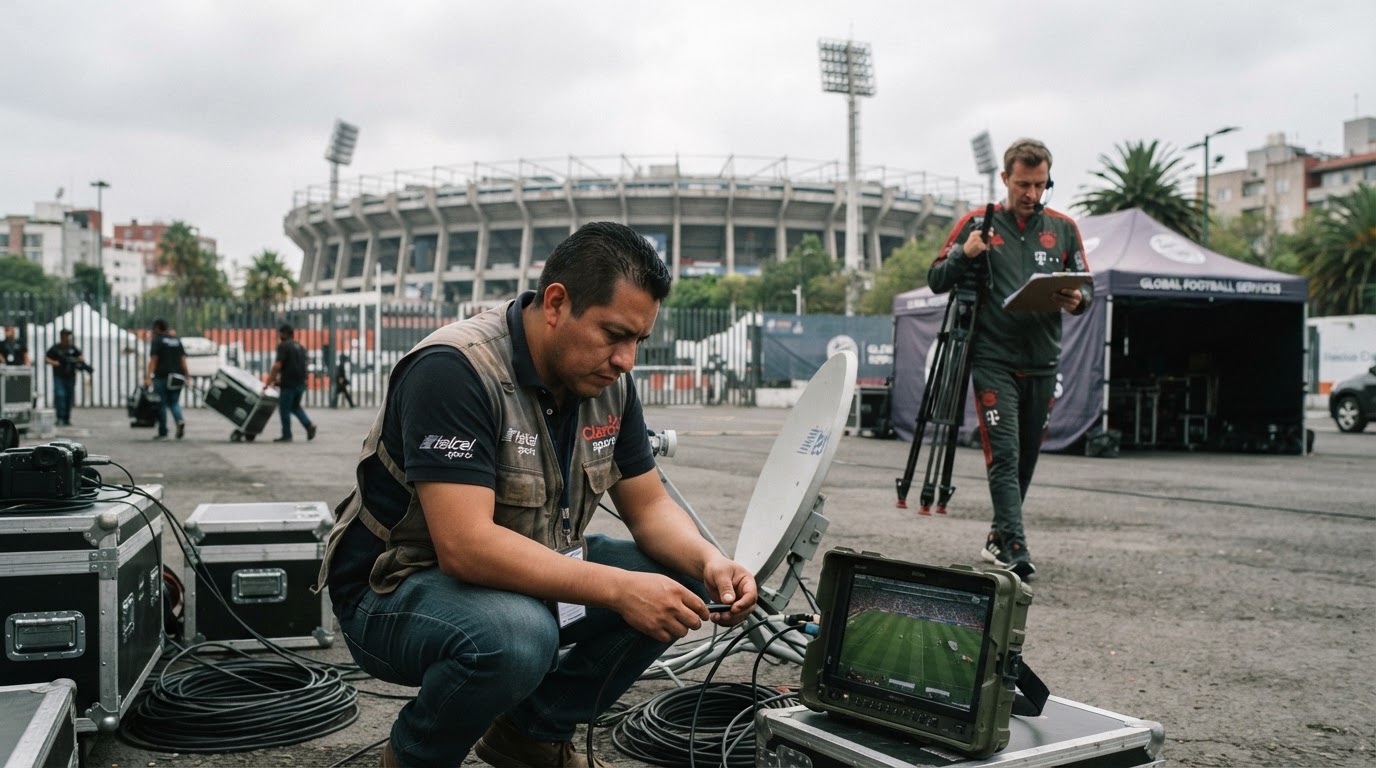
Capital allocations in professional sports follow broadcast footprint and stadium capacity rather than nostalgic goodwill. When Bayern Munich marketing director Rouven Kasper confirmed to Fox Sports on Saturday that the Bavarian institution is considering staging a match at Mexico City’s Estadio Banorte, previously known as Azteca, the overture signalled a calculation anchored in television rights and venue mechanics across the Pacific Rim.
Only one men's German soccer club has played at the arena: Bayer Leverkusen, which appeared there in 1996. For three decades, the Bundesliga remained largely anchored to traditional European circuits and summer tours in established commercial territories. Bayern Munich’s declared interest in returning to Mexico City reflects a revised commercial map, spurred by recent tournament visibility and shifts in audience consumption.
Broadcast Footprint and Venue Economics
The economic logic centers on market penetration. European domestic leagues face saturated domestic television subscriber bases and strict broadcast revenue ceilings across their core territories. Growth mandates locating uncommitted consumer pockets where linear television carriage or digital subscriptions can be monetised at scale. As Kasper noted, the commercial proposition relies directly on visible local traction and broadcast distribution.
The league has gained ground on television there, and the arrival of more Mexican players in the future could accelerate a visit … to the country.
That remark by Kasper exposes the commercial mechanism at work. Overseas exhibition fixtures are rarely isolated promotional events; they operate as physical collateral to sustain broadcast contracts. Previous Bundesliga exposures connected to Mexican talent—such as Chicharito, Carlos Salcedo, or Marco Fabi with Eintracht Frankfurt across campaigns in 2018 and 2019—demonstrated that player pathways generate sustained television viewership. When local representation dries up, league market share weakens. Staging live matches in capital venues serves to arrest that friction, using elite international marquee talent like England captain Harry Kane to anchor spectator demand.
Kane provides direct operational continuity for this expansion. At the 2026 World Cup, Kane netted the decisive goal in a 3-2 victory over host Mexico inside Estadio Banorte. That fixture demonstrated the commercial viability of high-capacity Latin American venues for top-tier European stars. Where national team fixtures generate short-term tournament windfalls, club tours attempt to institutionalise those spectator relationships into recurring club merchandise and broadcast revenues.
The Limits of Pacific Outreach
The counterargument to this trans-Pacific deployment lies in competitive congestion and fixture strain. European clubs manage rigid calendar limitations under expanding domestic and continental requirements. Undertaking long-haul logistics to Mexico City introduces operational disruptions, player fatigue, and high insurance liabilities. Exhibition matches run the risk of fielding diminished squads, which can dilute the commercial prestige the club seeks to trade upon. Moreover, television viewership gains do not automatically convert into paying commercial partners if domestic purchasing power or corporate sponsorship packages fail to match German domestic yields.
Yet the incentives driving Bayern Munich forward outweigh static risks. With Estadio Banorte modernised through the 2026 World Cup cycle, the physical infrastructure of Mexico City now meets the corporate hospitality benchmarks required by Bavarian commercial management. As European football searches for yield along Pacific corridors, club tours act as the vanguard for long-term television renegotiations. Whether Bayern Munich formalises this match will depend on fixture availability and broadcast guarantees, but the structural impulse is unmistakable: top-tier clubs will cross oceans wherever media rights and modern stadiums intersect.
Sources
Newsletter
Pacific Daily
A curated briefing from Thailand, Asia-Pacific and the world.