A Fortress for Vows Along the Bypass
Archipatch places a ceremonial sanctuary against the asphalt reality of regional Japan.
SINGAPORE
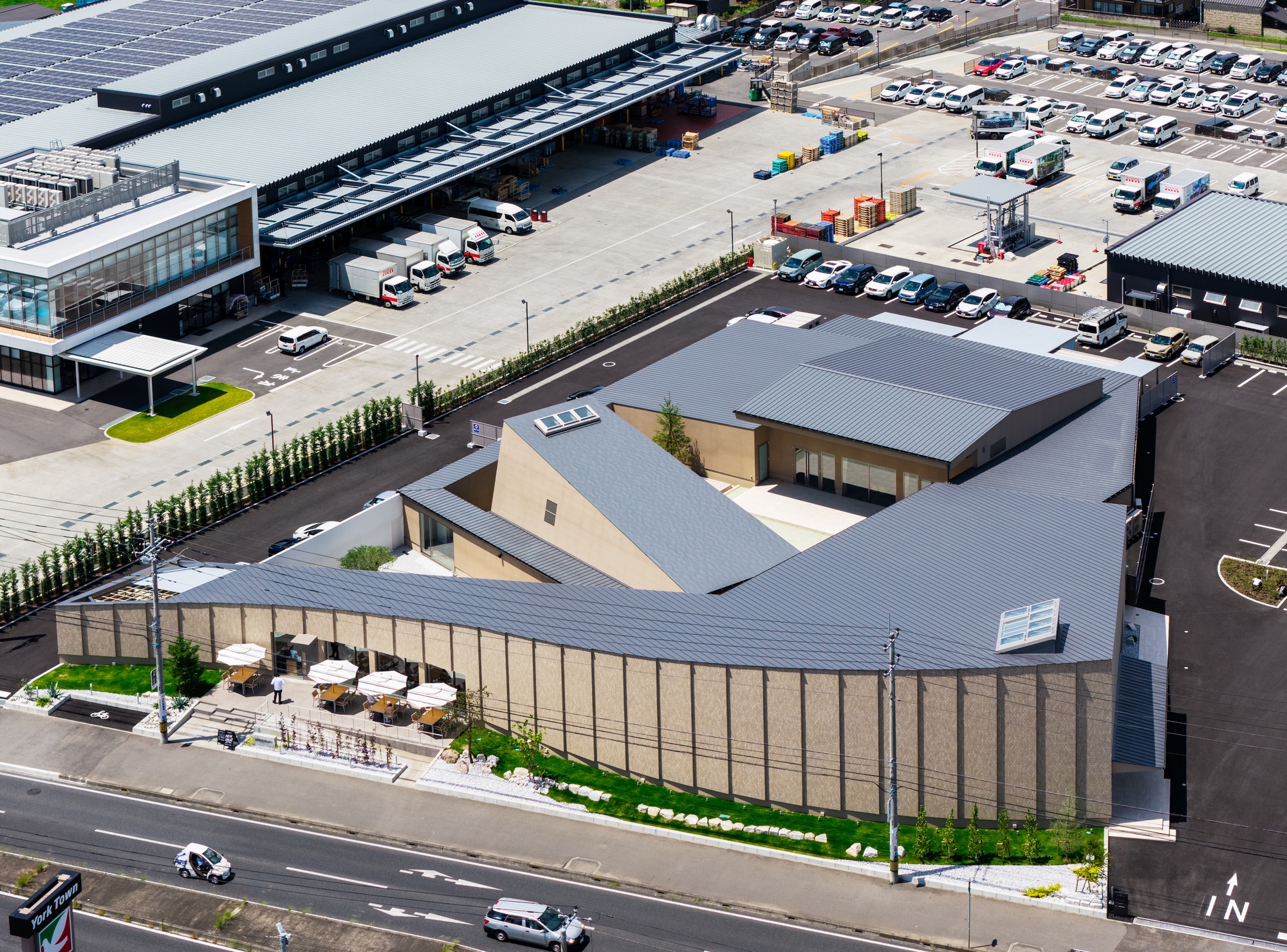
Traffic along an arterial thoroughfare in Mito rarely slows for romance. Delivery trucks, commuters, and delivery vans trace the grey margins of asphalt common to secondary cities across Japan. Against this concrete rush stands Heritage Park Mito, completed in 2026 across 1526 m² of commercial land. Designed by the architectural practice Archipatch, with Keiko Yoshida as lead architect and Toshiya Kurihara on the design team, the building houses both a restaurant and a wedding venue. The structure addresses a peculiar spatial conflict: how to stage intimate celebration directly beside highway commerce.
Wedding architecture in regional Japan long favoured either domestic simulation or distant alpine seclusion. Couples sought European chapels or hotel banquet basements shielded from everyday sights. Yet economic and logistical priorities have steadily pulled hospitality infrastructure toward automobile corridors. Establishments require parking, arterial accessibility, and street recognition to sustain year-round dining. In Mito, Archipatch met this operational mandate by constructing an exterior that commands attention from the road while guarding the quiet required for formal gatherings.
The Architecture of Deflection
To balance street presence against private ritual, the design team relied on structural engineering from ASAsocciates and mechanical engineering by Yamazaki M&E Design CO., Ltd. Their task was environmental isolation. Vehicle noise and visual distraction must not puncture the rhythm of a ceremony or an evening meal. Rather than denying its suburban location, Heritage Park Mito uses massing to create a quiet interior clearing.
Photographs by Masaki Hamada illustrate this discipline. The exterior volume confronts passing motorists as a decisive landmark, yet the plan turns inward. Guests step away from car exhaust and tarmac into spaces organized around containment and daylight. This interior composure proves essential for the building's dual commercial category, which spans restaurants, bars, and event spaces.
Secular Ritual on the Periphery
There is an undeniable commercial tension in this approach. A facility built beside a major road risks feeling stranded between car culture and ceremonial dignity. Sceptics might argue that an enclosed compound, no matter how carefully engineered, cannot entirely erase the asphalt environment beyond its doors. The presence of the roadway remains an immovable operational condition.
Yet the project demonstrates a pragmatic evolution in contemporary Japanese hospitality. Archipatch acknowledges that modern ritual rarely takes place in romantic isolation. Daily life across prefecture capitals is anchored to car journeys, strip retail, and bypass transit. Instead of manufacturing a fantasy of rural retreat, Heritage Park Mito accepts the roadside plot and builds a deliberate sanctuary within its perimeter. The commuter highway continues outside, but behind the facade, family rites find quiet ground.
Sources
Newsletter
Pacific Daily
A curated briefing from Thailand, Asia-Pacific and the world.