A Collapsed Ceiling Points to Wider Instabilities in Thailand
An incident in the Bangkok Parliament canteen raises questions about public infrastructure and governance at a crucial time.
SINGAPORE
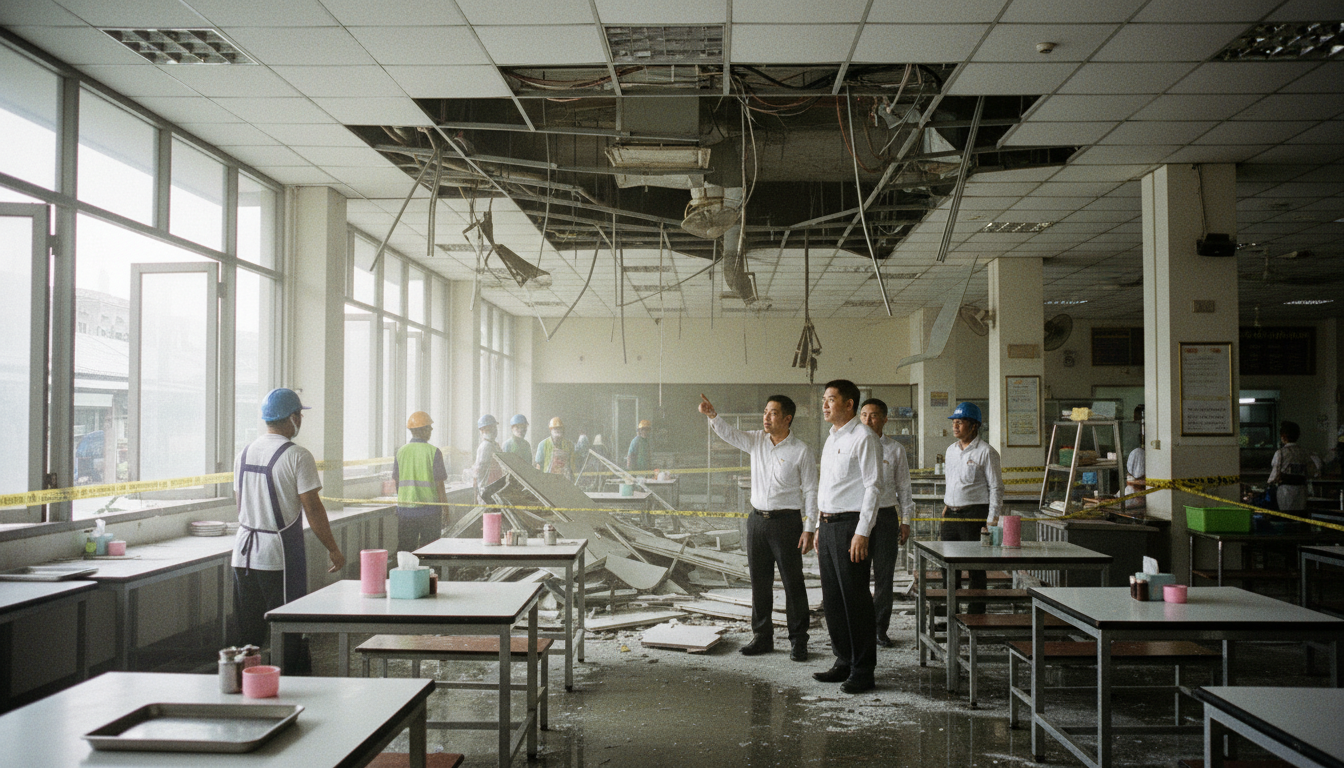
The canteen on the B2 floor of Bangkok’s Parliament building saw its ceiling collapse on September 13. The incident damaged tables and chairs. No injuries were reported, as the collapse occurred during a holiday, meaning government officials and staff were not present. Channel 3 stated the canteen is regularly used by Members of Parliament, senators, civil servants, parliamentary employees, and other political figures.
The absence of injuries is a fortunate outcome. However, the event itself — a structural failure in a key government building — merits closer attention. This is not merely an isolated accident; it is an indicator that directly impacts the daily lives and safety of those working within the country's legislative core, and by extension, the public.
### Governance and Public Trust
The collapse takes place against a backdrop of political shifts. Thailand’s Prime Minister Anutin secured reelection in a parliament vote in March 2026. He then prepared a new Cabinet as an energy crisis threatened economic growth. This followed a move in December 2025 to dissolve parliament and set the stage for elections. The return to power was supported by a broad backing and a nationalist push.
While the parliamentary elections concluded, and a new cabinet formed, the physical integrity of the institutions housing these processes is critical. An incident like a ceiling collapse in a public building used by high-ranking officials and staff can erode public trust. It raises questions about maintenance standards, oversight, and the allocation of resources for public infrastructure. Citizens expect that the spaces where their government operates are safe and well-maintained. A failure in such a visible and central location suggests potential systemic issues in facilities management or construction standards that could extend beyond this specific building.
### Implications for a Developing Region
The immediate consequence for an individual working in the Thai Parliament is a direct threat to safety, though averted in this instance. The broader implication for Thailand, and indeed the Asia-Pacific, is how such incidents reflect on national governance and the perceived stability of the state. Governments across the region are often judged by their ability to provide reliable public services and infrastructure. A prominent structural failure, even if localized, can foster a narrative of administrative weakness or inefficiency.
The incident, occurring in a space central to daily government operations, raises questions beyond its immediate physical damage.
Some might argue that a single ceiling collapse is an isolated event, with no broader implications for national governance or regional perception. They might suggest that such failures can occur anywhere, and the lack of injuries minimizes its significance. However, even isolated incidents can serve as proxies for deeper issues. In a period when Thailand's leadership is navigating economic challenges and consolidating political power, any perceived vulnerability in its core institutions warrants scrutiny. The focus now turns to how authorities respond: whether with transparency regarding the cause and preventative measures, or with a dismissal of its underlying implications. The outcome hinges on that response, and what it signals about the state of public infrastructure management in the country.
Sources
Newsletter
Pacific Daily
A curated briefing from Thailand, Asia-Pacific and the world.