Why Local Legal Resistance in Yilan Tests Regional Transit Ambitions
Litigation over high-speed rail environmental reviews reveals the friction between rapid capital corridors and statutory oversight.
SINGAPORE
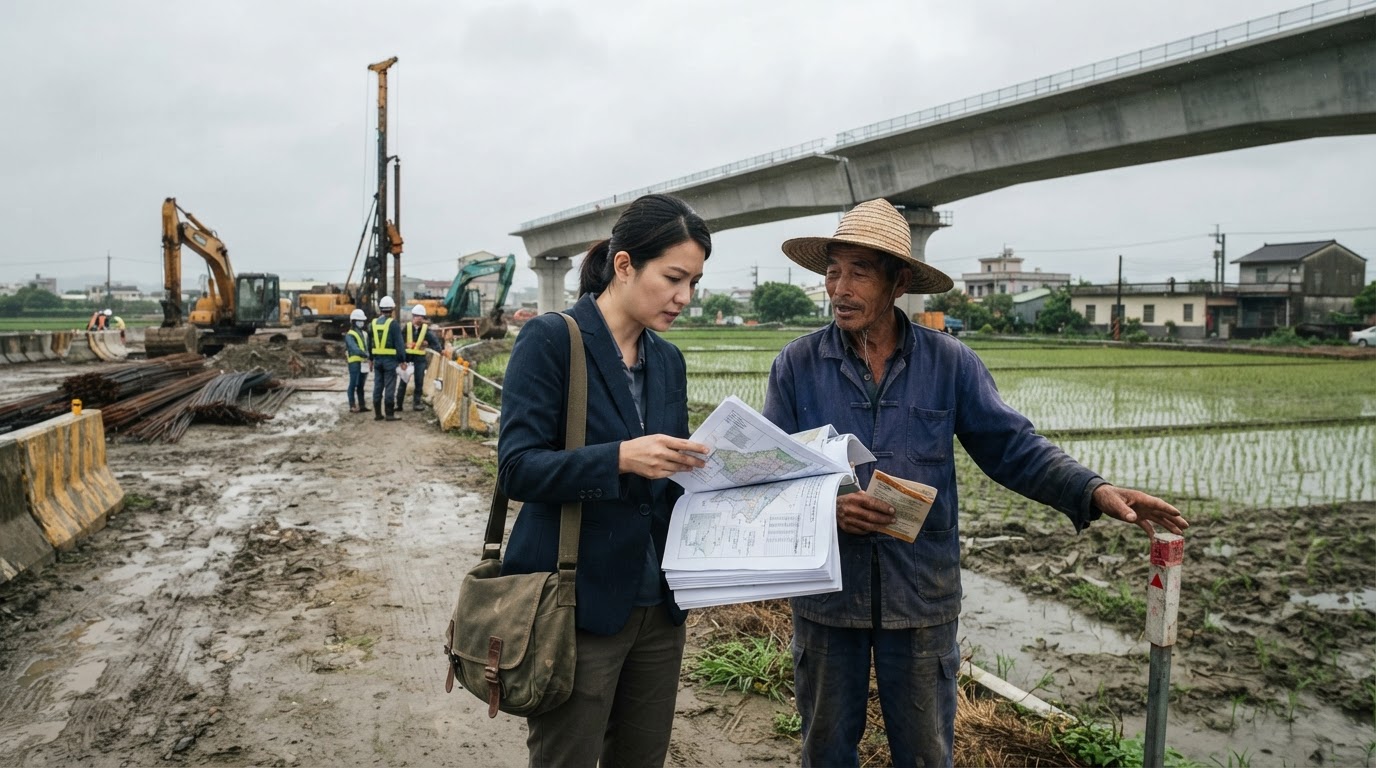
Metropolitan railway expansion across East Asia has long proceeded on an administrative assumption: central momentum routinely outpaces provincial hesitation. When residents in Yilan filed suit to slow the environmental review of an incoming high-speed rail line, that governing momentum stalled. The filing interrupted an established planning cycle wherein major intercity transport links are cleared through executive determination before peripheral objections gather institutional weight.
At issue is the deliberate compression of statutory oversight. High-speed rail networks deliver logistical integration between capital centers and peripheral counties. However, official review mechanisms frequently compress statutory evaluation periods in an effort to lock in engineering schedules. By bringing administrative protocols before the courts, the litigants in Yilan are testing whether executive infrastructure timelines can override established environmental evaluation frameworks.
Speed cannot substitute for procedural legitimacy.
Capital Priorities and Administrative Friction
This courtroom challenge unfolds as national resource allocations face severe competition. Infrastructure expenditure cannot operate in administrative isolation from wider sovereign commitments. For example, Taiwan proposed boosting its 2027 defence spending by 18 percent to a record high, reflecting how security requirements increasingly dominate future fiscal planning. When central governments manage escalating statutory outlays alongside strict budgetary constraints, capital-intensive domestic transit schemes face rigorous scrutiny over every administrative concession and financial commitment made to push them forward.
Across the wider Asia-Pacific, planners continually encounter this structural divergence between central strategy and municipal consent. In Japanese transport corridors as well as developing transit networks across Southeast Asia, central planners perceive intercity rail as an indispensable economic artery that links disparate regional markets. By contrast, local communities bear the tangible disruption: irreversible land rezonings, environmental exposure, and regulatory hearings that risk functioning merely as administrative formalities. What central ministries evaluate as an unquestioned regional asset often appears locally as an imposed logistical corridor that bypasses municipal governance.
Planners counter with considerable justification that procedural delays impose compounding penalties on public resources and regional equity. Halting an environmental review risks driving up engineering costs, complicating contractor procurement, and stranding provincial economies that depend on rapid passenger links to stave off economic stagnation. For outlying districts suffering from demographic contraction, deferring transport modernization can postpone commercial revitalization and preserve regional inequality.
The Cost of Truncated Due Process
Yet administrative haste produces its own structural vulnerabilities. Compressing environmental reviews does not eliminate local friction; it merely transfers that conflict from consultation rooms into legal chambers. When authorities treat public inquiries as procedural formalities rather than genuine risk assessments, they invite sustained courtroom challenges that can suspend construction after capital has already been deployed. Transit authorities that proceed without verified statutory compliance inevitably discover that engineering contracts cannot insulate a project from administrative invalidation.
The legal challenge in Yilan clarifies that transit connectivity across modern economies requires more than broad assertions of regional utility. Infrastructure resilience depends on administrative integrity long before physical construction commences. Until central transport authorities treat regulatory scrutiny as an indispensable foundation rather than an administrative impediment, community litigation will remain the decisive mechanism determining the true pace of high-speed rail development.
Sources
Newsletter
Pacific Daily
A curated briefing from Thailand, Asia-Pacific and the world.