Ottawa Chooses Concrete Over Consensus at the Pacific Gateway
Federal alignment with British Columbia’s bridge reversal shows how trade arteries override domestic planning disputes.
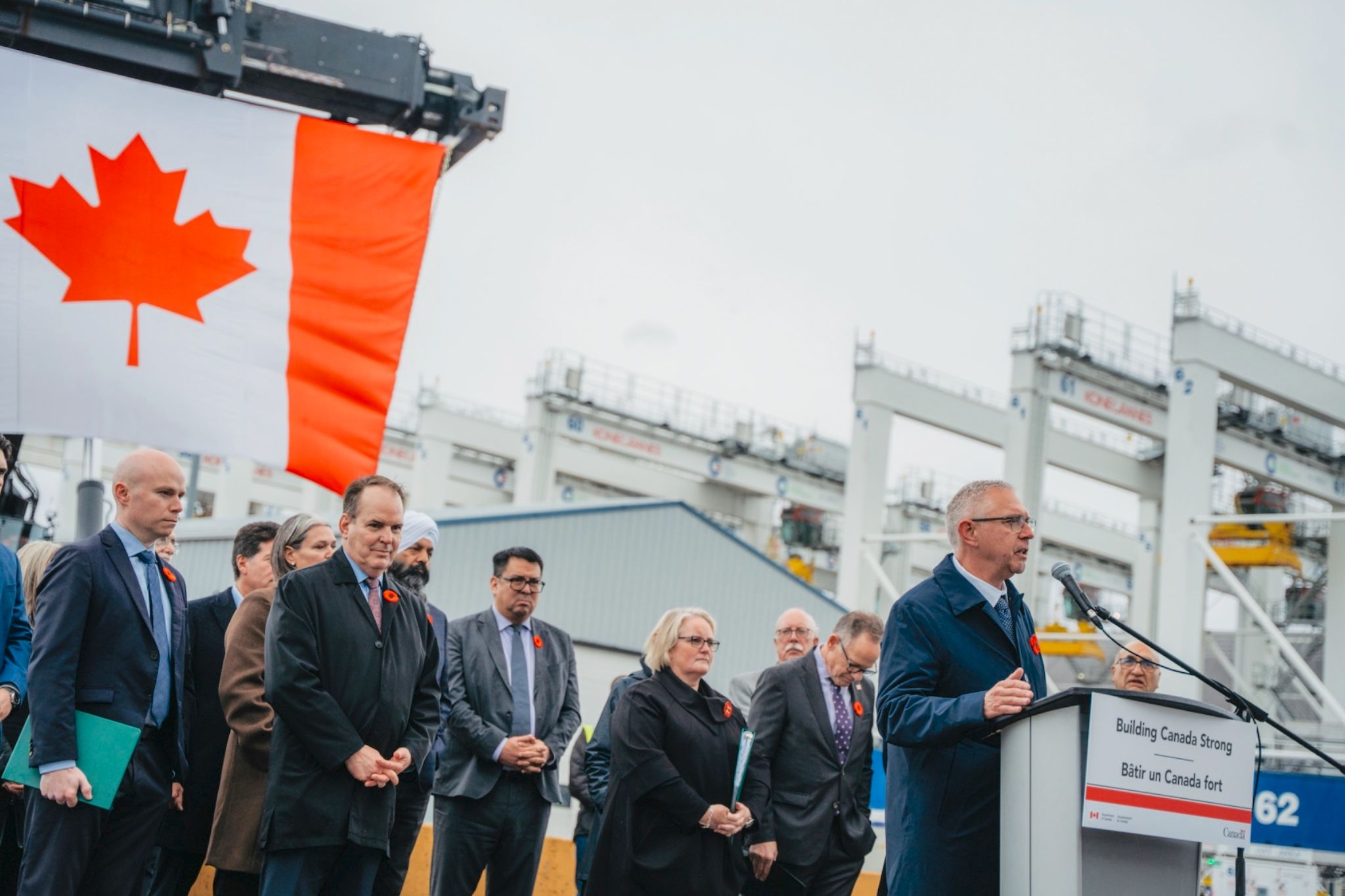
Major transport junctions rarely change their engineering logic because of sudden technical illumination. They change because the political utility of moving freight abruptly eclipses the political cost of discarding past plans. That reality surfaced clearly in Delta on Friday, Oct. 30, 2026, when the Government of Canada pivoted behind an incoming provincial administration without missing a procedural beat.
Just seven days after the Conservative Party of British Columbia won provincial office, Federal Minister of Transport Steven MacKinnon indicated Ottawa's support in principle for Premier-elect Lorne Doerkson's proposed 10-lane George Massey Bridge. In doing so, federal authorities signaled their willingness to leave behind the eight-lane immersed tunnel championed by the outgoing BC NDP government under David Eby. What would normally provoke months of intergovernmental dispute was resolved in a single Delta briefing room.
Freight Demands Reshape the Crossing
The pivot coincided with another announcement from the same podium: Ottawa designated the Roberts Bank Terminal 2 superport project an undertaking of national interest. This alignment of announcements was neither accidental nor purely coincidental. Superports cannot function in isolation from the arterial highways that empty their container yards into continental rail and highway distribution networks.
Replacing the aging George Massey Tunnel has spent years mired in provincial design debates. The immersed tunnel promised lower visual intrusion and specific riverbed management compromises, yet an expanded 10-lane bridge offers immediate volume capacity that cargo interests have long desired. When a federal cabinet prioritizes trans-Pacific trade throughput, local disagreements over tunnel footprints quickly lose leverage against the logistics imperatives of the Pacific rim.
Superports cannot function in isolation from the arterial highways that empty their container yards into continental rail networks.
Supporters of the immersed tunnel will argue that abandoning years of engineering preparation imposes avoidable waste and disrupts regional planning. Shifting from a sub-river tunnel back to an elevated bridge reopens environmental files and risks resetting timeline benchmarks that British Columbia communities have waited decades to see resolved. These criticisms carry administrative weight, especially given how frequently Canadian intergovernmental infrastructure plans stall across electoral cycles.
Yet Ottawa's swift concession to Doerkson demonstrates that national transport ministries view regional bottlenecks through an entirely different lens. To federal planners, the primary client of the Fraser River crossing is not merely the local commuter driving through suburban Delta. It is the supply chain connecting Pacific maritime shipping to continental consumer centers. Once Roberts Bank Terminal 2 received national priority backing, federal participation could not afford an extended ideological fight with Victoria over bridge versus tunnel cross-sections.
The Unresolved Trade Ledger
The speed of MacKinnon's agreement nevertheless raises awkward institutional questions. By indicating that existing federal tunnel financing could simply migrate to a 10-lane surface span, Ottawa demonstrated that its prior technical commitments were far more flexible than earlier policy statements implied. Funding terms that were previously framed as tailored to an immersed tunnel design proved immediately transferable the moment provincial electoral power shifted hands.
Premier-elect Doerkson secures a visible political trophy before formally taking office, demonstrating his ability to extract federal cooperation on signature infrastructure pledges. Meanwhile, the federal government secures an unhindered path forward for its Pacific gateway terminal without engaging in jurisdictional warfare against a newly elected conservative provincial cabinet. Both sides emerge with an expedient alignment that sidesteps the deeper friction of public transit integration and river ecology.
Whether a 10-lane bridge can be procured, designed and delivered any faster than the tunnel it displaces remains an unresolved question. What is already settled is the hierarchy of federal interests along the coast. When continental trade throughput collides with provincial transit philosophy, the highway span built for container trucks consistently wins the argument.
Sources
Newsletter
Pacific Daily
A curated briefing from Thailand, Asia-Pacific and the world.