When Urban Biennales Ask Gallery Crowds to Plant Cassava for Ruined Forests
An installation from Sentani brings tree bark and moist soil to the capital, testing whether participatory rituals bridge or obscure extraction in Indonesia's periphery.
SINGAPORE
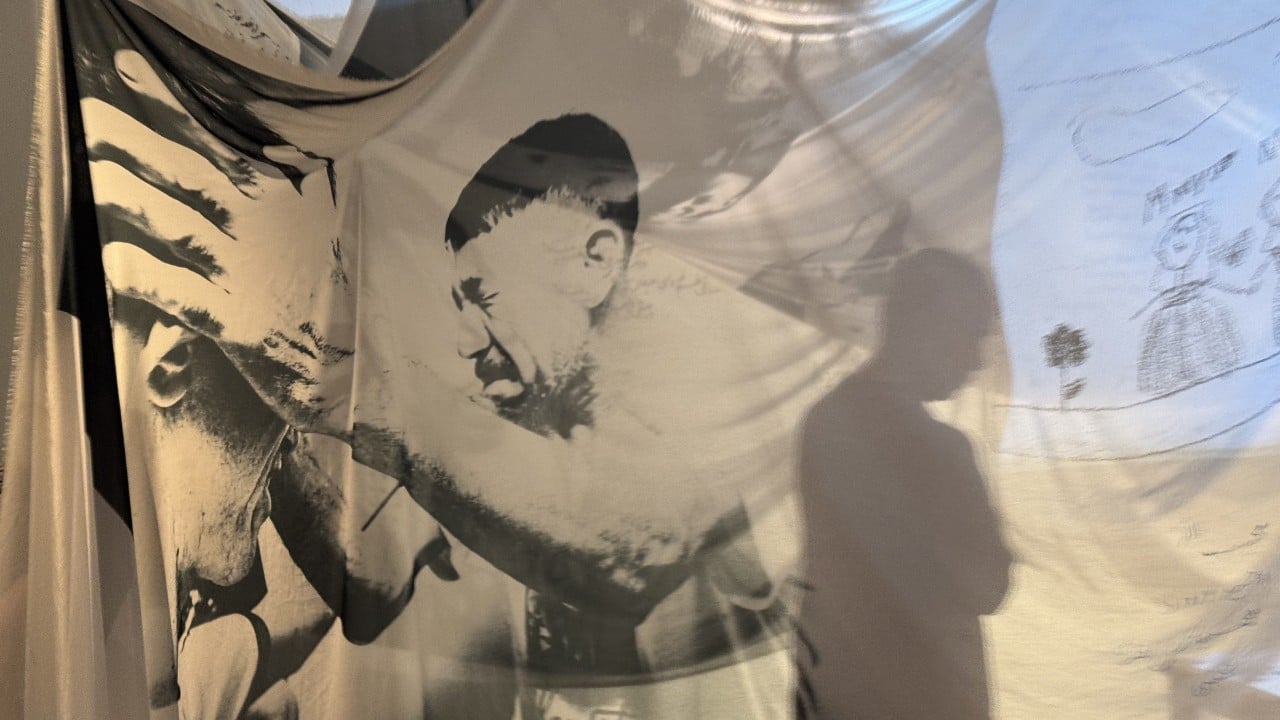
Soil pressed under urban fingernails rarely alters the economics of timber concessions or illegal gold pits operating thousands of kilometres away. At the 2026 Jakarta Biennale, visitors encounter damp earth laid out for planting cassava, enclosed beneath gallery lighting while audio recordings broadcast the calls of threatened birds-of-paradise. Suspended alongside this cultivation bed, paintings rendered with natural pigments on tree bark frame an environment created by Alyakha Kolektif, a Papua-based collective seeking to register how excessive logging and unauthorised mining damage the Sentani region of eastern Indonesia.
Across the capital, Art Jakarta opened during the same weekend. The convergence highlighted an art scene navigating commercial transactions alongside civic unease, establishing a distinct contrast between market spectacle and ecological grievance.
Earth in the Exhibition Hall
Inviting metropolitan patrons to cultivate tubers until late October offers an intimate tactile gesture, yet the framing suggests distinct limits to symbolic repair. Root crops in Sentani function as foundational sustenance, tied directly to land tenure and community survival against resource extraction. Transported into an exhibition pavilion, the act risks becoming an aesthetic rehearsal where urban viewers perform agricultural stewardship without bearing the administrative or physical costs confronting rural inhabitants.
Advocates of social practice art maintain that bodily engagement achieves what static didactic panels cannot. By asking an urban public to touch moist earth and hear the calls of imperilled fauna, the installation pulls remote ecological damage into direct physical proximity. Furthermore, the deliberate inclusion of bark cloth traditions indicates that indigenous material culture remains inseparable from the canopy currently being felled.
Yet the structural divide persists.
The Friction of Distance
Regional cultural institutions throughout Southeast Asia frequently struggle with this geographic and economic divide. Peripheral communities bear the immediate impact of resource exploitation, while cultural capitals curate the resulting trauma into thoughtful weekend discourse. Cassava stems inserted into manicured soil cannot replenish the degraded watersheds of Sentani, nor do they dismantle the commodity networks that draw raw timber and minerals into national balance sheets.
Traditional bark paintings require healthy forests to provide both support and pigment. When excessive logging strips the hillsides, the material foundation of the craft disappears alongside the habitat of the birds-of-paradise. Alyakha Kolektif's presentation documents this vulnerability, displaying cultural artefacts whose physical survival depends on ecological systems under active commercial siege.
Curatorial gestures that invite audiences into simulated cultivation run the perpetual risk of soothing civic consciences rather than confronting systemic devastation. The true test of such artistic intervention lies not in whether metropolitan visitors enjoy burying root cuttings under gallery lights, but whether the confrontation leaves them uneasy about the conveniences delivered by territorial dispossession. Earth swept clean from gallery floors at closing time leaves the forest boundary unresolved.
Sources
Newsletter
Pacific Daily
A curated briefing from Thailand, Asia-Pacific and the world.