Ticketing Bottlenecks at the National Stadium Expose Structural Gaps in Event Delivery
Apologies from co-organisers after fans missed the Singapore-Brazil kickoff reveal how venue logistics struggle to match commercial ambitions.
SINGAPORE
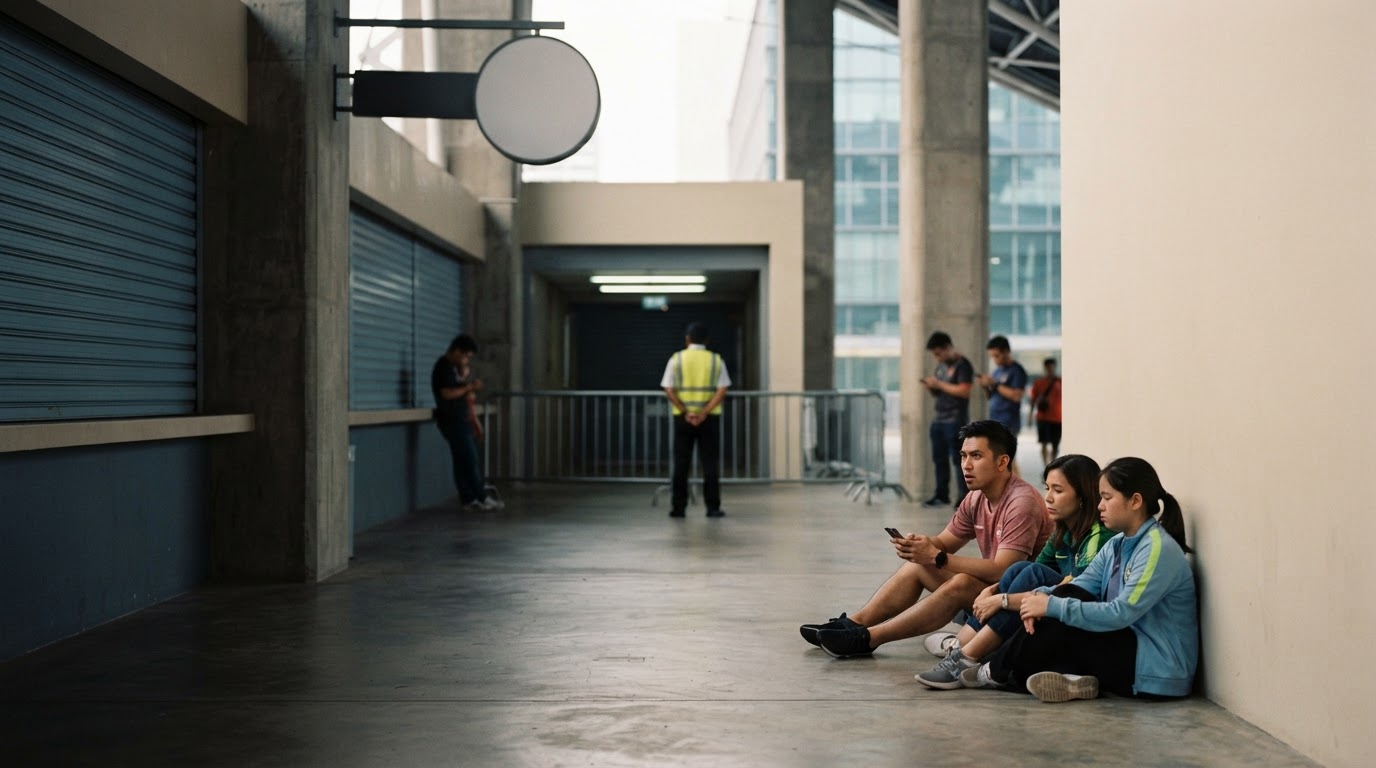
Operational capacity during peak ingress remains the most critical stress test for sports promoters, and physical ticketing failures reliably expose the gap between commercial scale and execution. When hundreds of ticket holders missed the 6pm kickoff of the exhibition match between Singapore and Brazil on Nov 17, 2026, the breakdown occurred at the most predictable friction point in stadium management: manual ticket replacement queues outside the National Stadium. Snaking lines persisted ten minutes after play began, turning what should have been standard customer resolution into an operational bottleneck.
Co-organisers The Kallang Group and Dentsu Sports International issued an apology and pledged to review procedures to do better next time. That response follows an established corporate template, treating gate disruption as an isolated procedural misstep rather than a systemic misallocation of gatekeeping resources. Organisers of premium sports fixtures concentrate investments on acquisition, staging, and brand alignment, yet the actual delivery mechanism relies heavily on the physical throughput of gate infrastructure.
The Mechanics of Gate Ingress
High-profile international matches generate compressed arrival windows. Spectators converge on entry perimeters during the final hour before kickoff, requiring validation systems to process thousands of entries per minute. Any friction upstream—such as malfunctioning digital barcodes, verification disputes, or uncollected physical tickets—redirects volume to customer resolution counters that operate with limited capacity.
When replacement counters fail to clear exceptions faster than the arrival rate, queues accumulate exponentially. The operational bottleneck outside the National Stadium demonstrated how quickly queue velocity deteriorates once exception handling becomes overwhelmed. The Kallang Group and Dentsu Sports International were forced to acknowledge that attendees were locked out while the fixture was already underway, converting customer service delays into visible brand friction.
Promoters often argue that unexpected surges in replacement requests or last-minute audience arrivals skew logistical planning beyond reasonable baseline projections. Stadium management must balance the operational cost of staffing excess troubleshooting booths against the probability of exceptional technical friction. Even so, that financial tradeoff shifts the immediate penalty directly onto paying ticket holders, who forfeit the opening stages of the match while waiting in external lines.
The Commercial Costs of Friction
Exhibition fixtures depend on the willingness of regional patrons to pay premium entry fees for non-competitive spectacles. When basic event mechanics like venue entry falter, the commercial premise of host venues weakens. The Kallang Group manages the precinct assets, while sports marketing specialists like Dentsu Sports International package and execute the inventory. Misalignment between these operational partners dilutes the commercial return for both.
Post-match reviews rarely alter the fundamental incentives driving venue management. Adding physical service desks or deploying redundant verification staff increases marginal operating overhead for events whose balance sheets are already fixed. Unless promoters face direct financial consequences for entry delays, venue reviews yield marginal procedural adjustments rather than structural logistics overhauls.
The Nov 17 operational failure between Singapore and Brazil shows that physical gate capacity remains an unhedged operational risk. Until tournament organizers align counter staffing directly with peak exception rates, stadium access will continue to depend on whether resolution booths can absorb the inevitable flow of administrative errors.
Sources
Newsletter
Pacific Daily
A curated briefing from Thailand, Asia-Pacific and the world.