The True Cost of Regional Smoke
Toxic air across Southeast Asia disrupts ordinary routines while diplomatic remedies stop at national borders
SINGAPORE
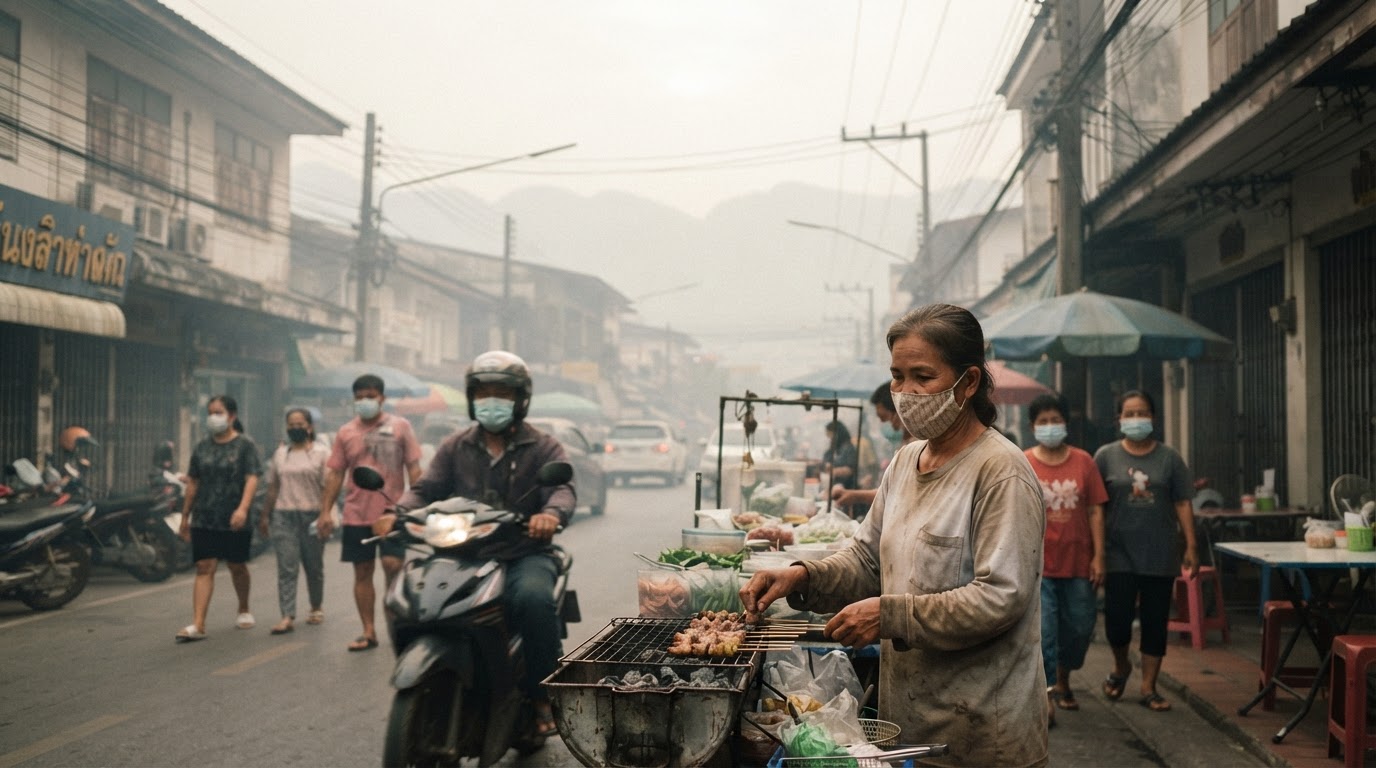
Daily life across Southeast Asian capitals contracted sharply when thick smoke settled over residential districts on October 17. Indoor air filters ran continuously, while parents kept children home from closed classrooms and outdoor workers weighed lost daily income against physical health.
The scale of the disruption appeared immediately in urban air monitors. Singapore placed second on IQAir’s live ranking of major cities, behind Baghdad, with Kuala Lumpur ranking third. All readings reached very hazardous levels, according to AFP. Beyond the metropolitan centres, the months-long pollution has closed schools, fuelled a surge in respiratory conditions and restricted outdoor activities in Indonesia, Malaysia, Singapore and Timor-Leste. For working households, this environmental crisis translates directly into compounding domestic expenses. Families must purchase private air filters, absorb pharmacy bills, and rearrange work shifts around sudden school closures. These observed domestic dislocations suggest that transboundary smoke functions less as an unpredictable weather episode and more as an unpriced commercial externality passed down to ordinary citizens.
The Limits of Cross-Border Warnings
Diplomatic interventions have attempted to address the commercial sources of the burnings directly. Singapore announced on Friday, October 16, that it would issue warnings to seven Indonesian companies it holds responsible for the fires. These entities comprise pulpwood and timber suppliers operating in Sumatra and South Sumatra, including Bumi Andalas Permai, Bumi Mekar Hijau, and SBA Wood Industries.
Delivering formal notices across maritime borders, however, faces profound operational limits. The persistence of agricultural burning indicates that fire remains the lowest-cost clearing method available to industrial concession operators. While timber and pulpwood suppliers capture the immediate commercial advantages of inexpensive land clearance, the resulting environmental liability drifts across national borders into clinics, schools and private homes. Regional monitors, including the Asean Specialised Meteorological Centre, track smoke trajectories and issue top-tier alerts when pollution peaks. Yet satellite tracking cannot extinguish subterranean peat fires once dry season winds accelerate. Indonesian state bodies, such as the National Disaster Mitigation Agency, face the competing task of managing environmental crises while navigating domestic economic pressures. This institutional friction implies that foreign regulatory notices rarely alter operational decisions made in remote concession zones.
Delivering regulatory notices across maritime frontiers remains far easier than altering commercial clearing practices on the ground.
Supporters of bilateral notices argue that named sanctions create legal jeopardy for commodity suppliers and their financial backers. That reasoning assumes commercial exposure deters irresponsible land managers from relying on uncontrolled burnings. In practice, concession holders frequently adapt through opaque ownership structures, diluting the legal force of external warnings. This pattern suggests that diplomatic censure alone cannot overcome the underlying profit incentives of rapid concession preparation without aggressive local enforcement.
The Downstream Reckoning
When cross-border governance falters, the financial bill shifts entirely to downstream communities. Families across Malaysia, Singapore and Timor-Leste are left to finance clean air as an expensive private necessity rather than enjoying it as a fundamental civic baseline.
The recurring haze demonstrates that diplomatic protocols struggle against the basic economics of industrial agriculture. Until concession managers face clear legal and financial penalties that exceed the savings of clearing land with fire, highest-level haze alerts will remain an annual record of civic disruption. Ultimately, the resolution depends on whether regional governments can penalise the balance sheets of timber suppliers or continue leaving working families to absorb the costs.
Sources
Newsletter
Pacific Daily
A curated briefing from Thailand, Asia-Pacific and the world.