The Operational Ceiling Behind Singapore's Rail Reliability Record
Rising mean-kilometre benchmarks demonstrate exceptional asset discipline, yet line exclusions and station friction reveal the hidden structural costs of chasing zero mechanical failures.
SINGAPORE
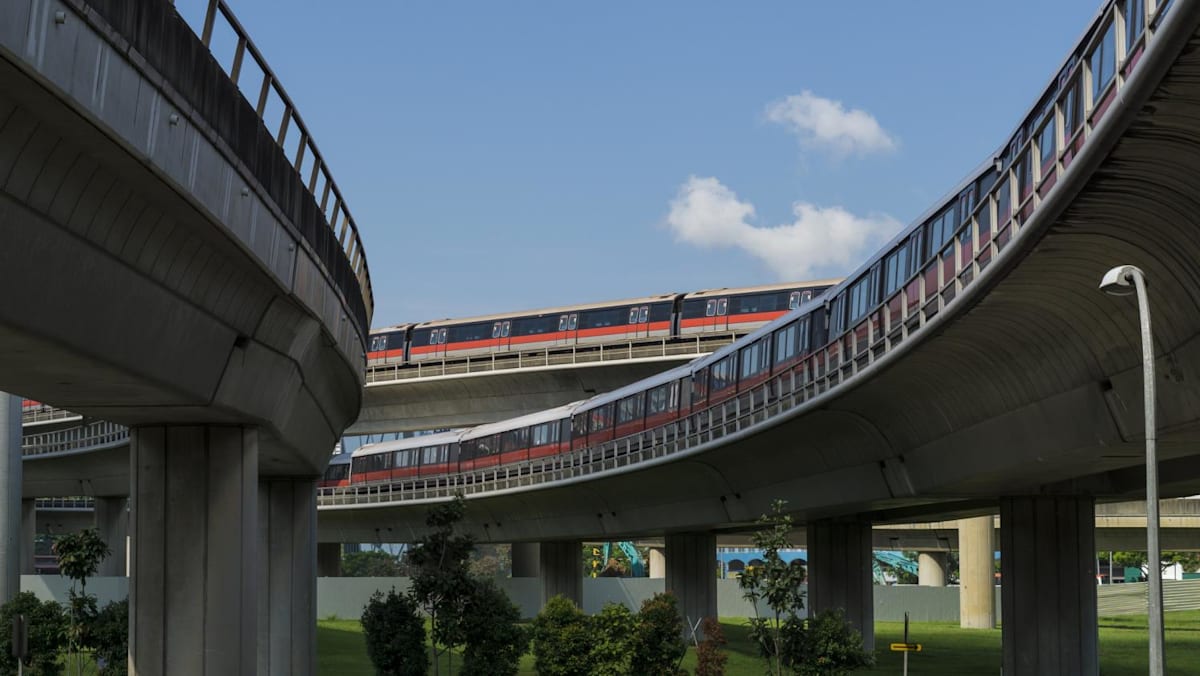
Every mass transit system under peak passenger loading reveals its primary vulnerability not in the depot, but at the exact interface between train doors and crowded platforms. When Singapore's rail network logged a mean kilometres between failures of 3.38 million train-km for the 12 months ending September, the headline registered an indisputable feat of fleet maintenance. That mark surpassed the previous record of 2.88 million train-km set in August. Land Transport Authority monthly reporting published on Thursday, Oct 15, confirmed the overall MRT network has now cleared the 2 million train-km benchmark for six consecutive months.
Preventive maintenance at this scale operates with mechanical precision. Bogies cycle through workshop bays on rigid schedules, and components are swapped out long before structural fatigue appears.
Individual line performances show how aggressively operators have driven hardware compliance. August figures showed the DTL posting a 99.3% improvement from July, while separate indicators showed 99% of trains operating on time in September evaluations. Across all five MRT lines measured in the report, component survival has been extended by compressing diagnostic turnaround times during early morning non-revenue hours. Yet this level of technical endurance answers only half of the transit equation. An asset regime can run flawlessly while the passenger concourses feeding it struggle under spatial compression.
The Boundary of the Calculation
Statistical cleanliness often depends on where boundaries are drawn. The Land Transport Authority record of 3.38 million train-km explicitly excludes the Thomson-East Coast Line. Leaving the TEL outside the calculation removes a corridor still undergoing initial operational calibration, where early signalling refinements and fleet integration inevitably depress network aggregates. An engineering index that filters out developing lines measures a mature perimeter rather than total operational reality.
The metric itself measures distance run between delays exceeding five minutes. It tracks rolling stock durability, not platform dwell friction or transfer bottlenecks.
Operational strain shifts when component failures drop toward zero. Earlier records showed the North-South Line recording lower stability when network figures dipped, demonstrating that legacy trunk lines bear heavier passenger crush loads and track wear. A rail operator that targets mean kilometres between failures allocates capital and diagnostic labor toward traction systems and track circuits. Station flow, transfer chokepoints, and dwell times receive secondary attention because crowding does not penalise distance metrics unless a carriage halts entirely.
Defenders of the engineering-led model point out that vehicle availability remains the absolute prerequisite for station crowd management. If a lead train stalls on a high-density corridor, holding platforms fill within three minutes, triggering dangerous concourse blockages across interchange hubs. Maintaining rolling stock reliability is therefore the foundational defense against systemic terminal collapse.
Diminishing Returns at Peak Load
That operational priority is structurally sound, yet incremental gains face steep diminishing returns. Lifting reliability from 2.88 million to 3.38 million train-km requires exponential diagnostic resources for marginal improvements in commuter transit times. What remains unresolved is how the network will preserve these asset margins once expanding lines like the TEL enter the baseline, and full-occupancy platform friction begins testing the physical limits of station infrastructure.
Sources
Newsletter
Pacific Daily
A curated briefing from Thailand, Asia-Pacific and the world.