The Engineered Shepherd and the Modern Desire for Calm
Breeding projects designed to soothe anxious households expose how urban owners project rural fantasies onto domestic animals.
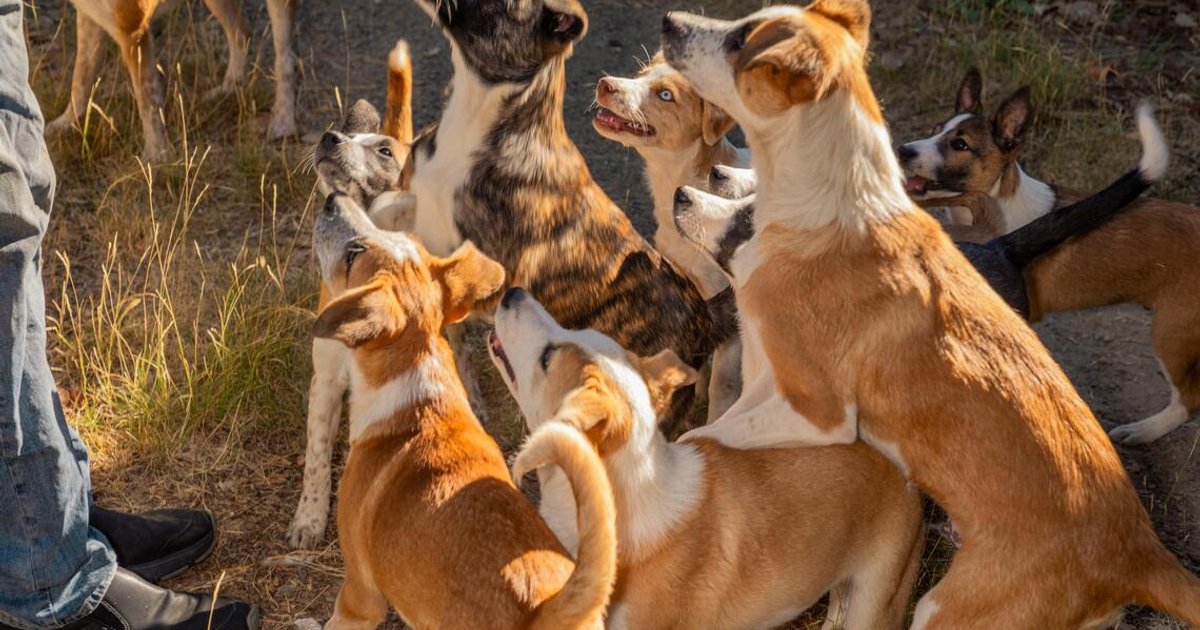
Domestic animals have long reflected the anxieties of their keepers rather than their own evolutionary imperatives. Across the Pacific Rim, affluent households routinely seek companions that promise emotional stability without demanding the strenuous labor of their ancestral working lives. When a Northern California winemaker named Andy DuVigneaud turned his attention from agriculture to genetics in Boonville, his declared objective carried that precise contradiction. Operating under the conviction that an old working McNab strain can yield an ideal domestic pet, he has produced 16 litters of what he terms fox collies, drawing more than 400 enquiries from prospective buyers seeking reassurance in uncertain times.
His project relies on DNA testing and selective pairing to reconstruct a pastoral animal stripped of pastoral friction. DuVigneaud asserts that these dogs can manage ranch work while possessing the temperamental flexibility to ride quietly in passenger seats and relax without neurosis. Describing the result as "the best dog in the world," he has articulated an ambition that the revived line might change the world. Such claims illustrate an increasingly familiar commercial ethos, wherein the biological heritage of working animals is recalibrated to serve human psychological comfort.
The Fantasy of Pastoral Competence
Purebred dogs historically emerged from strict functional necessity. Herding animals required sharp vigilance, relentless stamina, and reactive territorial instincts to defend flocks across open country. High-density urban environments across the Pacific demand the exact opposite traits from companion animals: silence, emotional detachment from external stimuli, and uninterrupted docility.
Prospective owners who submitted the hundreds of inquiries to Boonville are rarely seeking an animal to muster cattle across rough terrain. What they desire is the aesthetic and symbolic presence of rural competence, decoupled from its inconvenient physical demands. The working dog becomes an artifact of grounded self-reliance, reimagined as a domestic tranquilizer for households navigating social turbulence. Biological traits, however, rarely conform cleanly to consumer specifications. Suppressing generations of selected drive through pairing protocols does not automatically erase the energetic tension inherent in pastoral working strains.
Breeders who claim that genetics can deliver an animal uniquely fitted for social instability overstate what canine biology can reliably guarantee. While careful lineage mapping can guide pairings, domestic canine behavior remains heavily conditioned by immediate environment and daily handling. Lineage alone cannot insulate an animal from the stress of confined quarters or erratic human schedules.
Engineering Solace Across the Pacific
This impulse to engineer biological solutions for human restlessness is not confined to rural California. Across modern metropolises throughout the Pacific Rim, pet ownership is increasingly framed as emotional shelter against economic volatility and social alienation. Companion animals are tasked with providing unconditional constancy in societies where human routines feel increasingly fragmented and insecure.
By viewing animal companionship as a hedge against cultural uncertainty, owners shift the burden of emotional repair onto another species. The dog is no longer an agrarian partner in a shared landscape, nor simply a dependent household pet. Instead, the animal functions as a specialized emotional buffer, selectively bred to project ancestral resilience into modern living rooms. Whether 400 prospective owners receive the calm companionship they anticipate matters less than the underlying instinct that brought them to Boonville. When human institutions appear unreliable, society repeatedly turns to nature, attempting to redesign it into a private sanctuary.
Sources
Newsletter
Pacific Daily
A curated briefing from Thailand, Asia-Pacific and the world.