Thai Chemical Spill in Prachin Buri Reveals Depth of Pollution's Human Cost
A toxic leak in Si Maha Phot district highlights how industrial incidents often leave communities with inadequate recourse, despite official vows of legal action.
SINGAPORE
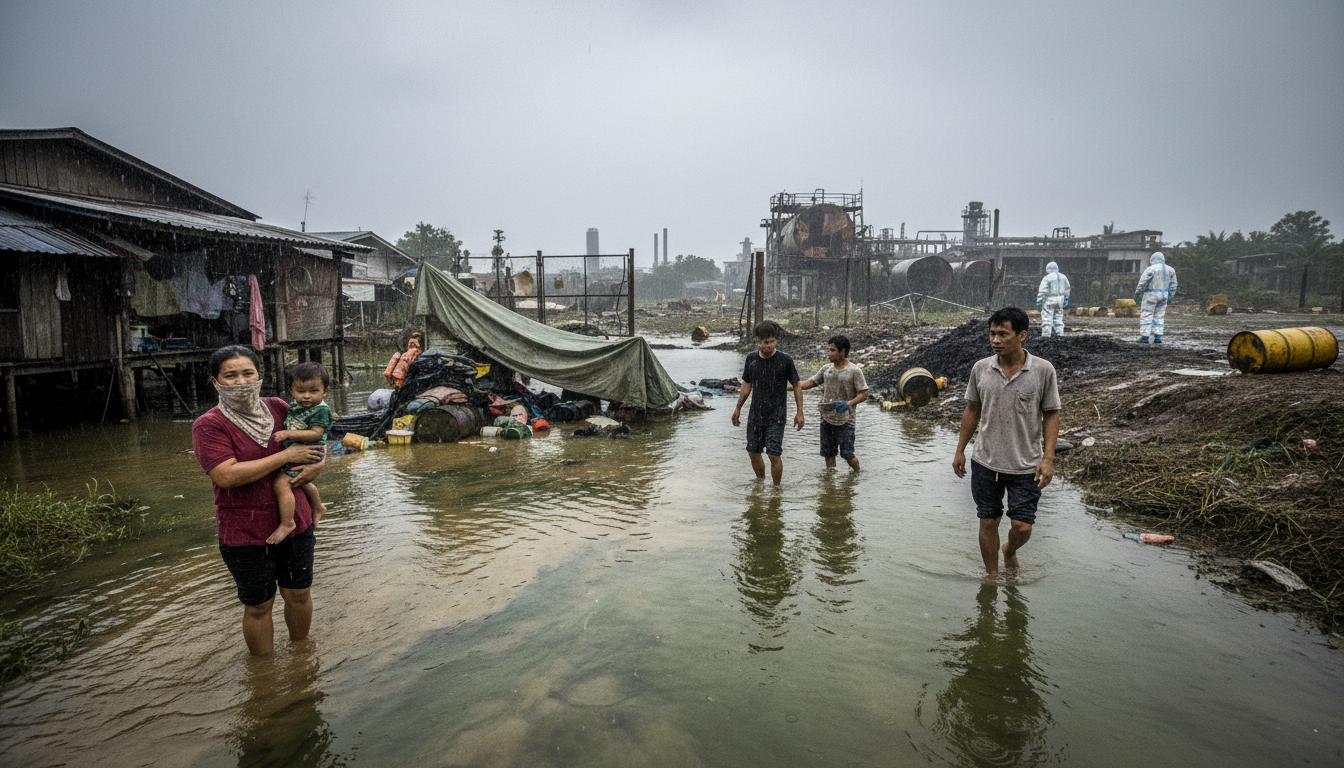
A chemical leak from industrial waste in Si Maha Phot district of Prachin Buri, which worsened local flooding, prompted Deputy Interior Minister Polapee Suwunchwee to vow legal action on Tuesday. Mr. Polapee stated provincial authorities were instructed to investigate possible civil and criminal offenses to bring legal proceedings against the operators. This official response follows an order for an investigation and the shutdown of operations to remove toxic waste from the affected area.
Mr. Polapee also stated that proposed compensation from the operators would not be enough for residents exposed to or affected by the contamination. This acknowledgement suggests that the immediate financial offers often fall short of addressing the longer-term disruptions to daily existence and environmental integrity that local populations face.
The incident in Prachin Buri is not unique. It exemplifies a recurring challenge where the human consequences of industrial activities become deeply personal for those living near affected sites. While ministers pledge legal action, the broader question remains about the everyday costs carried by communities in the wake of such events. This includes not only the visible damage but also the hidden burdens of uncertainty and diminished quality of life.
The scale of potential environmental costs is substantial across the region. A study reported in the Taipei Times in March 2026 estimated that electronics pollution alone could cost USD 500 million in health damages by 2030. Such figures underscore the significant human and economic toll of industrial byproducts when not properly managed. While some jurisdictions, like Singapore as noted in The Straits Times in October 2026, monitor air quality with specific laws to address pollution, the direct responsibility for a localized chemical leak often rests with specific companies. This creates a complex chain of accountability that frequently focuses on reactive measures.
Taking legal action is a necessary step to hold specific companies accountable. Yet, the effectiveness of such measures depends on the thoroughness of investigations and the impartiality of enforcement. Past instances, such as those detailed in the South China Morning Post in 2019 regarding data manipulation and corruption impacting green efforts, indicate that even well-intentioned policy can face implementation challenges. For the residents of Si Maha Phot, the immediate concern involves the safety of their environment and the adequacy of support; the long-term implication revolves around whether this incident will catalyze systemic improvements or primarily result in temporary measures against a few named entities.
This situation in Prachin Buri highlights a critical tension: the need for industrial activity versus the right of communities to a clean and safe environment. Mr. Polapee’s rejection of the operators' compensation offer suggests an understanding that the real cost extends beyond simple financial restitution. The incident reinforces that while the benefits of industry often accrue broadly, the costs of its failures are frequently concentrated on a few, imposing a heavy daily burden on those who live near the source of contamination.
Sources
Newsletter
Pacific Daily
A curated briefing from Thailand, Asia-Pacific and the world.