Singapore Airlines and the Frailty of Cabin Design
A public pledge by chief executive Goh Choon Phong to re-examine business class colours reveals the sensory limits of premium long-haul interiors.
SINGAPORE
Long-distance flight strips travel down to continuous visual exposure. Passengers confined to an aircraft seat for twelve hours do not observe interior design as a retail display; they inhabit it as an artificial climate. Cabin walls, partitions and textile finishes become the sole visual horizon under pressurised air and muted cabin illumination. In that enclosed geometry, minor aesthetic missteps magnify quickly into acute sensory fatigue.
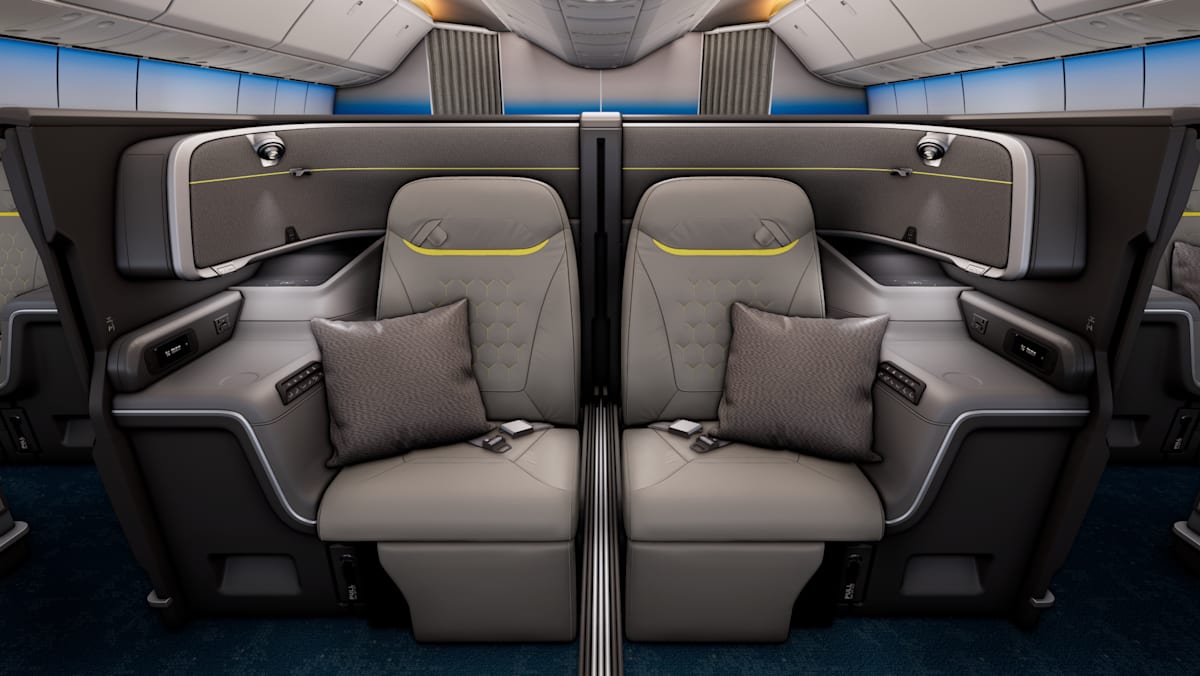
That tension surfaced in Singapore on Thursday, Nov 12, when Singapore Airlines chief executive Goh Choon Phong acknowledged that the carrier will review feedback regarding its new cabin products, specifically addressing the business class colour scheme. Addressing public reactions to the newly revealed interiors, Mr Goh confirmed that the airline is exploring "further refinements" to enhance the passenger journey. For an Asian network carrier whose reputation has rested on measured consistency, pausing to reconsider the visual tone of its flagship hardware is a notable corporate adjustment.
The Architecture of Passenger Fatigue
Long-haul aircraft cabins are among the most expensive industrial spaces in commercial transport. Heavy engineering dictates seat pitch, aisle access and shell weight, yet consumer judgement often hinges on atmospheric subtleties that engineering teams underestimate. Premium carriers frequently alternate between conservative neutrals and assertive corporate palettes. When an airline chooses tones that feel either too clinical or excessively sharp under artificial lighting, the cabin environment shifts from an enclave of rest into an abrasive workplace.
Visual fatigue operates independently of physical comfort. A seat can offer generous reclining angles and seamless lie-flat surfaces, yet a dissonant colour scheme can leave long-haul travellers feeling subtly unmoored. High-fare corporate travellers moving between major regional hubs such as Singapore and regional capitals spend substantial portions of their working week inside these narrow tubes. For those passengers, visual calm functions as a baseline utility rather than an optional decorative luxury.
The airline will also be exploring "further refinements" to enhance customers’ travel experience.
Counterarguments naturally defend bold interior choices. Design teams often point out that initial public reactions to cabin revamps tend to skew conservative, reflecting nostalgia for older, familiar cabin environments. Given time, travellers frequently adjust to contemporary textiles and mood-light calibrations. Yet the decision by Mr Goh to address the business class palette directly indicates that feedback crossed a threshold beyond routine passenger hesitation.
The Commercial Cost of Refinement
Altering cabin finishes is neither swift nor trivial in civil aviation. Retrofitting seat fabrics, changing bulkhead laminates and modifying composite panels require rigorous certification, precise manufacturing schedules and downtime for operating aircraft. An airline cannot simply repaint an aircraft interior over a weekend. Every modification must balance supply chain lead times against the demanding operational rosters of an international widebody fleet.
Regional competitors across Asia will monitor this recalibration with intense interest. As network carriers across the Asia-Pacific compete for high-yield premium passengers, small differences in cabin atmosphere influence corporate travel choices. The passenger does not choose an airline solely for punctuality or route networks; the promise of an unharried, quiet visual space remains central to the value proposition of business class travel.
By acknowledging customer impressions and committing to review cabin products, Singapore Airlines demonstrates an awareness of these subtle commercial stakes. Modern aviation marketing frequently celebrates seat dimensions and entertainment hardware, yet the true test of long-haul travel remains elemental: whether a passenger emerges from an enclosed cabin rested or visually exhausted. A cabin palette is never merely decorative; it establishes the emotional climate in which international passengers endure the hours between departure and arrival.
Sources
Newsletter
Pacific Daily
A curated briefing from Thailand, Asia-Pacific and the world.