Prime Real Estate Enclaves Reshape Urban Land Use on Witthayu Road
Joint venture residential developments target international capital while testing the limits of central metropolitan space
SINGAPORE
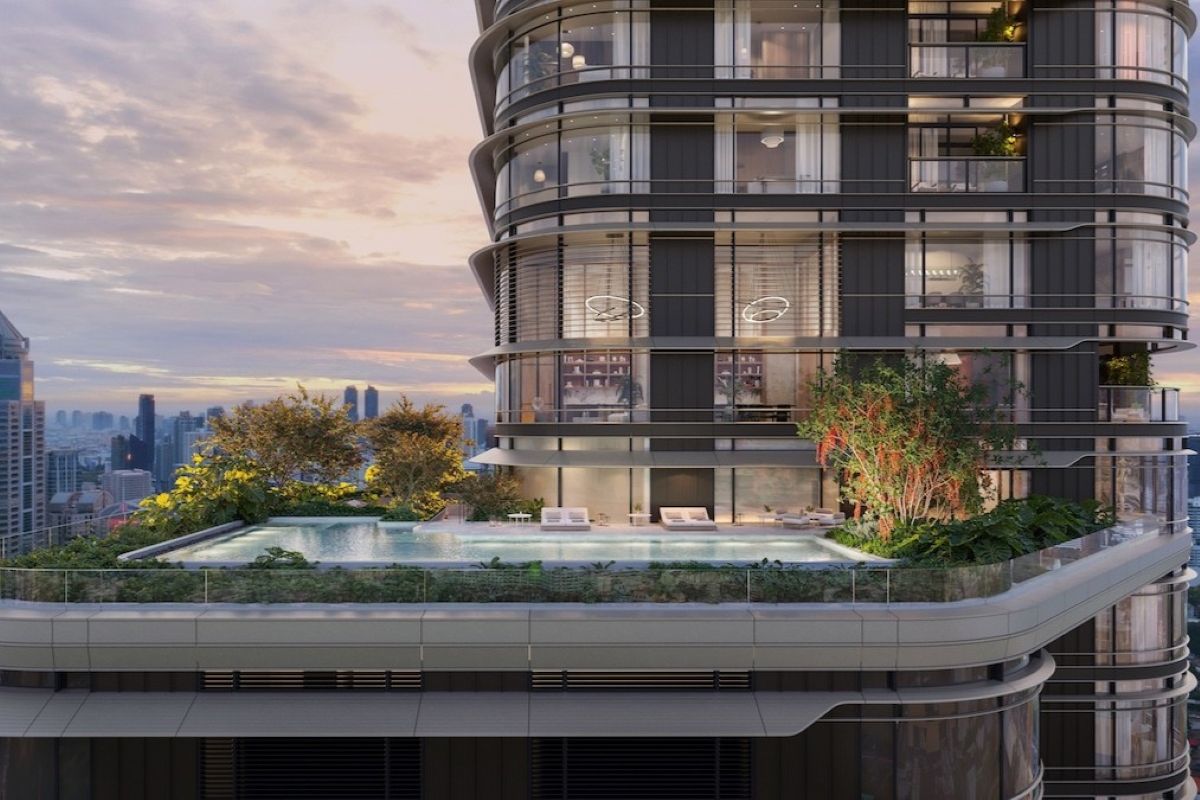
Private viewing appointments began on Witthayu Road this October for the first residential units developed under the hospitality identity of Upper House. The opening of the Upper House Residences Lounge signals an unambiguous shift in how prime metropolitan land is allocated. Operating through a joint venture vehicle named City Dynamic, domestic firm City Realty and Hong Kong-based Swire Properties have combined resources to introduce Upper House Residences Bangkok alongside The Wireless Residences by Upper House. For decades, hotel groups maintained a clear boundary between short-term hospitality and permanent shelter. That division is dissolving along one of Bangkok's primary thoroughfares.
Branded residential developments function on a distinct economic logic. Instead of offering accommodation to transient travellers, property partnerships package residential addresses through hotel operational styling and serviced hospitality management. Swire Properties already maintains hotel operations through East and Upper House across Hong Kong and Mainland China. Applying that brand equity to residential property on Witthayu Road indicates that commercial partnerships increasingly treat prime urban geography as an export product for mobile private wealth.
Shifting Land Use Priorities
Residential investments of this profile alter how land allocates municipal value. When prime metropolitan corridors turn toward high-end residential holdings, surrounding commercial services inevitably recalibrate their offerings to accommodate an elite residential base. Local retail, dining and transport amenities align with resident spending patterns rather than the daily requirements of common wage earners. Ground-floor businesses and service providers face escalating lease requirements as plot values rise in response to concentrated capital expenditure.
Every square metre assigned to restricted residential enclaves represents physical space removed from broader public access. The core tension sits between private property development rights and citywide spatial equity. Proponents of cross-border real estate partnerships point out that international joint ventures deliver direct capital inflows. Such partnerships demonstrate commercial confidence in Bangkok during uncertain regional market cycles. The incoming investment can stimulate construction employment, generate technical collaboration between regional developers, and establish high architectural standards within central districts.
Yet capital inflows concentrated in residential assets do not circulate evenly through the wider metropolitan economy. While specialized construction firms and project consultants secure revenue, ordinary neighbourhood commerce rarely captures long-term benefits from closed residential compounds. The buyers occupying these units maintain expenditure profiles disconnected from standard municipal living costs. When a district becomes dominated by walled sanctuaries offering managed domestic services, surrounding streets often lose their mixed-income commercial fabric.
The Broader Metropolitan Trade-off
Cross-border investment flows also expose urban planning vulnerabilities across Southeast Asian capital cities. When developers from established financial centres replicate high-margin property formats abroad, land prices climb ahead of local median wage growth. Property value appreciation along Witthayu Road establishes valuation benchmarks that ripple through adjoining sub-districts. Property owners in neighbouring streets adjust their rental expectations upward, compounding lease pressures on domestic small enterprises.
City authorities face an enduring policy question regarding how much central space can be surrendered to speculative and high-end residential assets. Without planning mechanisms that capture land value increments for community infrastructure, such projects insulate private residents while exporting commercial friction to adjacent areas. The introduction of private residences on Witthayu Road confirms that global hospitality brands view Bangkok residential property as viable investment inventory. Whether this development model leaves central urban districts functional for ordinary working residents depends entirely on municipal oversight.
Sources
Newsletter
Pacific Daily
A curated briefing from Thailand, Asia-Pacific and the world.