Mobile Dental Clinics Expose the Real Cost of Cheap Sugar in Mongolia
Charity vans can fill cavities across vast steppes, but processed diets still outpace public healthcare budgets.
SINGAPORE
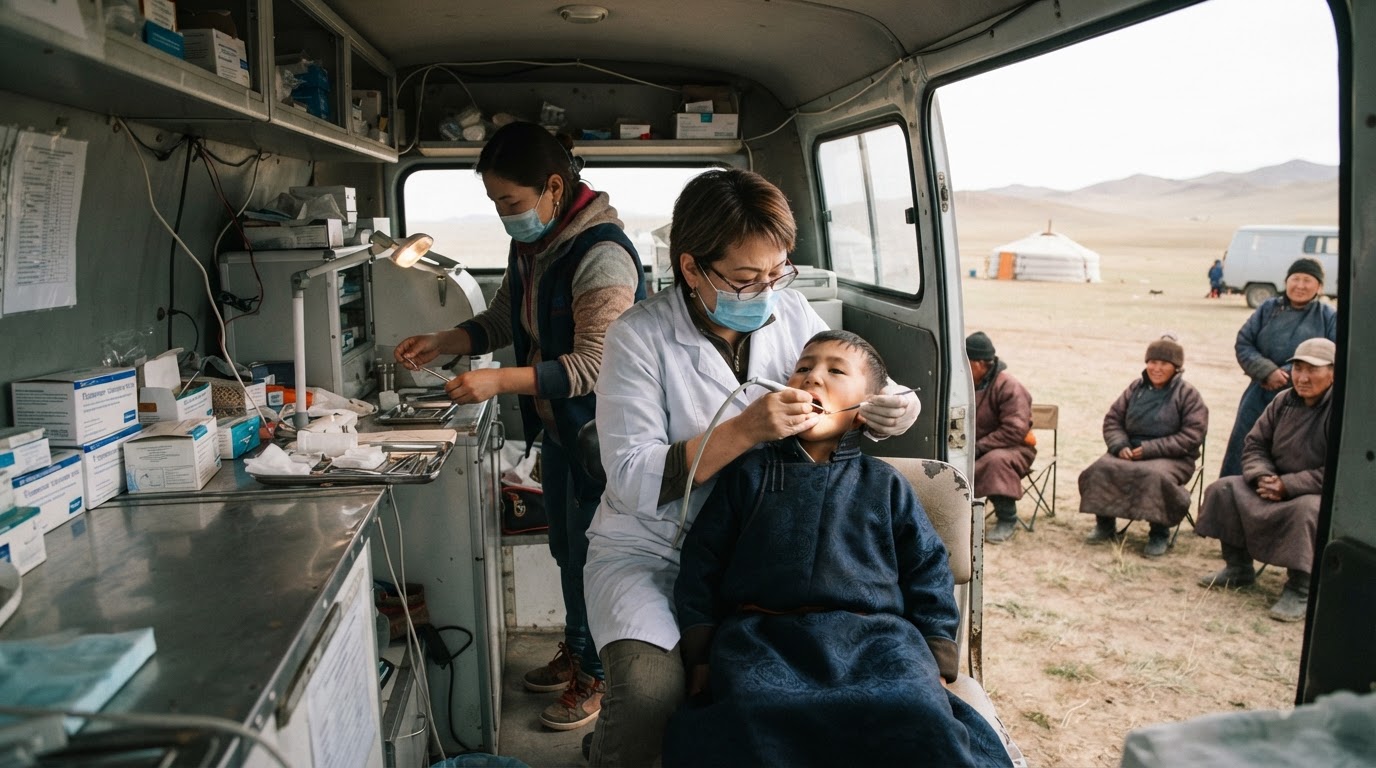
Inside a traditional Mongolian ger in the sprawling suburbs of Ulaanbaatar, children queue to have their teeth examined at a mobile clinic. Outside, vehicles operated by the Misheel Kids Foundation prepare to navigate vast distances and frigid temperatures. The scene, documented in recent reporting from the capital, captures a public health strain: hundreds of thousands of Mongolian children suffer from untreated dental problems. What takes place inside these mobile treatment rooms reflects a stark pattern of modern commerce. Shelf-stable goods reach peripheral settlements long before basic clinical dentistry becomes locally available.
The underlying driver begins at the grocery stall. For households managing tight monthly budgets on the outskirts of Ulaanbaatar and across rural communities, packaged snacks and sugary drinks have become everyday staples. These items are cheap and readily transportable across rough terrain. Sugary calories offer an immediate, affordable way to fill lunch bags where fresh alternatives remain expensive. Yet that household savings calculation carries an aggressive deferred cost. When tooth decay sets in, the expense of specialised treatment rapidly outstrips what an ordinary family budget can sustain.
The Van and the Clinic
Commercial supply chains move with speed, whereas medical infrastructure lags years behind. In remote districts, permanent dental surgeries are scarce or entirely absent. A child suffering from severe decay rarely has access to a nearby public dentist. Seeking treatment in Ulaanbaatar demands heavy outlays for transport and lodging, rendering private clinics inaccessible for families living on low incomes.
This institutional gap is where the Misheel Kids Foundation, operating mobile dental units, intervenes. By driving clinical teams directly into ger settlements and distant provinces, the organisation spares families catastrophic travel expenditures. Dentists examine teeth and treat cavities on site, halting oral pain that would otherwise disrupt schooling and child nutrition.
Yet charitable operations also illuminate the boundary between temporary relief and systemic stability. Relying on an NGO fleet to treat hundreds of thousands of patients across vast geographical expanses represents an uphill battle. Mobile clinics can repair an acute cavity, but they cannot change the retail networks that sell sweetened beverages in remote outposts. A resin filling placed inside a suburban ger does not alter the local water supply, nor does it make fresh groceries cheaper than packaged sweets.
Limits of Mobile Interventions
Advocates of mobile dental programs point out that waiting for permanent regional hospitals condemns young children to irreversible dental harm. Under that practical view, converted dental vans represent an efficient deployment of scarce resources across a sparsely settled country. The pain relief provided to a suffering child is immediate and tangible.
Nevertheless, emergency treatment cannot substitute for a coherent national health prevention strategy. When primary dental services depend on mobile units battling sub-zero conditions, care inevitably remains intermittent. Children receive sporadic checkups rather than ongoing preventive hygiene. From a public expenditure standpoint, treating advanced decay after it becomes painful is far more expensive than preventing disease through school-based oral health programs.
Tackling Mongolia’s childhood dental emergency requires deeper structural measures than charitable mobile vans can supply on their own. Long-term progress depends on whether health authorities establish permanent clinical capacity in regional hubs while confronting the widespread marketing of cheap processed foods. Until public health delivery matches the reach and efficiency of commercial food distribution, the true cost of cheap sugar will continue to land squarely on family finances.
Sources
Newsletter
Pacific Daily
A curated briefing from Thailand, Asia-Pacific and the world.