A New Gate Between Hong Kong and Mainland China Shifts Regional Connectivity
The capacity of the Huanggang Port suggests a recalibration of cross-border movement, with implications for trade and demographics beyond its immediate vicinity.
HONG KONG
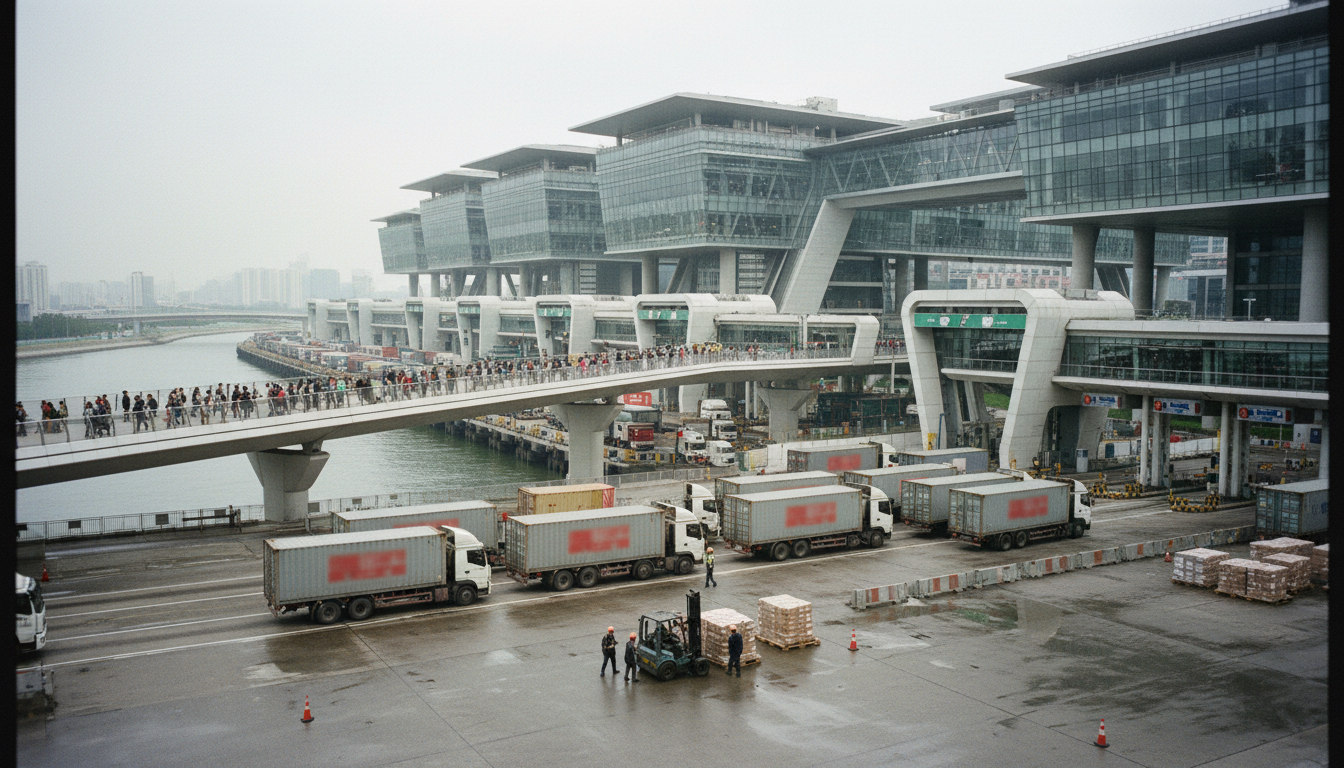
The new Hong Kong-China checkpoint, capable of handling 200,000 trips a day at a single gate, represents a significant increase in cross-border processing capacity. While this development is framed as an upgrade facilitating movement between Hong Kong and mainland China, its broader implications extend to regional strategic planning.
Historically, border infrastructure reflects not only immediate travel needs but also long-term policy priorities. This specific capacity suggests an emphasis on high-volume movement, allowing for more people to travel between the two jurisdictions. For Hong Kong, where identity and autonomy have long been salient, changes to the mechanisms of access with mainland China can signify a subtle but important shift in its gateway role. Hongkongers, able to use either their ID or a home return permit at the revamped Huanggang Port, experience a procedural streamlining.
The increased throughput capability carries economic consequences. While the immediate effect might be smoother transit for individuals, such infrastructure also underpins the movement of labor, goods, and capital, albeit indirectly. Thailand, an economic hub in Southeast Asia, observes similar infrastructure developments across its own borders, particularly with neighboring Cambodia and Laos. The pattern of enhanced connectivity frequently aims to foster economic integration, with varying success and unintended outcomes for local communities near these new arteries.
For the wider Asia-Pacific, investments in large-scale cross-border infrastructure, such as the Huanggang Port, illustrate a continued commitment to regional mobility. However, the precise nature of this mobility — whether it is primarily driven by economic imperative, political integration, or a combination — warrants careful consideration. The challenge for policymakers, both in China and across the region, lies in balancing the benefits of increased connectivity with potential societal and environmental costs. The question remains which coastlines, literal or figurative, ultimately bear the costs for policies often drafted in inland capitals.
Sources
Newsletter
Pacific Daily
A curated briefing from Thailand, Asia-Pacific and the world.