Zelenskyy's Conditional Election Offer Marks Tactical Shift Amid External Pressures
Ukrainian President Volodymyr Zelenskyy's proposal to hold elections following a 60-day Russian ceasefire signals a strategic recalibration, linking internal political processes to external military conditions.
SINGAPORE
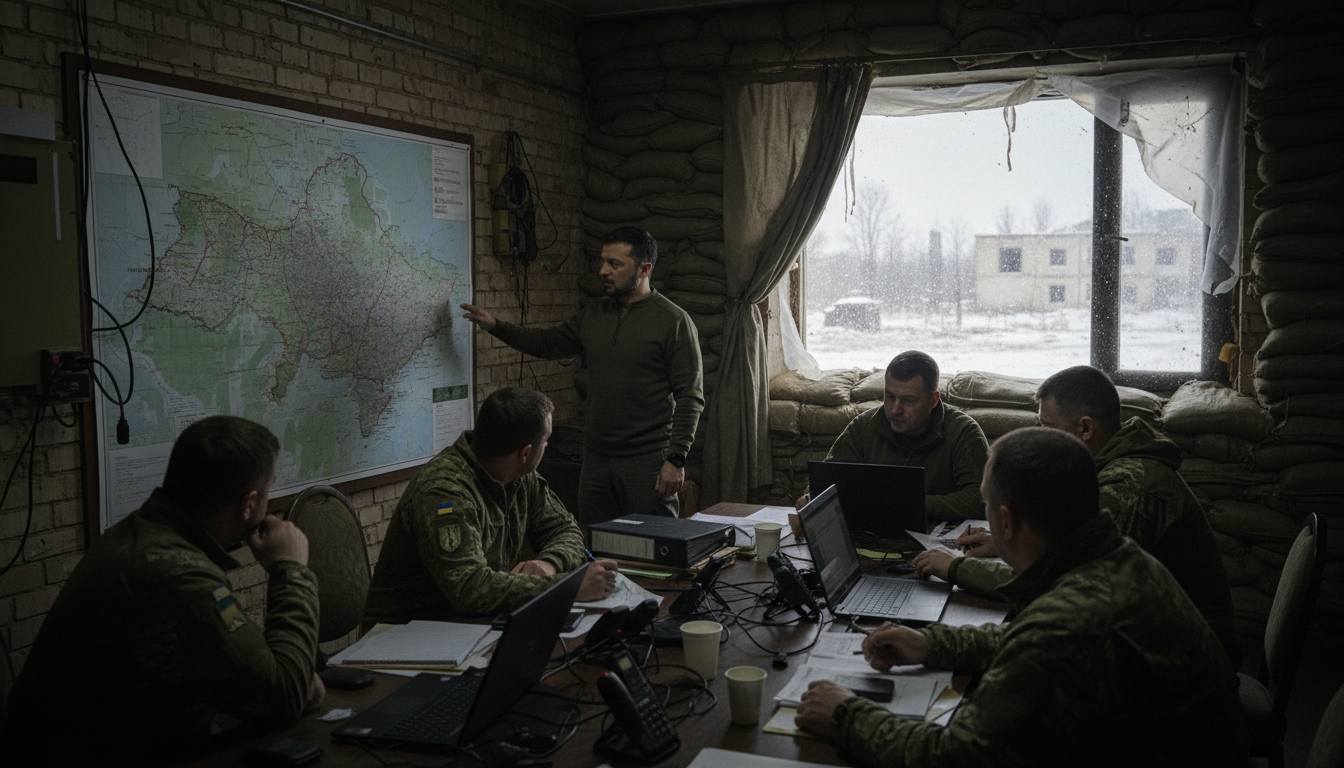
Ukrainian President Volodymyr Zelenskyy told ABC on Sunday, October 11, 2026, that elections could be organized if Russian President Vladimir Putin agreed to a 60-day ceasefire. "Please tell Putin, give us two months, 60 days of total ceasefire, 60 days, and we will organise elections," Zelenskyy stated. This conditional offer diverges from earlier positions. In August 2026, Zelenskyy rejected a rival's call for a vote, arguing it would 'split' Ukraine and risked destroying the country.
This conditional offer suggests a new assessment of Ukraine's internal political dynamics. Previously, holding elections under conflict conditions was viewed as too destabilizing. The new proposal establishes a specific, measurable condition for a significant political event. Linking national elections to a temporary halt in hostilities, rather than a definitive end to the conflict, highlights a tactical shift in Ukraine's strategy for achieving even limited stability.
Global instability, particularly from major conflicts, generates economic and political ripple effects across the Asia-Pacific region, including Thailand. Disruptions in global energy markets or supply chains directly impact import costs and inflation. While a 60-day ceasefire in Ukraine would not resolve the broader conflict, any period of de-escalation could temporarily alleviate some pressures on commodity prices and enhance supply chain predictability. The region, which relies on stable international trade, benefits from any measure that reduces global economic volatility.
The proposal also positions Ukraine's internal political processes as a variable in potential peace negotiations, rather than a fixed internal matter. This public declaration follows US President Donald Trump's criticisms. Trump on Saturday criticised Zelenskyy for attacking Russian oil refineries. The US President also said Russia and Ukraine reached an 'energy ceasefire', though no details were given. Zelenskyy, responding to this on Sunday, October 11, 2026, also defended attacks on Russian oil refineries, stating "it's up to Ukrainians" to choose their leaders. This earlier assertion of national agency contrasts with the new offer, which directly links a key internal process to specific external conditions.
The practical complexities of implementing elections under any ceasefire, given displaced populations and occupied territories, present challenges. The offer places the impetus for elections on Russian agreement to a specific, short-term military cessation, requiring Russian engagement. The broader impact of this proposal on regional stability and global economic indicators will hinge on whether this specific condition is met, and how a temporary ceasefire might influence more enduring peace efforts.
Sources
Newsletter
Pacific Daily
A curated briefing from Thailand, Asia-Pacific and the world.