Xpeng's European Shift Signals Broader EV Industry Pressures
The electric vehicle maker's plan to localise production in Europe reflects changing trade dynamics and the increasing importance of regional manufacturing over direct exports for Chinese firms.
SINGAPORE
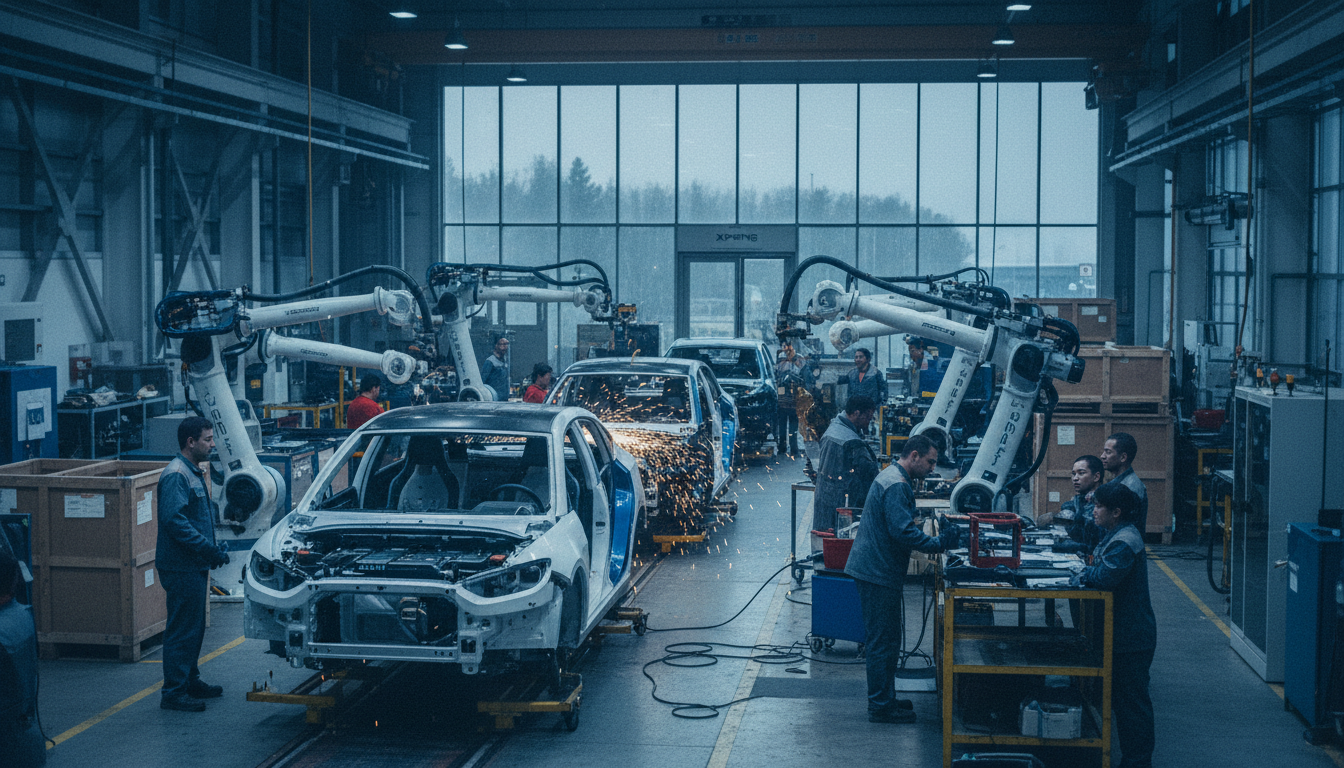
Xpeng’s executive statement regarding expanded European production, aimed at anticipating local content regulations, marks a strategic pivot for one of China’s significant electric vehicle manufacturers. This decision, announced in October 2026, moves beyond the established model of exporting finished vehicles from China, indicating a shift towards in-market manufacturing.
Historically, Chinese carmakers have focused on direct exports to gain market share in Europe. This approach leveraged domestic production efficiencies and cost advantages. However, the stated need to expand European production ahead of local content rules suggests that this model is becoming less sustainable for sustained growth. The European Union has shown an increasing inclination towards policies that favor regional manufacturing, a trend that could reshape global automotive supply chains.
While the specific nature of these local content rules is not detailed in the available information, the implication is clear: access to the European market for EV manufacturers like Xpeng may increasingly depend on establishing a manufacturing footprint within the region. This development highlights the growing influence of non-tariff barriers and domestic industrial policy in shaping international trade flows for high-value goods like electric vehicles. The move potentially aims to mitigate future tariffs or other restrictions designed to protect European industries.
For Xpeng, a company that displayed its Aridge flying car system and Land Aircraft Carrier (LAC) at the 2026 Paris Auto Show, this production strategy represents an adaptation to evolving geopolitical and trade landscapes. The company’s Chairman and CEO, Xiaopeng He, presented the XPeng G9L electric car at the same event in Paris. The decision to invest in European manufacturing facilities contrasts with the earlier phase of market entry where Chinese EV makers were described as having left established players like GM, VW, and Tesla “in the dust” by July 2025.
This shift is not merely about Xpeng but reflects a broader recalibration within the EV sector. Chinese EV makers have been rapidly expanding in Europe, a trend observed in May 2026. The question then for European suppliers was whether they would benefit from this expansion. Xpeng’s latest move suggests a more direct benefit for European labor and component manufacturers, rather than just market access for Chinese-made products. It suggests that, rather than competing solely on price from an offshore base, Chinese manufacturers are now embedding themselves within the target markets.
However, expanding production in Europe introduces its own set of challenges. Establishing new manufacturing facilities involves significant capital investment, navigating diverse regulatory environments, and building local supply chains. The cost structures in Europe differ considerably from China, potentially impacting the competitive pricing advantage Chinese EVs have enjoyed. The global automotive industry was struggling to compete with China by May 2026, with European carmakers seemingly paving the way for Chinese rivals as market balance shifted. Xpeng’s decision, therefore, represents a calculated risk that the long-term benefits of local integration—including compliance, closer market proximity, and potentially reduced shipping costs—outweigh the immediate financial and operational complexities.
The success of Xpeng’s European production strategy will depend on its ability to replicate its manufacturing efficiencies within a new operational context. This outcome will hinge on effective supply chain management and the capacity to adapt to local labor markets and regulatory frameworks, factors that are not yet resolved for any such expansion.
Sources
Newsletter
Pacific Daily
A curated briefing from Thailand, Asia-Pacific and the world.