Worrell 1000's Social Media Gambit for 2028: Access or Artifice?
An offshore catamaran race aims for global visibility via social media, raising questions about genuine engagement versus manufactured scarcity.
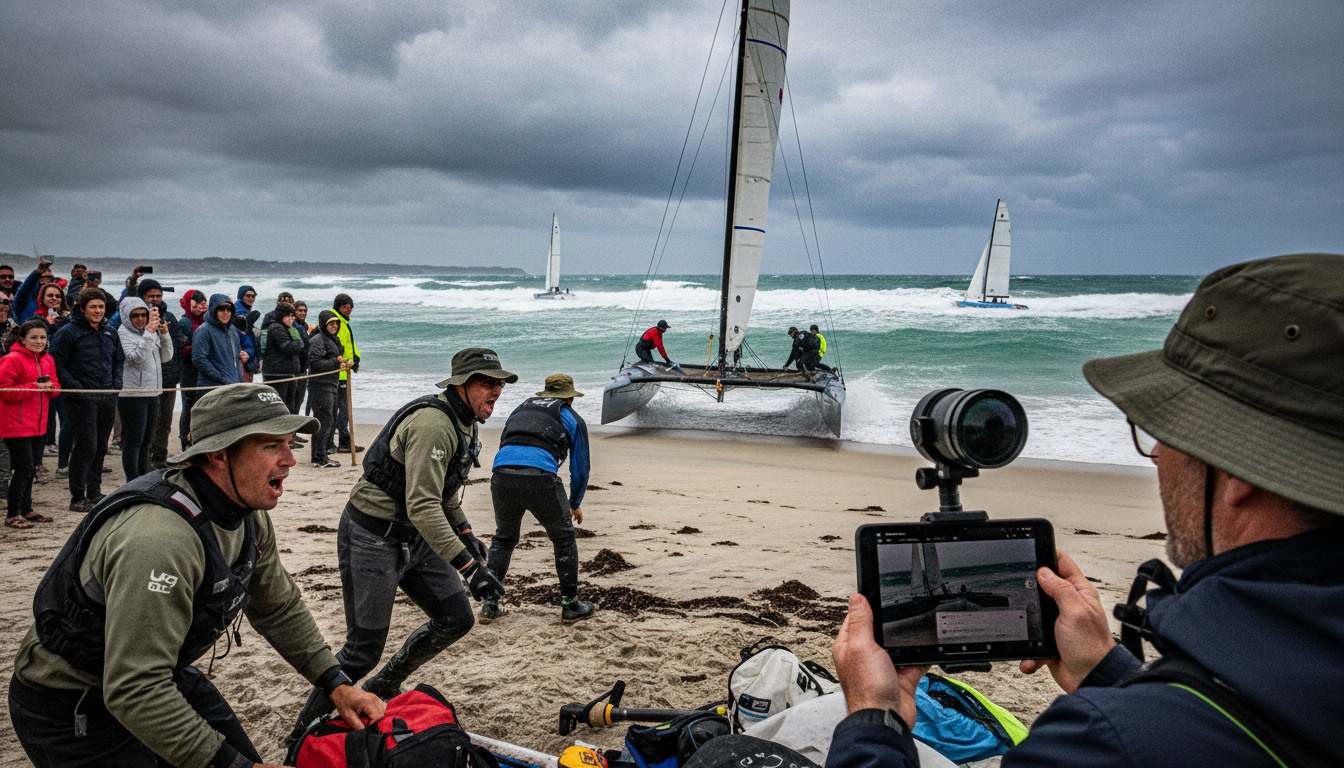
The Organizing Authority for the Worrell 1000 offshore catamaran race has announced a global orientation seminar delivered via Facebook Live. This initiative precedes the event's 2028 Legacy Run, positioning a niche athletic competition for broader reach. The decision to use a global platform like Facebook suggests an ambition for unprecedented access, yet it also invites scrutiny of the motivations behind such digital overtures.
The Worrell 1000, as described, is an "iconic" event, a descriptor often applied by those with a vested interest in its perceived value. Associating this event with a “Legacy Run” for 2028 further frames it as significant, though the underlying evidence for this significance is limited to the organizing body’s own framing. The move to a digital-first global seminar could be interpreted as a pragmatic response to the logistical challenges of international engagement for a specialist event. It enables a wider audience to participate without the expense or travel demands of physical attendance.
However, the deployment of Facebook Live, a platform whose parent company Meta faced scrutiny for its content moderation policies and data privacy, introduces a distinct tension. Meta, for example, started removing Australian children from Instagram and Facebook in 2025, and has faced accusations of waging infowar in the Philippines in the same year. These instances highlight the complexities and potential liabilities associated with relying on such platforms for global outreach. While providing instant connectivity, these platforms also curate user experience through algorithms and terms of service that are not always transparent. The promise of global access through Facebook Live must therefore contend with the realities of the platform’s control over information dissemination.
For an event seeking to elevate its profile, leveraging a widely accessible digital channel could theoretically expand its audience beyond traditional sailing enthusiasts. This expansion might attract new sponsors, participants, or spectators, thereby increasing the commercial viability of the 2028 Legacy Run. The cost-efficiency of digital distribution compared to traditional media or physical events is clear. Yet, a crucial question remains: does this digital strategy genuinely broaden the appeal of offshore catamaran racing, or does it merely provide a veneer of accessibility over a fundamentally niche pursuit?
Reliance on a single platform for a “global” seminar could also limit true global reach. Different regions have varying internet access, digital literacy, and platform preferences. Moreover, the long-term engagement generated by a single digital event for a 2028 competition is speculative. The announcement frames the event as “highly anticipated,” but the evidence supporting this anticipation is not specified. The utility of the seminar itself, whether it addresses technical aspects of the race or merely serves as a promotional vehicle, also impacts its effectiveness. The Worrell 1000’s strategy represents an attempt to bridge the gap between a specialized sport and a broader, digitally connected world, but the extent of its actual impact on the event’s legacy remains an open question.
Sources
Newsletter
Pacific Daily
A curated briefing from Thailand, Asia-Pacific and the world.