Why Themed Resort Rooms Carry Hidden Costs
Legoland Hotel Malaysia adds urban-themed inventory to deepen guest capture, but custom room footprints test commercial returns.
SINGAPORE
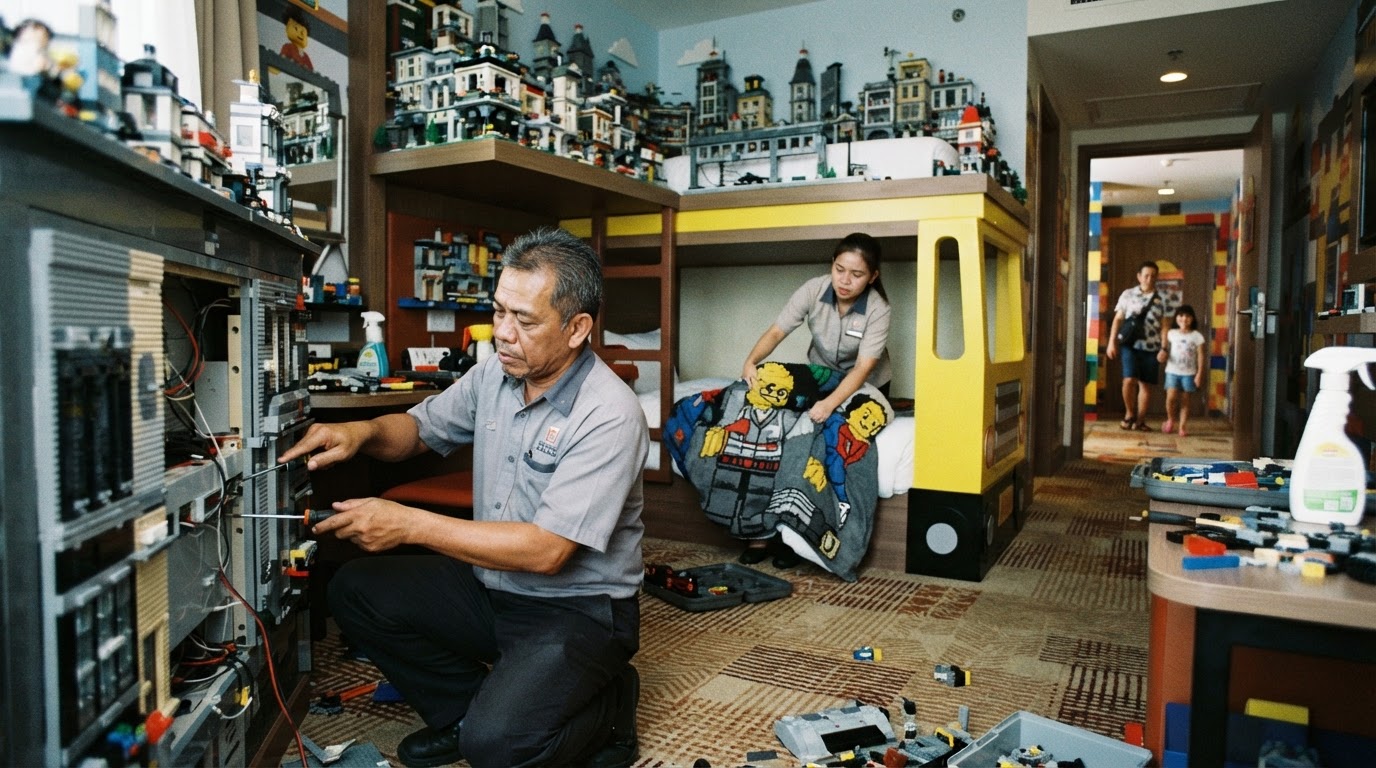
Convincing theme park ticket holders through turnstiles is often far simpler than holding them on the grounds until the next morning. Legoland Hotel Malaysia has added Lego City-themed rooms to its accommodation line-up, making stays available for spaces decorated with police officers, firefighters, construction crews and deep-sea divers. Each unit divides adult areas from children, deploying a bunk bed and a pull-out trundle bed designed to accommodate up to three children alongside an in-room treasure hunt. The immediate commercial ambition is unmistakable: convert single-day theme park foot traffic into multi-day resort stays that capture accommodation fees and retail spending under one roof.
Yet specialised lodging inventory imposes capital and operational liabilities that standard hotel rooms rarely encounter. Fitting bespoke wall graphics, themed joinery and dedicated play fixtures demands considerable capital outlay that deteriorates quickly under the heavy wear of travelling family groups. Standard hospitality rooms withstand normal occupancy cycles with predictable housekeeping routines and routine linen turnover. Immersive quarters, by contrast, require immaculate aesthetic upkeep. A chipped wall panel or broken decorative element directly punctures the themed environment, leaving operators to fund larger maintenance reserves just to preserve premium nightly rates.
The Mechanics of Guest Capture
The economic calculation behind the move at Legoland Malaysia Resort rests on locking in ancillary family expenditure. When a family departs for an off-site commercial hotel at sunset, secondary food outlays and evening purchases vanish from the resort balance sheet. By engineering separate children's sleeping zones and private entertainment activities, the property lengthens domestic dwell time. Keeping young guests occupied within the guestroom ensures that meals, entertainment and branded retail remain confined inside the property boundaries.
The financial return of a themed room hinges on containing family expenditures within the resort boundary.
This physical expansion reflects a broader commercial strategy across the region. Toymaker Lego has pursued dedicated retail growth in India, targeting 50 stores by 2030, while supply chain infrastructure expanded through a Kuehne+Nagel distribution centre in Vietnam announced in 2025. Extending park themes directly into accommodation corridors reinforces this regional brand presence. It translates intellectual property into operational real estate, building customer loyalty that continues long after check-out.
The Off-Peak Occupancy Challenge
The underlying commercial hazard for this hospitality model stems from extreme demand volatility. Family leisure assets experience sharp peaks during school holidays, followed by steep drop-offs across regular workweeks. Conventional business hotels offset weekend slowdowns with corporate accounts and conference bookings. Rooms decorated with municipal emergency vehicles and construction imagery, however, find virtually no takers among midweek corporate travellers. Operators must therefore squeeze substantial rate premiums out of holiday weekends to cover barren weekdays, or discount rooms deeply and risk eroding their brand standard.
Furthermore, the physical permanence of thematic design limits operational flexibility. Standard hotel spaces adjust to various traveller types across changing market seasons. Deeply thematic rooms, however, remain tied to a single customer demographic. As visual properties evolve, operators face recurring refurbishment cycles to keep custom interiors aligned with commercial expectations.
Legoland Hotel Malaysia can depend on family vacation demand to generate high revenue during concentrated peak dates in Malaysia. Whether these capital-intensive quarters generate steady annual returns depends entirely on how management manages the prolonged mid-week occupancy drop. Turning day-trippers into overnight guests remains a sound operational objective, but heavily themed inventory must ultimately justify its capital cost across quiet stretches of the calendar.
Sources
Newsletter
Pacific Daily
A curated briefing from Thailand, Asia-Pacific and the world.