Macao Stages the Machinery of Tourism Resilience
The 12th Global Tourism Economy Forum gathers global delegations to debate structural crisis from inside hospitality infrastructure designed for scale
SINGAPORE
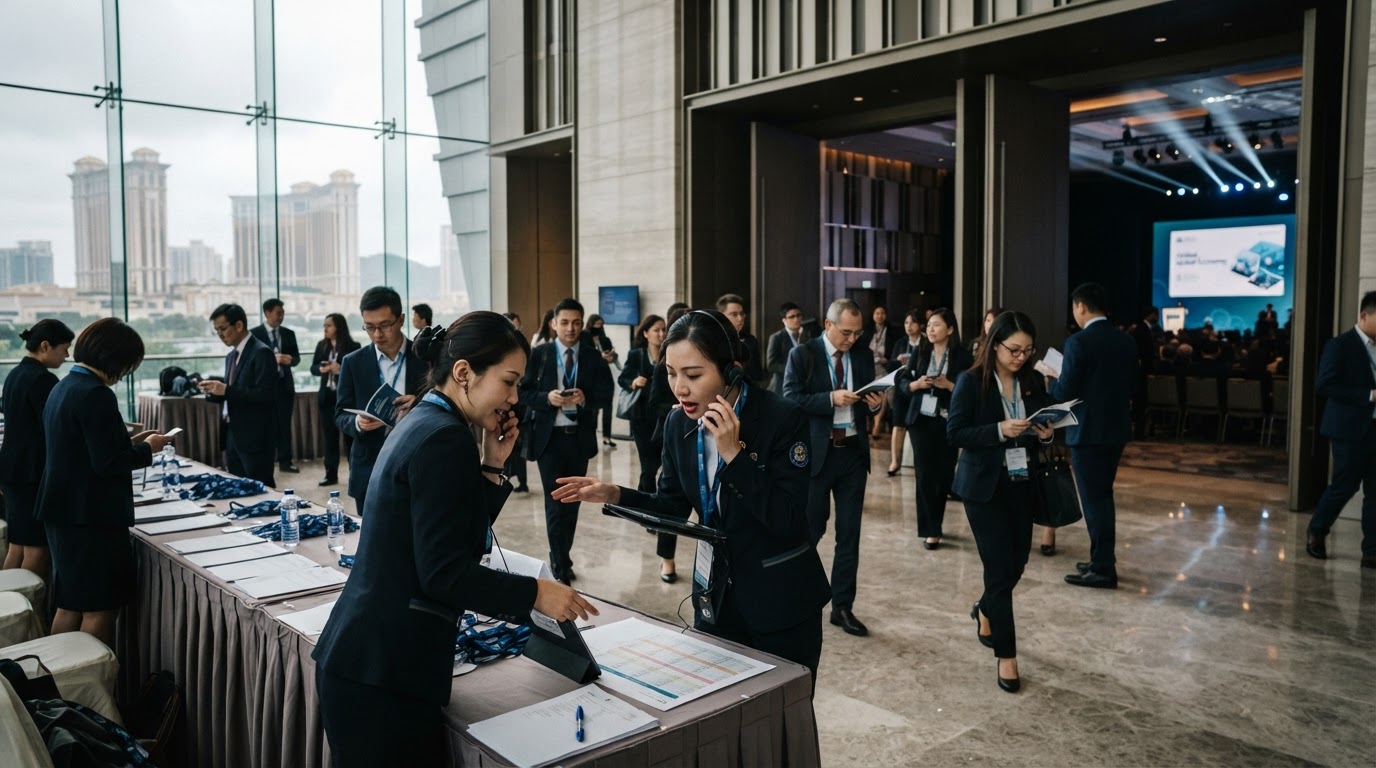
A convention hall operates as an apparatus built to isolate dialogue from external friction. Inside these sealed envelopes, indoor temperatures and synthetic lighting remain strictly regulated regardless of conditions outdoors. In Macao, the 12th Global Tourism Economy Forum opens October 15 to 17 under the title Crisis · Resilience · Evolution – Building a Tourism Economy for a Shared Future. Political leaders and academic elites convene across four programmatic segments to inspect how travel networks absorb shock.
Staging high-level debates on vulnerability inside heavily engineered conference real estate presents an instructive operational contradiction. The host territory has spent decades refining floorplates that channel tens of thousands of visitors through continuous, conditioned interiors. Every corridor steers foot traffic away from natural limits toward commercial momentum. While forum agendas address institutional survival, the physical shell hosting them demonstrates how regional leisure economies remain anchored to intensive energy inputs.
The Architecture of Assembly
The setting reveals the priorities of modern summit design.
Across four curated segments, the gathering brings together state delegations from China, international bodies linked to the United Nations, and researchers from Columbia University. Scheduled contributions from figures including Jeffrey Sachs focus on sustainable development, while project sessions referencing the Marco Polo Drive of Peace frame Eurasia as an interconnected transport zone. These discussions envision frictionless movement across sovereign borders and regional trade corridors. Policy frameworks drafted in such plenaries treat disruption primarily as a management bottleneck solvable through administrative consensus.
Spatial realities tell another story. Destinations engineered around mass arrivals depend on unrelenting physical throughput. Transit concourses and cavernous exhibition halls must operate without pause to justify their capital commitments. When an economy tethers its baseline stability to arrival figures, institutional resilience becomes synonymous with preserving transit velocity. High-minded vocabulary spoken from rostrums inevitably collides with the physical requirements of facilities built to house 30000 individuals across overlapping cycles of consumption.
Limits Within the Controlled Interior
Advocates of large-scale forum planning counter that physical concentration remains irreplaceable. Direct proximity enables bilateral dealmaking between state tourism authorities and corporate operators that digital channels cannot match. Concentrated schedules force disparate state actors into common rooms, establishing administrative alignment along shared transit pathways.
Yet spatial insulation generates severe blind spots. Inside climate-controlled auditoriums, pressing environmental shifts remain hidden behind acoustic paneling. Heavy visitor volumes generate real friction across municipal utility grids and local thoroughfares, but that strain stops outside the security perimeter. Debating crisis management from hermetic chambers encourages solutions that preserve business volume rather than physical habitat.
Destinations across the Asia-Pacific face mounting climatic exposure alongside rising infrastructure maintenance costs. Handling these disruptions calls for spatial restraint and civic resilience rather than perpetual footprint growth. The 12th GTEF demonstrates an enduring habit of addressing physical vulnerability through the mechanics of sheer scale. Real security will remain an unrealized abstraction until tourism facilities prove they can function for host populations during acute crisis.
Sources
Newsletter
Pacific Daily
A curated briefing from Thailand, Asia-Pacific and the world.