Why Modern Polish Threatens the Fragile Architecture of Nintendo's Memory
The divided reaction to the updated Ocarina of Time reveals how technical fidelity can strip the imaginative ambiguity from interactive classics
SINGAPORE
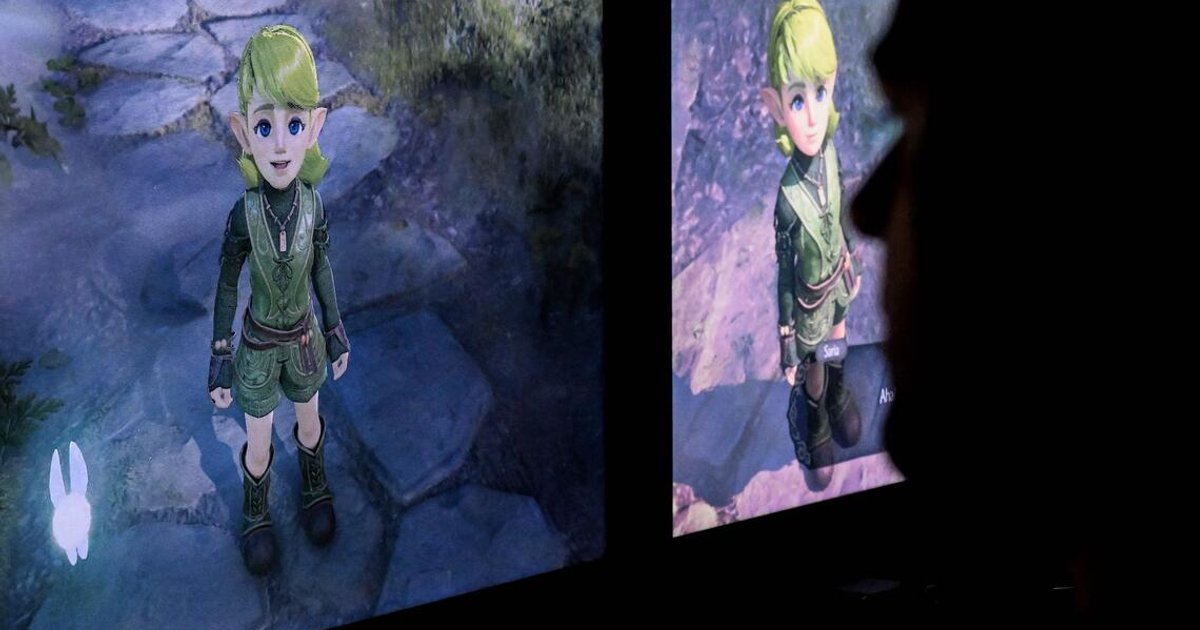
A visual medium matures by learning what to leave unrendered. When Nintendo displayed its remake of The Legend of Zelda: Ocarina of Time at its European headquarters in Frankfurt ahead of a Nov 5 release, the primary dispute was not about mechanical responsiveness or sound. The division among early observers centred instead on surface texture, specifically an aesthetic that struck critics and fans as entirely too polished. That complaint sounds counterintuitive in a sector where technical fidelity has long been marketed as progress, yet it points toward an unwritten compact between Japanese video game design and audience memory. For players who encountered the original work during childhood, excessive visual precision can feel less like an upgrade and more like an intrusion upon an imaginative sanctuary.
Released in 1998 on the Nintendo 64, Ocarina of Time was the fifth entry in the franchise created by Shigeru Miyamoto. The milestone production established three-dimensional navigation standards that still govern interactive storytelling, sending Link on an epic quest against Ganondorf to protect Princess Zelda. Severe technical boundaries in 1998 compelled players to bridge the broad spaces between angular polygon models and impressionistic skies with internal vision. Those low-resolution geometries operated very much like theatrical staging, establishing evocative silhouettes while trusting the human mind to furnish emotional and atmospheric depth.
The Friction of Polish
Modernising such a foundational text often strains the delicate border separating preservation from revision. AFP reported on hands-on access in Frankfurt, where international commentators examined an updated Hyrule shorn of historical grain. What appears to have sparked wariness among dedicated followers was not poor craftsmanship, but the perceived erasure of aesthetic ambiguity. Sharper character models and brighter digital lighting resolve every corner with overt clarity, narrowing the room for subjective interpretation. When an electronic world softens every rough edge, it risks diminishing the personal investments that players formed across decades of contemplation.
Nintendo has confronted this preservation dilemma across its premier intellectual properties before, including handheld iterations in 2011 and historical treatments of Mario. Studio remakes frequently promise fidelity while applying a contemporary sheen that alters ambient mood. Commercial publishers in Japan often treat higher visual resolution as an expected courtesy to modern consumers, operating under the assumption that visual clarity represents straightforward progress. Paul de Barbeyrac of Jeux Video was among the European commentators assessing the refreshed atmosphere against the enduring prestige of the 1998 benchmark. That scrutiny reflects a persistent cultural tension: legacy material cannot simply be scrubbed and refinished without altering the artistic restraint that gave the work its initial weight.
Memory as Co-Author
The wider debate clarifies how communal memory functions across interactive entertainment. Consumers who push back against modern graphic overhauls are rarely arguing for technical obsolescence for its own sake. Instead, those players defend the cognitive space where their early imaginations once served as silent co-authors of the experience. By fixing every blade of grass and smoothing every uneven stone, contemporary rendering techniques can turn an active, interpretative journey into a fixed presentation. The audience is invited to inspect a showroom rather than inhabit an open myth.
Ahead of the Nov 5 release, that friction highlights an ongoing question about ownership in digital heritage. Commercial studios tend to view their archives as software assets requiring periodic visual upkeep, whereas long-time audiences treat them as fixed emotional landscapes. The dispute over Hyrule's new surface suggests that visual fidelity and aesthetic depth do not always move in the same direction.
Sources
Newsletter
Pacific Daily
A curated briefing from Thailand, Asia-Pacific and the world.