White House AI Consolidation Signals Potential Policy Shift
The reported move of AI testing officials to the White House suggests a centralized approach to artificial intelligence governance, interrupting a recent pattern of distributed responsibility and raising questions for Asia-Pacific regulatory alignment.
SINGAPORE
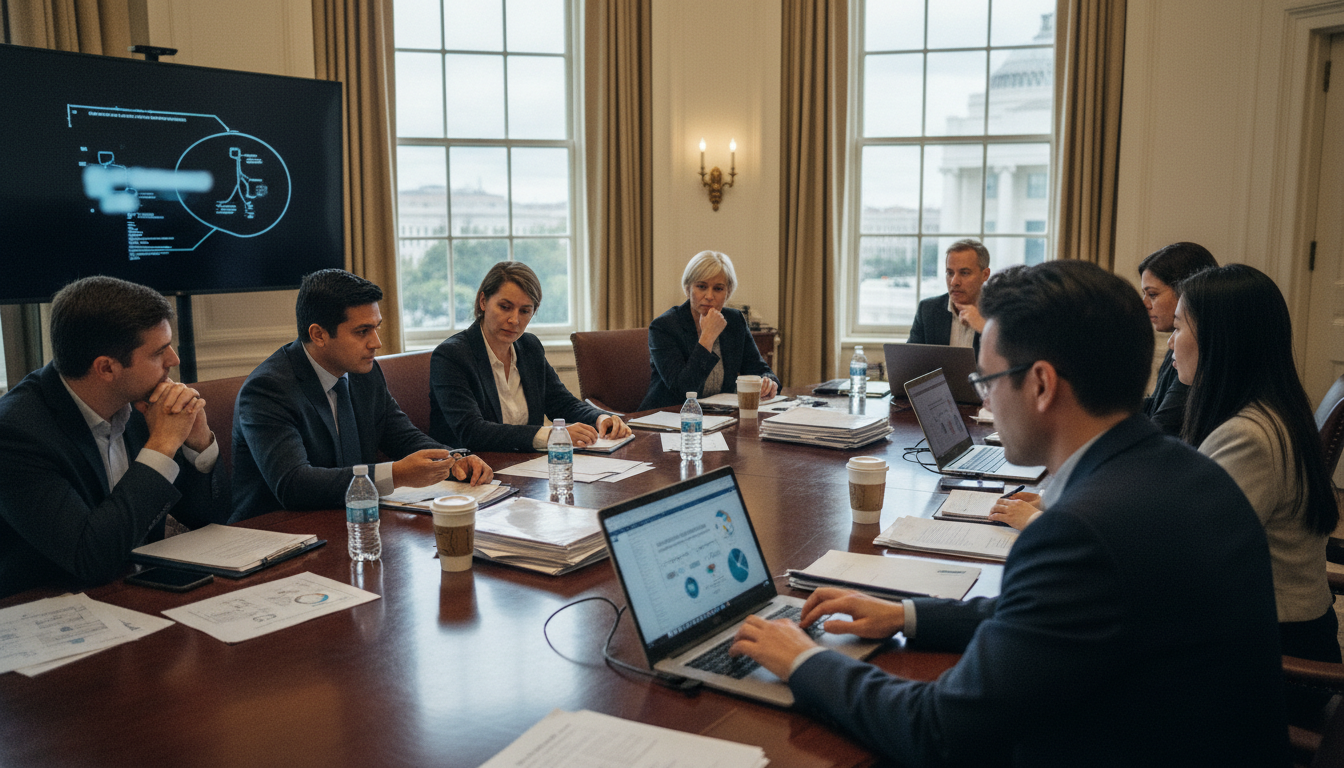
The Trump administration's reported plan to move three senior officials from the Center for Advancing Innovation and Standards for Super Intelligence directly to the White House indicates a significant shift in how artificial intelligence policy might be managed. This consolidation suggests a more direct, centralized approach to AI oversight within the executive branch, contrasting with recent discussions that involved various private and public stakeholders.
Previously, major technology companies like Meta, Anthropic, Google, and OpenAI have engaged with Trump officials regarding AI safety testing. Such engagements, as reported in August 2026, often involve a degree of external consultation, allowing for industry input and technical expertise to inform policy development. Shifting key testing officials to the White House implies a reduced reliance on such distributed input in favor of internal executive control.
This centralizing tendency, if confirmed, presents implications beyond US borders. For nations across the Asia-Pacific that are navigating their own AI regulatory frameworks, a direct White House lead could mean a more unified, and potentially more assertive, American stance on AI standards. This might simplify engagement on some fronts, but it also risks a less flexible or collaborative international approach if decision-making is confined to a smaller, internal group.
The stated goal of the Center for Advancing Innovation and Standards for Super Intelligence suggests a focus on both technological progress and establishing benchmarks. Placing these functions directly under the White House could streamline decision-making, allowing for faster policy responses. However, it also raises questions about the scope of expertise and independence. The Commerce Department, for example, typically brings a broader economic and trade perspective to technological regulation, which could be diminished under a more centralized White House model.
Historically, shifts in governmental oversight of complex technical fields can impact international cooperation. When US administrations centralize control over critical functions, foreign governments often perceive this as either a more focused interlocutor or a less open one. For Asia-Pacific economies, which are both significant developers and adopters of AI technologies, anticipating a clearer, potentially less negotiable, US position on AI standards becomes a key challenge. The full implications of such a move, particularly regarding the development of global AI norms, remain subject to how this centralized authority would interact with established international bodies and diverse national interests.
Sources
Newsletter
Pacific Daily
A curated briefing from Thailand, Asia-Pacific and the world.