Haze Return Signals Enduring Regional Policy Failure
Singapore's recurring air quality degradation, despite temporary improvements, underscores a persistent structural inability to resolve transboundary pollution, with consequences extending beyond public health metrics.
SINGAPORE
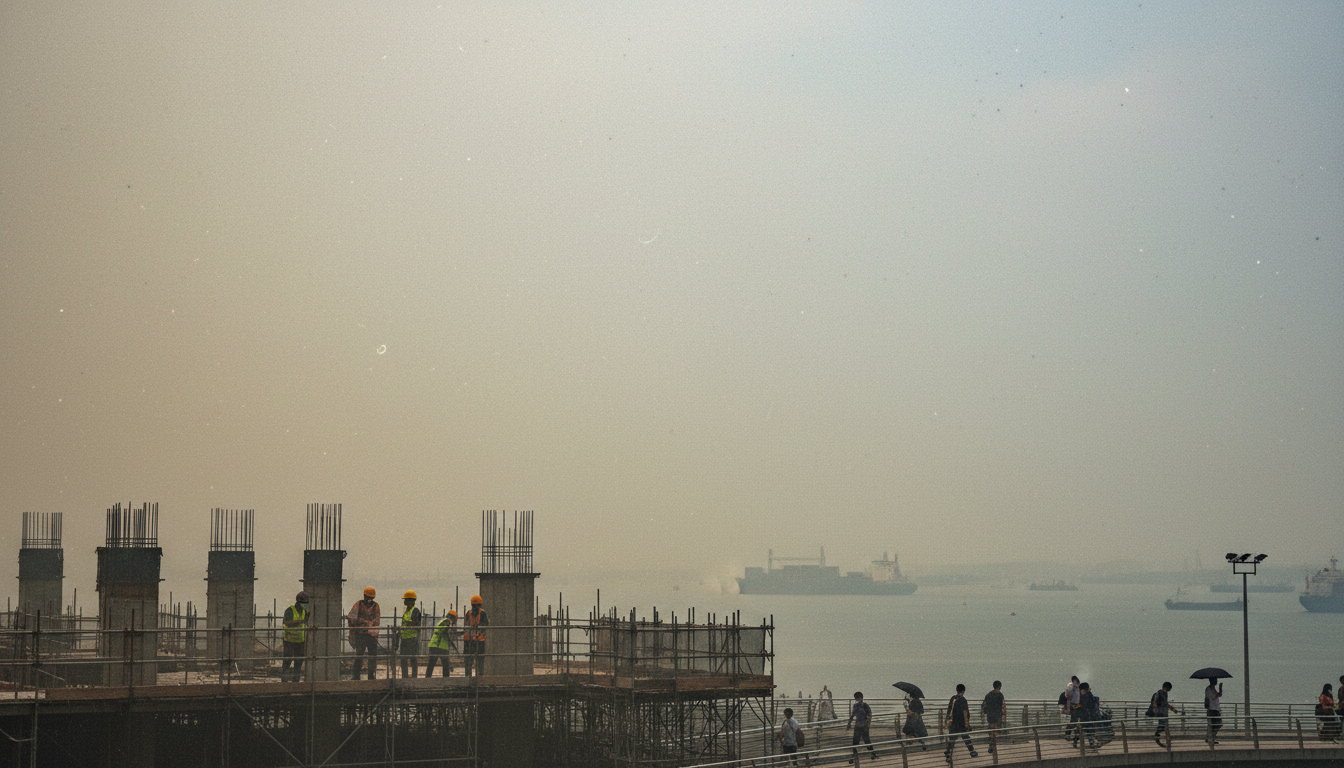
Singapore experienced a period where its central region's 24-hour Pollutant Standards Index (PSI) reached an unhealthy range. This occurred on October 3, 2026, marking a deterioration before air quality subsequently improved to moderate levels that same day. The National Environment Agency forecast continued risk of smoke haze, with PSI expected to remain in the high-moderate to low-unhealthy range.
This specific incident, where the central region's PSI registered 100 at 11pm on October 3, reflects a recurring pattern. Earlier in the week, on September 28, the PSI had already reached an unhealthy range for the first time in two weeks. PM2.5 levels, which indicate fine particulate matter, showed spikes across most regions as haze persisted. While air quality later shifted to moderate, the underlying issue of transboundary haze persists, reflecting an annual challenge to public health and economic stability across parts of Southeast Asia.
The temporary return to unhealthy air quality, followed by a moderation, highlights the reactive nature of responses rather than a fundamental shift in controlling the sources of haze. These sources are largely understood to be agricultural and forestry burning in neighboring countries. While Singapore deploys diplomatic and economic pressure, its direct leverage over external land use practices remains limited. The primary decision-makers, in this structural analysis, reside beyond its national borders, in the jurisdictions where fires originate. Their policy choices, enforcement capacities, and economic incentives dictate the regional air quality.
Some might argue that the situation is improving, citing the quick return to moderate PSI levels and previous periods of clearer skies. Such an argument, however, risks conflating temporary amelioration with systemic resolution. The periodic spikes into unhealthy ranges, even if brief, demonstrate that the structural drivers of haze – particularly land clearing for plantations – continue unabated. The ability to return to 'moderate' conditions often depends on meteorological shifts, not necessarily on a permanent reduction of the source fires.
The unresolved constraint is therefore the absence of a truly unified, enforced regional policy mechanism that can compel source countries to adopt sustainable land management practices. Without such a framework, the health of populations in Singapore, and indeed across other affected parts of Southeast Asia, will continue to depend on seasonal winds and the limited, bilateral interventions rather than a decisive, structural change.
Sources
Newsletter
Pacific Daily
A curated briefing from Thailand, Asia-Pacific and the world.