Singapore's Refund Portal for Beverage Container Returns Signals Operational Hurdles for Regional Schemes
A new digital portal in Singapore addresses refund issues for beverage container returns, revealing the complexity of consumer adoption that impacts circular economy goals across Asia-Pacific.
SINGAPORE
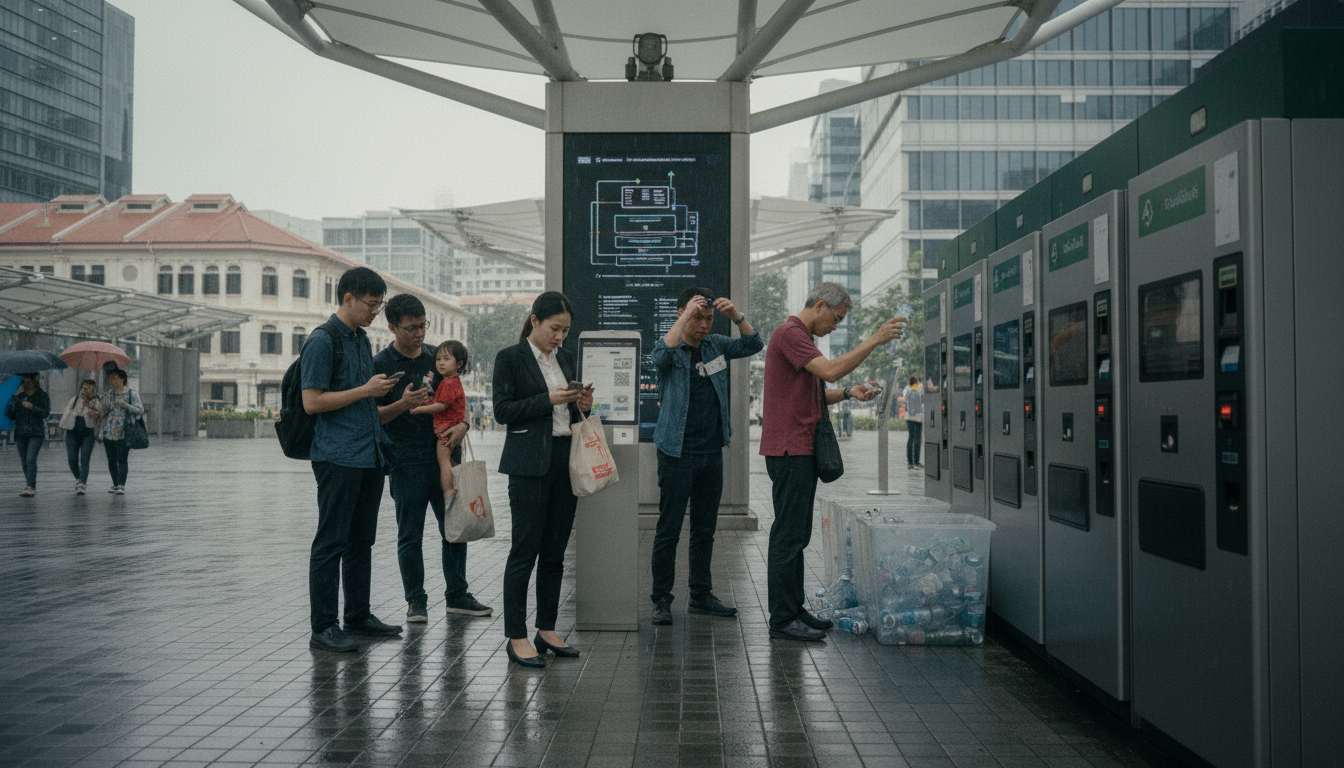
Singapore’s new refund portal, introduced on October 1, 2026, aims to resolve transaction issues within the system for returning beverage containers. This digital intervention emerges as the scheme enters its full rollout, initially at SG Recycle machines in the north and west of Singapore, with islandwide expansion planned. The very existence of such a portal suggests that integrating digital financial transactions with physical recycling infrastructure faces operational complexities.
The portal is designed to manage payment discrepancies for consumers returning beverage containers. This necessity indicates that a seamless link between digital payment systems and physical return points is not inherent. Data often show that points of friction in consumer processes, such as transaction errors, can reduce participation. While the portal seeks to mitigate this, its implementation highlights the administrative requirements involved in managing large-scale return initiatives.
From a regional perspective, Singapore’s experience offers insights for other Asia-Pacific economies considering or implementing similar policies. Many nations in the region are developing strategies to reduce waste, frequently focusing on plastics and beverage containers. However, the operational reality in Singapore demonstrates that policy goals encounter specific difficulties at the consumer interaction level. Implementing widespread return schemes requires robust back-end systems for logistics and financial reconciliation, extending beyond the initial infrastructure of reverse vending machines.
Evidence indicates Singapore’s commitment to waste reduction efforts, such as the production of craft beer from recycled sewage, reported in July 2022, and broader zero waste initiatives highlighted in June 2021. The region's growing digital infrastructure capacity, exemplified by DBS driving S$20 billion in data center deals across Asia-Pacific by April 2026, could theoretically support complex recycling tracking and refund systems. However, Singapore’s need for a dedicated refund portal suggests that the availability of digital infrastructure does not automatically translate into flawless operational execution for consumer-focused environmental programs.
The challenge for Thailand and other regional economies lies in anticipating these operational friction points. Without robust digital and administrative solutions for transaction management, the effectiveness of any container return scheme could be compromised. While the conceptual benefits of a circular economy are evident, practical implementation demands detailed planning for every step of the consumer journey, including potential financial issues. The success of such schemes depends on their ability to integrate into daily life without significant hurdles, a goal that the refund portal implicitly acknowledges as ongoing.
The long-term impact on consumer participation remains uncertain if these transaction issues persist or new challenges arise. The operational efficiency of the portal and public confidence in its refund process will determine whether this digital intervention genuinely boosts engagement or primarily addresses existing problems.
Sources
Newsletter
Pacific Daily
A curated briefing from Thailand, Asia-Pacific and the world.