When Suburban School Failures Fuse With National Fiscal Gridlock
Street clashes across French cities show how administrative breakdowns in peripheral public services compound structural resistance to state economic policy
SINGAPORE
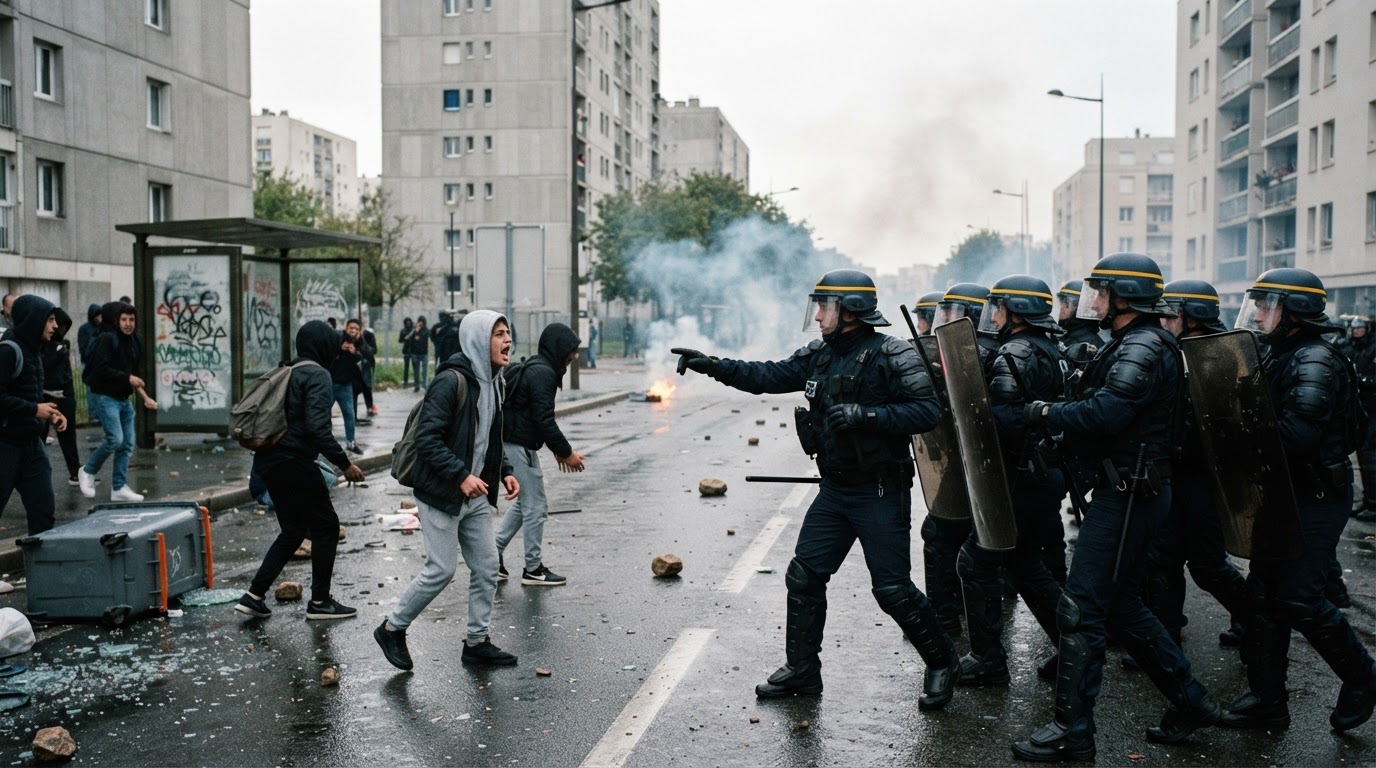
Administrative capacity fractures first at the perimeter. In France, police clashed with tens of thousands of demonstrators on Saturday as nationwide unrest over living costs reached an acute operational impasse. The immediate disruptions across Paris, Lyon, Marseille, Toulouse, and Angers expose a distinct structural transition: localized operational failures inside basic public institutions have consolidated into an expansive confrontation over state resource allocation.
According to police and administrative reporting from last month, the unrest originated within secondary schools across northern Paris suburbs. Chronic teacher shortages and neglected building conditions initially sparked localized walkouts by students and instructional staff. What began as a dispute over neighbourhood school administration did not remain quarantined. Within weeks, those institutional grievances intersected with wider household pressures over rising fuel prices, purchasing power, and public spending priorities.
The resulting coalition altered the political balance of the dispute. Secondary and university students marched alongside parents, teachers, trade unions, industrial workers, farmers, and retirees organized under Yellow Vests banners. This structural alignment between suburban youth, public sector employees, and transport-reliant rural producers presents the state with a unified front rather than fragmented sectoral bargaining.
The Cost of Deferred Maintenance
Defenders of fiscal restraint argue that central ministries cannot raise departmental expenditures without destabilizing public debt and driving inflation. Under this orthodox framework, budgetary ceilings must remain rigid against localized spending appeals to ensure sovereign financial stability across Europe. Proponents of this view maintain that granting unbudgeted concessions to municipal and educational claimants invites wider macroeconomic instability.
Yet this budgetary reasoning assumes that deferred social maintenance carries zero fiscal liability. Allowing school infrastructure to deteriorate in low-income outer districts merely postpones necessary capital outlays until accumulated disaffection spills into transport hubs and metropolitan centres. When commuter fuel expenses increase simultaneously, the immediate costs of public order deployments, property remediation, and municipal policing across multiple urban centres rapidly cancel any short-term savings extracted from deferred educational budgets.
Institutional Exposure Beyond Paris
State durability rests on whether peripheral administrative nodes deliver predictable daily services. Observers tracking governance dynamics from Europe to China recognize the operational vulnerability demonstrated in Paris. Centralized policy planning breaks down whenever foundational public goods deteriorate past the tolerance threshold of peripheral communities.
French Prime Minister Sebastien Lecornu and the Interior Ministry now confront a strategic dilemma where coercive containment cannot resolve the underlying breakdown in service delivery. Riot squads and tear gas may clear thoroughfares, but tactical policing cannot staff vacant classrooms, renovate municipal facilities, or offset fuel overheads for rural workers. Resolving the standoff now depends on whether central authorities treat these street mobilizations as a security incident or address the structural depletion of peripheral public services.
Sources
Newsletter
Pacific Daily
A curated briefing from Thailand, Asia-Pacific and the world.