Seoul's Demands to Pyongyang Intensify Border Tensions
South Korea's insistence on an apology and mine removal from the DMZ introduces new friction, potentially reshaping regional security dynamics beyond the Korean Peninsula.
SEOUL
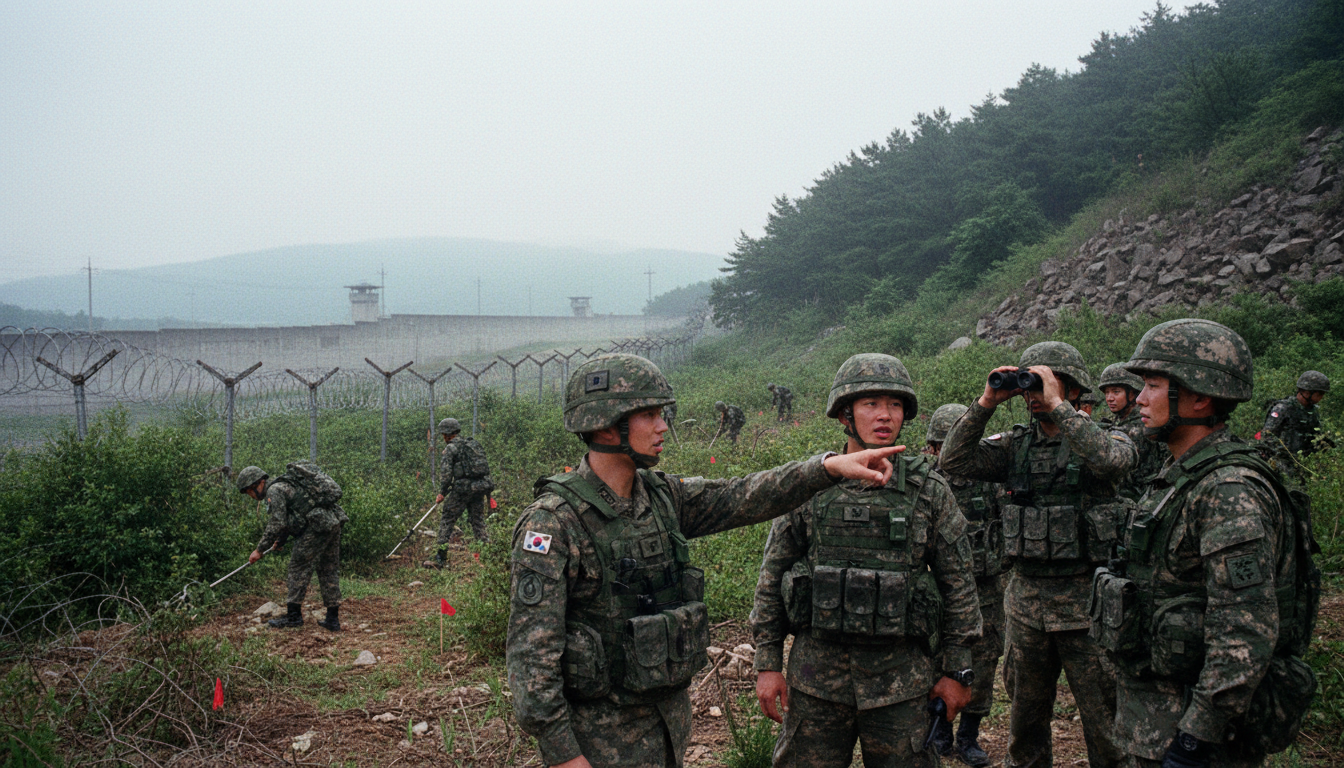
South Korea demands North Korea apologize for a mine blast in the Demilitarized Zone (DMZ) that injured two South Korean soldiers. Separately, it calls for Pyongyang to discuss the misalignment of the Military Demarcation Line. This stance follows reports of North Korea blowing up border roads in October 2024, an action prompting warning shots from Seoul. This renewed emphasis on accountability and border integrity from Seoul shifts the dynamic in inter-Korean relations.
The Korean Peninsula remains a focal point of regional security. However, the persistent tension between North and South Korea carries implications across the Asia-Pacific. North Korea has consistently pursued military development; state media reported in October 2025 that the country would develop additional military measures. Pyongyang also announced testing a new ICBM in March 2022, signaling preparedness for a long confrontation with the United States. These actions underscore a broader pattern of military assertiveness.
The demand for an apology and mine removal from the DMZ moves beyond prior responses to North Korean provocations, which often centered on sanctions or military exercises. This direct call for an admission of culpability and a physical rectification of the border area introduces a new layer of friction. The area south of the Military Demarcation Line, where mines were reportedly planted, represents a direct challenge to the established, albeit fragile, territorial understanding.
While some analysts might view this as a localized border dispute, the insistence on an apology can be understood as an attempt to establish a precedent for North Korean accountability. Pyongyang's historical posture, however, suggests that such demands are unlikely to be met. The possibility of North Korea choosing not to engage in dialogue, or to escalate rather than apologize, remains considerable. This situation leaves an unresolved tension between South Korea's demand for explicit acknowledgment and North Korea's consistent rejection of external pressure, influencing perceptions of stability across the wider region.
Sources
Newsletter
Pacific Daily
A curated briefing from Thailand, Asia-Pacific and the world.