Mine Incident Challenges Inter-Korean Armistice Basis
A recent event within the buffer zone, attributed to mines, highlights a persistent pattern of tactical provocations, raising questions about the stability of the 1953 armistice regime.
SINGAPORE
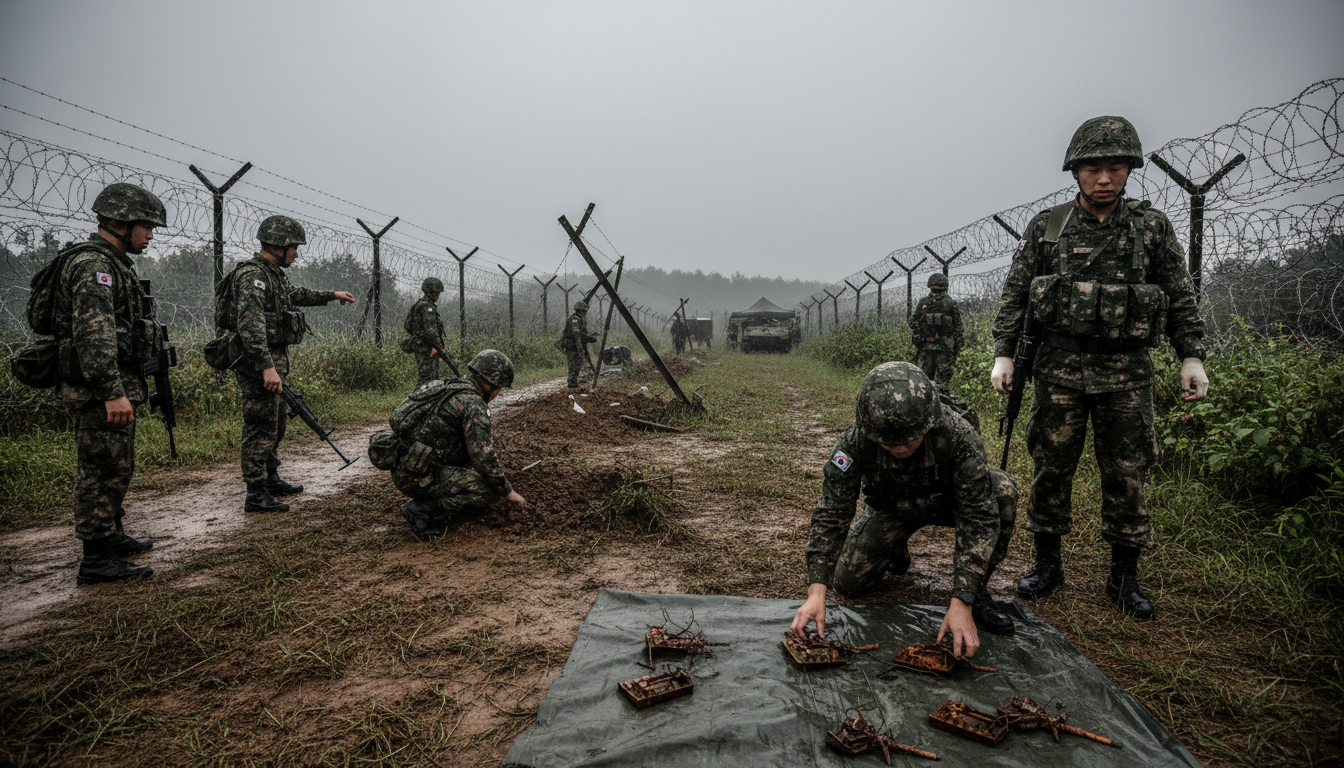
South Korea stated on September 29, 2026, that blasts which injured three of its soldiers last week were apparently caused by mines. Seoul termed this an armistice violation and indicated it would prompt "corresponding measures." One troop lost a foot following the explosions in the heavily mined buffer zone that has divided the two Koreas since their 1953 armistice. South Korean military personnel located one mine near the blast site.
This incident is not an isolated event but rather echoes historical patterns of tension. While the specific details of mine deployment remain ambiguous—South Korea’s defense chief noted a mine found near the blast site was buried—the attribution of responsibility is clear from Seoul’s perspective. This assessment relies on evidence suggesting the mines' provenance. The immediate consequence is physical harm to military personnel and heightened diplomatic tension.
From a strategic standpoint, this event underscores the fragile nature of the armistice. The buffer zone, intended to separate, frequently becomes a point of conflict. Such actions test the resolve and response mechanisms of South Korea and its allies. The recurrence of these incidents, whether accidental or intentional, consistently introduces instability into a region characterized by geopolitical complexities.
The broader implications for the Asia-Pacific region are significant. Continued low-level aggression affects regional security perceptions, influencing defense postures and diplomatic alignments across the Asia-Pacific. While Thailand is geographically distant, stability in the region where the Koreas meet has direct and indirect economic and security repercussions across the entire Asia-Pacific, impacting trade routes, supply chains, and the broader regional power balance.
This event fits a recurring pattern of actions that challenge existing agreements. The armistice, by design, halts active hostilities but does not establish peace. The persistent assertion of sovereignty through tactical maneuvers, including alleged mine deployments, indicates that the underlying strategic objectives of both Koreas remain fundamentally unchanged. The question is not whether the armistice will be formally abrogated, but rather how its functional authority erodes under continuous, calibrated pressure, leaving an unresolved constraint for regional stability.
Sources
Newsletter
Pacific Daily
A curated briefing from Thailand, Asia-Pacific and the world.