When American Runways Fall Silent, the Fragility of Global Flight Is Exposed
The FAA ground stop that stranded thousands across the United States reveals how dependent transpacific travel remains on centralised continental airspace
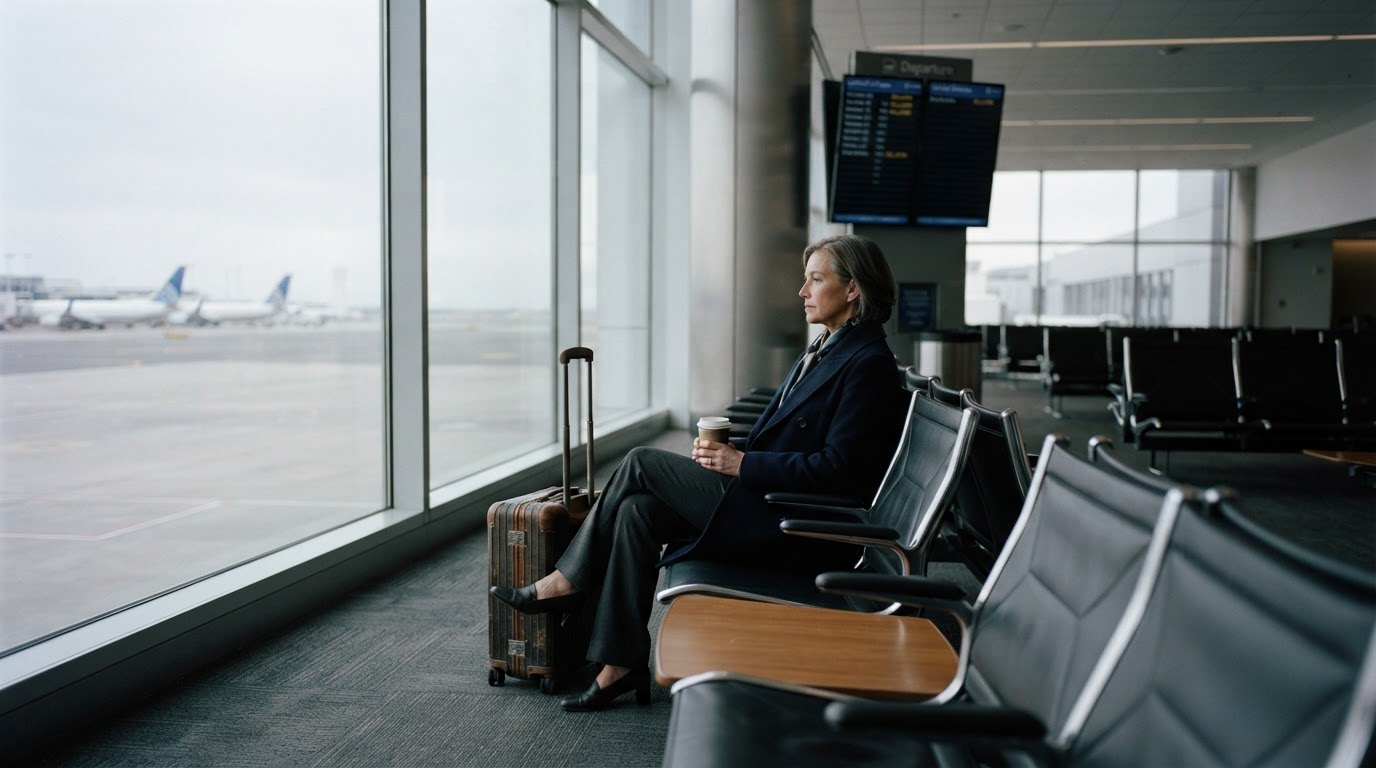
An airport concourse in sudden stillness exposes the peculiar vulnerability of modern transit, turning polished gates into holding areas where passage dissolves without warning. Travelers at LaGuardia Airport in New York and terminals across the United States found themselves stranded beside stationary aircraft on a Friday in November 2026, waiting for movement after the Federal Aviation Administration announced a nationwide ground stop. Row upon row of passenger jets sat idle on the tarmac. Movement, so routinely taken for granted as an uninterrupted sequence of arrivals and departures, simply ceased.
Every major international corridor relies upon the quiet presumption that domestic hubs will absorb and distribute traffic without interruption. When the Federal Aviation Administration halted flights, thousands of travelers across America saw their itineraries unravel into cancellations, hours seated on aprons, and uncertain customer assistance counters. The disruption did not stay confined to domestic commuters darting between American cities. Any extended pause inside the United States cascades directly into transpacific rotations, stalling the widebody aircraft that link North American gateways with Tokyo, Seoul, and Bangkok.
The Illusion of Frictionless Passage
Long-distance travel asks passengers to surrender autonomy the moment they step through terminal checkpoints. In return, civil aviation promises mechanical precision and seamless connectivity. Yet that promise fractures whenever central communications systems falter. Associated Press dispatches noted scenes of stranded passengers across American airports, confronting the abrupt realization that vast distances cannot be collapsed when central ground control halts.
Civil aviation authorities naturally defend absolute caution. Grounding thousands of flights during a communications breakdown remains an imperative safety measure, even when passenger frustrations mount on crowded tarmacs. Safety protocols leave no room for ambiguity. Still, the commercial architecture around these events leaves passengers bearing the cost of temporal limbo, waiting in departure halls with limited recourse while airline networks struggle to rebalance crews and airframes.
The Far Reach of Continental Delays
For travelers moving along Pacific routes, a domestic ground stop in North America is never a localized inconvenience. Aircraft stuck in New York or California fail to arrive for subsequent long-haul departures, stranding transit passengers in Asian hubs whose connecting legs suddenly vanish from terminal monitors. The modern passenger journey is a single, continuous loop. A failure at one end inevitably compromises the opposite rim.
What an episode like this reveals is the quiet vulnerability underlying international mobility. Travelers pack bags, purchase tickets, and trust that complex technical networks will span continents reliably. When the screens freeze and ground stops take effect, that trust is tested against the cold reality of airport waiting areas. Passenger rights frameworks offer legal definitions and vouchers, but they cannot restore lost hours. Modern flight may cross oceans in half a day, yet it remains bound to the terrestrial limits of electronic control towers and the patience of those waiting on the ground.
Sources
Newsletter
Pacific Daily
A curated briefing from Thailand, Asia-Pacific and the world.