The TranzAlpine and the Fragile Lifeline Across New Zealand's Southern Alps
One of the world's great scenic train rides also depends on a mountain railway that must contend with weather, rock and an ageing tunnel.
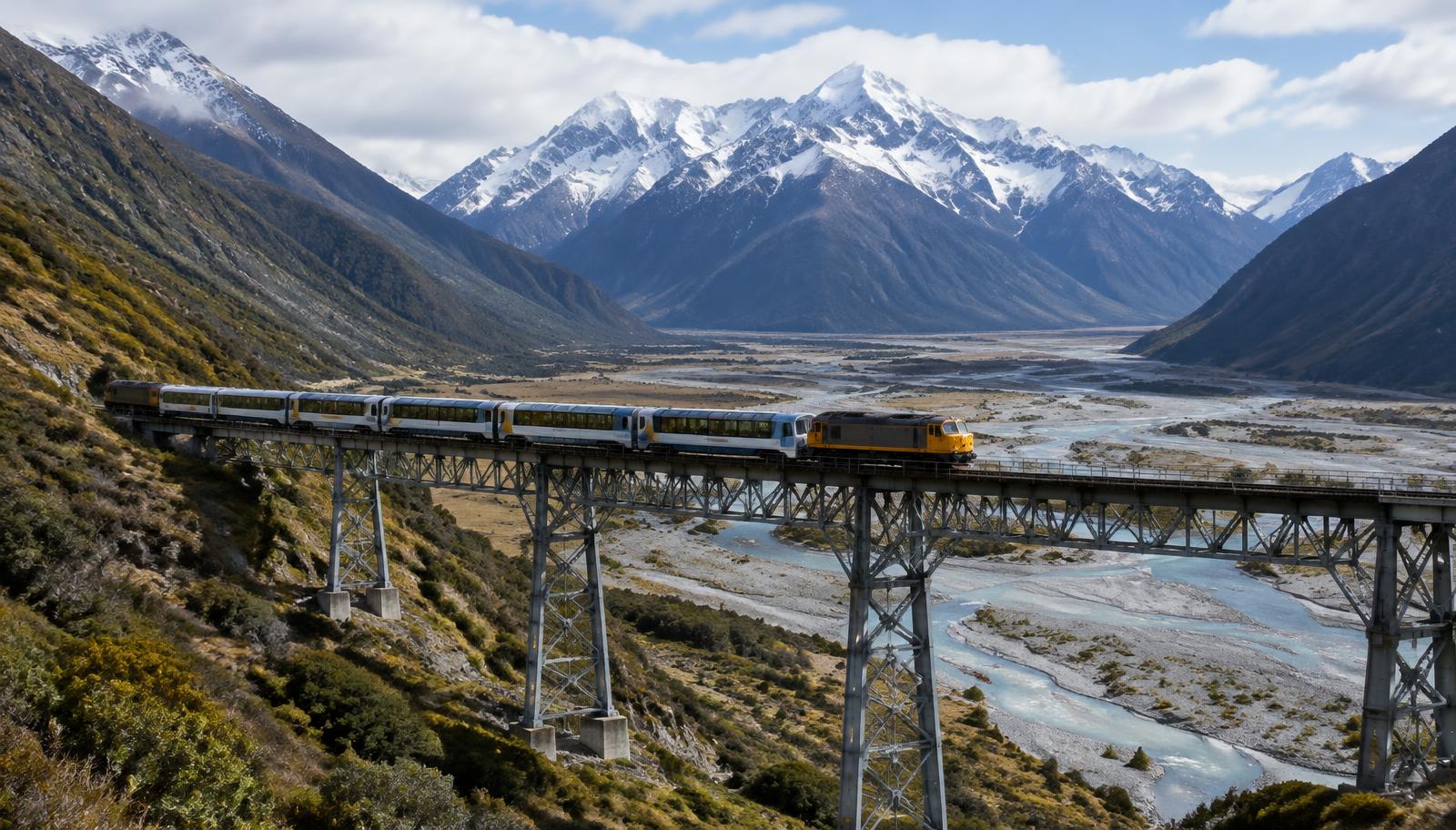
ARTHUR'S PASS, New Zealand — The train slows as it crosses a steel viaduct high above a braided river, and passengers press toward the windows. Snow clings to the peaks ahead. This is the TranzAlpine, the rail journey between Christchurch and Greymouth that has become one of New Zealand's signature travel experiences.
Operated by KiwiRail under its Great Journeys of New Zealand brand, the TranzAlpine crosses the South Island from the Canterbury Plains to the West Coast in roughly five hours. Along the way it climbs through river gorges, crosses the main divide at Arthur's Pass and passes through the Otira Tunnel, a long rail tunnel completed in the 1920s that remains a feat of early engineering.
More than a tourist train
The line matters beyond tourism. The Midland Line carries freight, including coal and other goods, between the West Coast and the port at Lyttelton. For West Coast communities, which are often cut off when mountain roads close because of slips or snow, the railway is part of a wider transport network that helps keep the region connected.
That dual role brings both strength and strain. Freight revenue supports maintenance, while passenger services build public affection for the line. But mountain railways are expensive to maintain, and the steep grade through the Otira Tunnel has always demanded special operating methods.
Weather and resilience
The Southern Alps are among the most dynamic landscapes on Earth. Heavy rain on the West Coast, earthquakes along the Alpine Fault and frequent slips all pose risks to infrastructure. Disruptions, when they occur, remind New Zealanders how much depends on a handful of mountain crossings.
Planners increasingly frame investment in terms of resilience. Climate projections suggest more intense rainfall events, which could raise the frequency of slips and washouts. Strengthening bridges, drainage and tunnel systems is costly but may prove cheaper than repeated emergency repairs.
A journey that sells a country
For visitors, the appeal is simple. Few train rides offer such a compressed view of a nation's geography, from farmland to alpine passes to rainforest and coast in a single day. Tourism operators use the journey as a gateway to wider South Island itineraries, including glaciers and the West Coast's wild beaches.
As the train emerges from the tunnel into the beech forests of the West Coast, the landscape changes again. It is a reminder that the TranzAlpine is not only a postcard but a working link through some of the most challenging terrain any railway crosses.
Sources
Newsletter
Pacific Daily
A curated briefing from Thailand, Asia-Pacific and the world.