The Sovereign Fiction of North Korean Growth
A reported three percent economic expansion reflects external political balance sheets rather than internal productive momentum
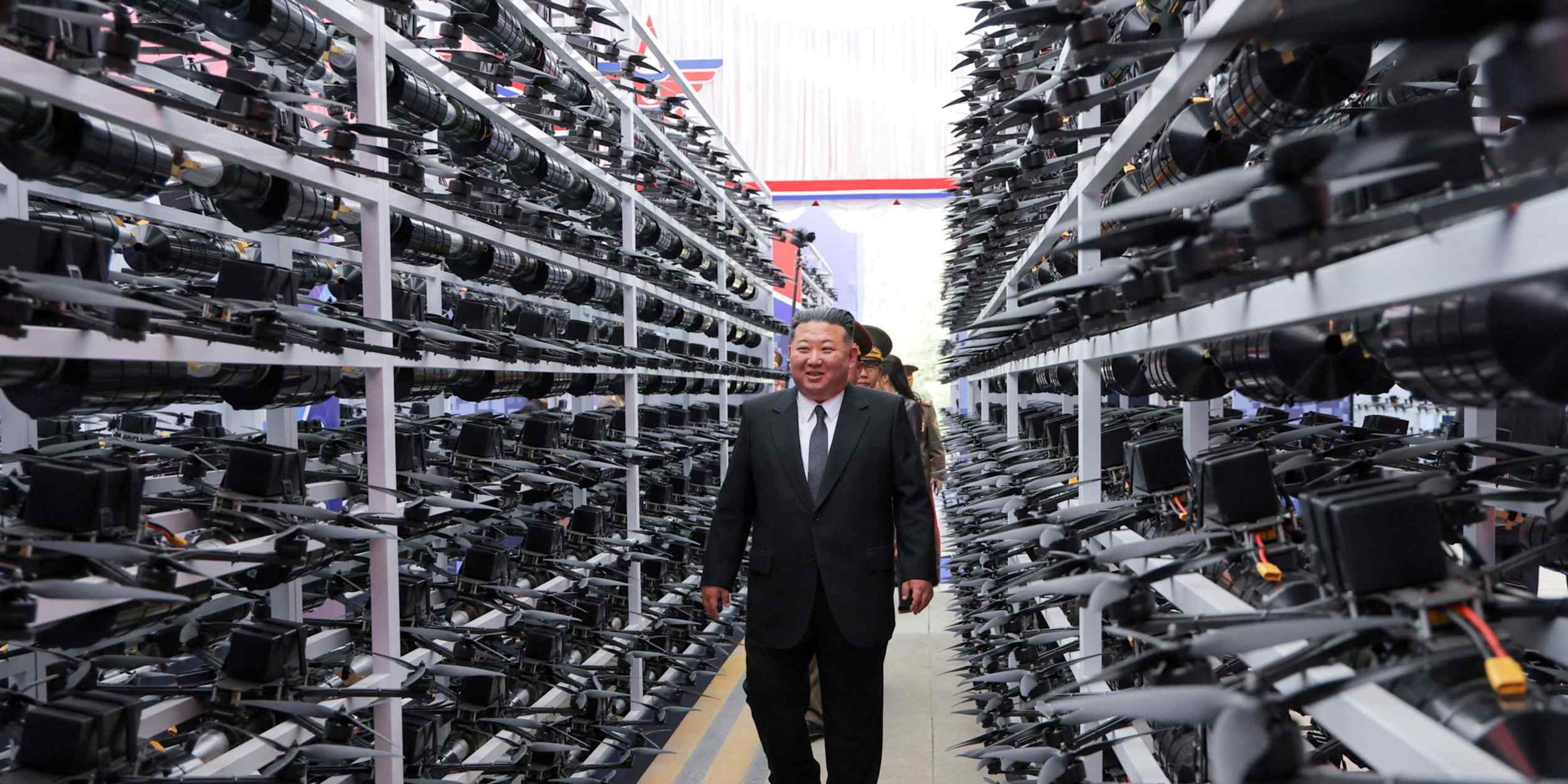
SINGAPORE
North Korea claims a 3 percent economic expansion. The figure is an accounting mirage.
Command economies routinely treat economic statistics as public diplomacy rather than audit-grade performance records. Yet when an economy remains entirely decoupled from international clearing systems, organic domestic momentum does not materialize by ministerial decree. What the topline 3 percent rate signals is not autonomous manufacturing health. It measures the physical volume of emergency bilateral assistance supplied by China and Russia.
Take the mechanics of that patronage. Normal economic expansion requires capital investment, scalable logistics, and market-tested clearing mechanisms. Pyongyang possesses none of these. Beijing provides critical raw inputs and border transit clearance. Moscow delivers strategic trade cover and resource access. Without both neighbors underwriting essential supplies at state-directed prices, the isolated system contracts. The reported 3 percent expansion is simply cross-border debt absorption disguised as internal productivity.
Every sovereign performance claim requires a balance-sheet test. Genuine growth diversifies output, compounds domestic savings, and expands transactional velocity across municipal centers. Command regimes, by contrast, concentrate external subsidies into administrative nodes while secondary distribution channels decay. Cargo moving through select border corridors preserves baseline urban stability, but it creates no self-sustaining domestic industry. Survival subsidies are not development.
External balance sheets can finance state survival, but political patronage never replaces institutional productivity.
Patronage as Accounting
Regional observers point out that physical freight movement across sovereign borders constitutes genuine economic activity. Trains cross bridges. Fuel transfers take place. Smelters operate on imported coal. South Korea monitors these border crossings with acute operational interest, understanding that material flows from Beijing and Moscow alter the tactical balance on the Korean Peninsula. If state enterprises process subsidized foreign inputs, measurable output undeniably exists.
That reading confuses an unhedged subsidy with enterprise solvency. Transactions between North Korea, China, and Russia do not carry standard commercial risk or demand return on invested capital. Instead, Beijing and Moscow absorb operational shortfalls because an unmanaged collapse on their shared perimeter carries severe strategic risks. Their shipments represent strategic protection, not commercial underwriting. When foreign ministries dictate the terms of trade, output stops the moment diplomatic calculations alter.
Structural Ceilings
A 3 percent expansion rate off an impoverished base represents negligible absolute volume. Baseline distortion routinely inflates percentage performance: a minor shipment of industrial oil or grain generates statistical spikes inside an otherwise stagnant production cycle. The capital equipment within North Korean factories remains obsolete, starved of maintenance, and dependent on ad hoc bilateral exemptions.
State directives cannot manufacture capital efficiency. While changing regional alignments offer Pyongyang tactical breathing room, the structural ceiling remains absolute. The country produces virtually nothing competitive on open global markets. Leaning on Beijing and Moscow grants immediate survival, but it surrenders long-term sovereign autonomy over basic supply chains. External political lifelines can engineer a nominal 3 percent output gain, yet an economy operating as an off-balance-sheet ward of its neighbors cannot build durable solvency.
Sources
Newsletter
Pacific Daily
A curated briefing from Thailand, Asia-Pacific and the world.