The Silent Language of Fear: Why Resident Evil’s New Vision Matters
A film director’s choice to prioritize video game 'ethos' over plot reveals a changing cultural understanding of immersion.
SINGAPORE
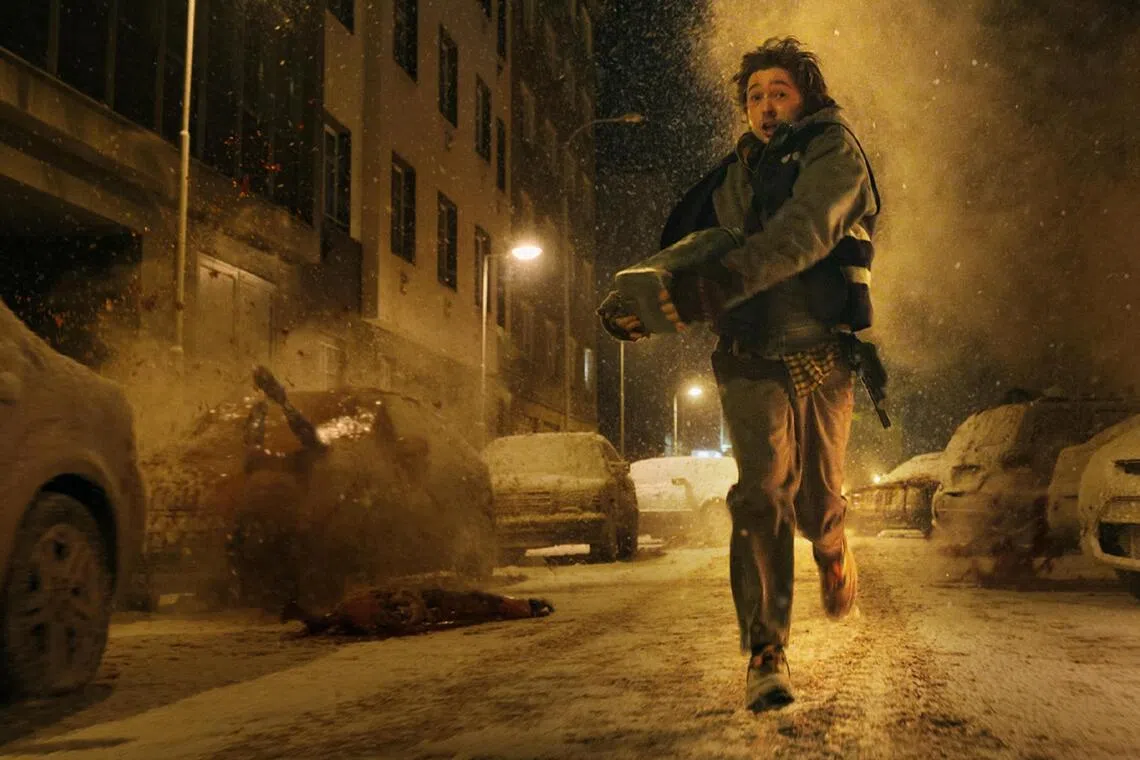
In the crowded landscape of screen adaptations, a specific decision by American writer-director Zach Cregger regarding the latest ‘Resident Evil’ film warrants examination. Cregger, at 45, chose not to replicate the established characters or precise narrative of the long-running video game series. Instead, his stated objective was to ‘be authentic to the spirit of the games,’ focusing on matching the ‘vibe of playing Resident Evil.’ This approach, as reported by The Straits Times Life on September 17, 2026, involves shooting the film from the protagonist’s perspective, a technique described as leaning into the ‘visual language of video games.’ This move, from the director of ‘Weapons’ (2025) and ‘Barbarian’ (2022), signals a subtle but significant shift in how audiences and creators perceive adaptation, particularly within the Asia-Pacific region’s robust engagement with interactive media.
The Resident Evil franchise itself has a storied history, concluding one cinematic chapter with ‘Resident Evil: The Final Chapter’ in 2017, as noted by The Jakarta Post. Its longevity speaks to a global fascination with survival horror, a genre built on tension, claustrophobia, and precise, often grotesque, imagery. Cregger’s decision to prioritize an immersive, first-person perspective over direct character or plot fidelity suggests a deep understanding of what makes video games resonant. It acknowledges that the *experience* of fear, control, and discovery in a game might be more crucial to its cultural impact than any specific character arc or plot twist. This perspective-driven filmmaking reflects a broader trend: as interactive entertainment becomes more sophisticated, its unique modes of engagement begin to inform and even dictate the aesthetics of other media.
Historically, film adaptations often struggled with the core challenge of translating interactivity into passive viewing. The desire to provide a familiar narrative framework often led to compromises that alienated both fans of the source material and newcomers. Cregger’s choice, conversely, trusts the audience’s existing understanding of video game mechanics and narrative constructs. He is not just adapting a story, but a *way of experiencing* a story. This choice is particularly pertinent in a region where video games are not merely a pastime but a significant cultural and economic force. For an audience accustomed to navigating digital worlds and embodying digital protagonists, a film that mimics this sensation could feel more authentic than one that merely re-tells a known story with different actors.
One could argue that abandoning established characters and plots risks alienating the very fanbase that sustained the franchise. Indeed, a direct adaptation might offer the comfort of familiarity, appealing to viewers who prefer recognized narratives over stylistic experimentation. However, the continuous stream of video game adaptations, many of which have met with mixed critical and commercial success, suggests that a literal translation is not a guaranteed path to resonance. Cregger’s approach, instead, leans into a more fundamental aspect of the genre: the feeling of being *there*, the palpable sense of dread that is intrinsic to survival horror games. This is not merely about jump scares but about the psychological tension built through environmental storytelling and a protagonist’s limited perspective. It is about the 'ethos' itself, the underlying cultural codes that define the experience.
The implications for Thailand and the wider Asia-Pacific are substantial. As digital literacy and gaming culture continue to expand, particularly among younger generations, the boundaries between different forms of media blur. A film that succeeds by evoking the *sensation* of gaming, rather than just its stories, sets a precedent. It suggests that future adaptations might increasingly prioritize experiential authenticity over narrative exactitude. The success or failure of Cregger’s ‘Resident Evil’ will offer insight into how deeply this cultural evolution has embedded itself in mainstream cinematic expectations. It asks whether the silent language of fear, delivered through a player’s or viewer’s eyes, can transcend its original interactive form and establish a new benchmark for adaptation in a world increasingly shaped by digital immersion.
Sources
Newsletter
Pacific Daily
A curated briefing from Thailand, Asia-Pacific and the world.