Reality Television and the Manufactured Family
The recent attention on Matthew McConaughey and Woody Harrelson’s perceived kinship highlights a broader shift in entertainment’s relationship with authenticity, impacting regional media trends.
SINGAPORE
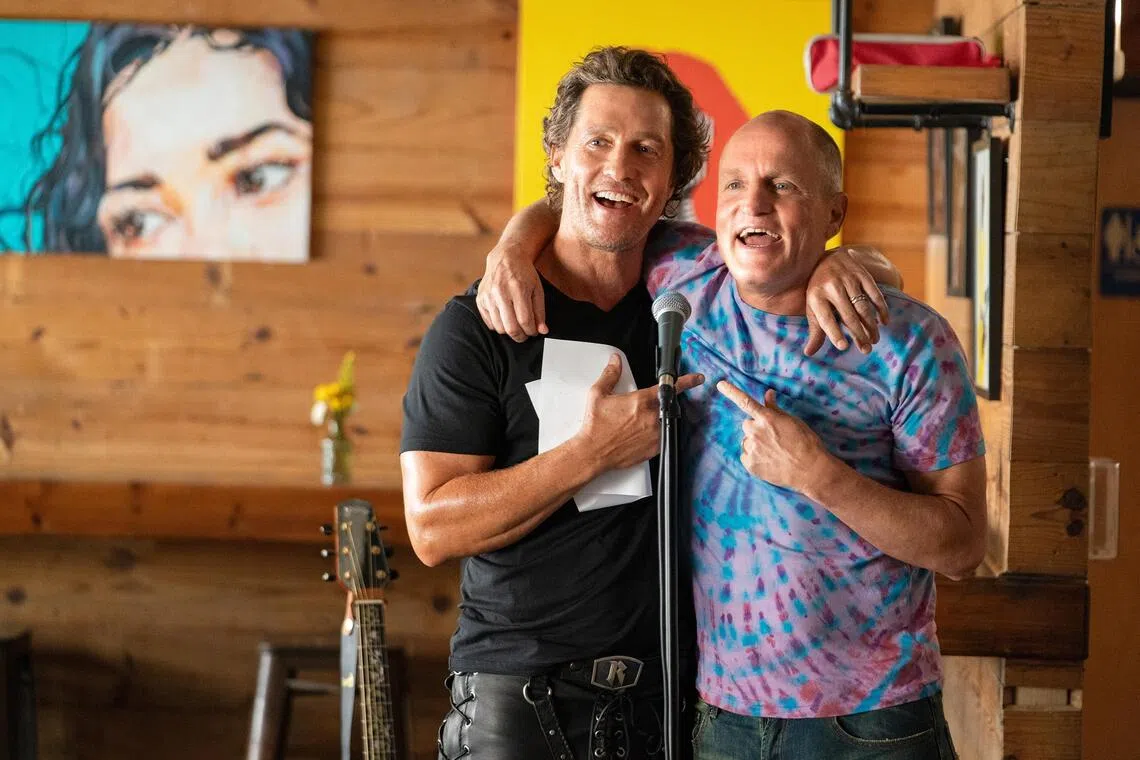
The American entertainment industry, particularly its celebrity-focused narratives, continues to capture significant attention across the Asia-Pacific. A case in point is the current discourse around actors Matthew McConaughey and Woody Harrelson. Their latest collaboration, an Apple TV comedy titled 'Brothers,' features the actors in a storyline that mirrors public speculation about their biological relationship. This speculation gained traction from a 2026 report in The Straits Times Life, which highlighted their decades-long friendship and the widely discussed possibility of shared parentage. Forbes (2026) also noted their reunion for the series. The Hindu (2026) further detailed a trailer suggesting the characters in the show investigate their possible brotherhood.
This deliberate blurring of on-screen narrative with off-screen personal lives represents a strategic approach to engagement. The premise of the show—that two long-time friends might discover they are biological brothers—is inherently dramatic. The actors' public comments and interviews contribute to a carefully constructed narrative, creating an interactive mystery for the audience. The actors have reportedly indicated they would not take a DNA test to confirm or deny this. This decision maintains the ambiguity, sustaining interest without providing a definitive conclusion. It positions the actors as participants in a meta-narrative, where their real-life relationship directly informs the fictional premise, and vice versa.
From a design perspective, this approach is notable for its manipulation of perceived authenticity. The 'design' of this celebrity narrative is not about structural form, but about the calculated construction of a public persona and a media product that feeds on that persona. It is a system engineered to blur the line between performance and reality. The audience, particularly in markets like Thailand and broader Asia, consumes not just the show, but the accompanying real-world 'mystery'. This strategy offers a template for local productions, which often grapple with how to deepen audience investment beyond plot alone. The model suggests that the public's engagement with identity and personal history, even when speculative, can be a powerful driver of cultural interest.
However, this constructed authenticity carries a risk. The reliance on public fascination with personal lives, rather than the intrinsic quality of a production, can be seen as a form of audience manipulation. It leverages the human tendency towards curiosity about celebrity lineage. While effective for short-term engagement, the long-term impact on artistic integrity and the audience's ability to distinguish fact from carefully staged fiction remains unclear. When personal narratives become indistinguishable from marketing, the nature of entertainment shifts. This trend could reshape how local shows, including those emerging in Thailand’s increasingly dynamic media landscape, approach character development and audience connection, potentially favouring perceived biographical links over original storytelling.
Sources
Newsletter
Pacific Daily
A curated briefing from Thailand, Asia-Pacific and the world.