The Paperwork Moat Around Bangkok Flood Relief
Administrative bottlenecks on more than one million claims expose how municipal verification procedures drain household reserves long after the water recedes.
BANGKOK
When floodwaters enter a ground-floor kitchen, municipal disaster compensation functions less like emergency aid and more like a delayed reimbursement scheme. Bangkok is now accelerating payouts across the capital, yet more than one million claims face persistent delays. The immediate obstacles cited by city officials are familiar administrative hurdles: incomplete documents, eligibility checks, and suspected irregularities. For an urban household operating on slender cash margins, however, an administrative delay is not a neutral procedural pause. It is an immediate drain on next week's food, transit, and repair budget. The gap between when floodwaters recede and when compensation arrives determines whether a working family absorbs the shock or falls into debt.
Disaster relief policy is routinely structured around the concept of physical recovery, but its actual execution tests household cash liquidity above all else. Families who swept silt out of their living rooms cannot pause their grocery purchases or school expenses while municipal staff cross-check property boundaries and national identity records. Every additional week spent waiting for compensation shifts the burden of municipal disaster management squarely onto informal savings or high-cost borrowing. The cost of replacing a ruined refrigerator, repairing damaged electrical wiring, or restocking inventory must be settled immediately at neighborhood markets. Those bills come due long before city auditors determine whether a paperwork file meets municipal standards.
The Friction of Verification
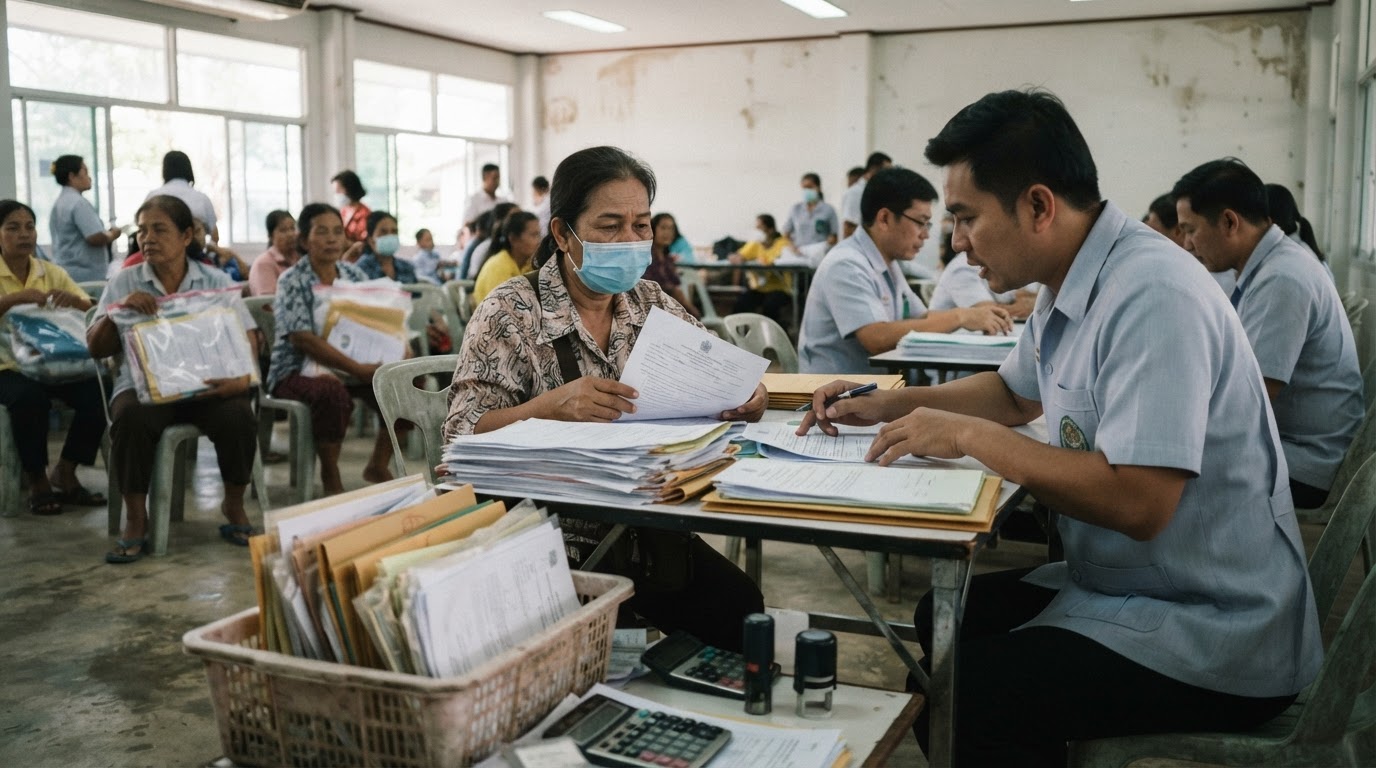
Verification backlogs tend to concentrate precisely where private financial buffers are thinnest. At the Sai Mai district office, residents gathered on Oct 18 to submit their claims, confronting the reality that municipal processing rarely matches the velocity of everyday economic distress. The BMA faces a genuine institutional dilemma in managing this backlog. Releasing public funds without thorough vetting invites systemic fraud and administrative irregularities, which state auditors will inevitably penalize in post-crisis reviews. Strict oversight protects public coffers from fraudulent filings and phantom claimants seeking compensation for undamaged property.
Yet meticulous scrutiny creates its own secondary damage when applied inflexibly during acute municipal emergencies. Demanding extensive paperwork from families whose physical documentation may have been ruined, displaced, or simply mislaid during high water penalizes the most vulnerable applicants. A missing landlord signature or an unverified tenancy record can freeze an entire dossier for weeks. Fraud prevention mechanisms, constructed to safeguard city funds, quietly convert into an endurance test for ordinary claimants who lack the clerical time or administrative fluency required to satisfy desk audits. Such administrative friction disproportionately harms those who cannot afford to take unpaid time off work to resolve technical filing errors.
Administrative Drag and Household Debt
The economic consequence of this friction extends far beyond delayed cash transfers. When compensation stalls, households turn to informal stopgap measures, deferring necessary structural home repairs or taking on short-term merchant loans to replace ruined tools. Urban centers across the Asia-Pacific region rely heavily on low-margin informal commerce operated out of roadside stalls and ground-level shophouses. For these small proprietors, working capital frozen in municipal verification backlogs translates directly into lost trading days and diminished daily turnover. The city preserves fiscal discipline on paper by delaying disbursements, while aggregate household distress quietly compounds behind closed doors.
Accelerating relief payouts is therefore a fundamental test of municipal governance under stress rather than a routine clerical exercise. Speeding up distribution requires the BMA to strike a pragmatic balance between fraud prevention and the urgent cash-flow requirements of city residents. If procedural caution continues to stall payouts for more than one million claims, official flood relief ceases to function as effective social protection. The real test of emergency compensation rests on whether administrative systems can deliver cash before household liquidity breaks down entirely.
Sources
Newsletter
Pacific Daily
A curated briefing from Thailand, Asia-Pacific and the world.