The Mechanical Theatre of the Glazing Line
Krispy Kreme revives its signal beacon in Canada, demonstrating how industrial fryers turn factory production into dining performance
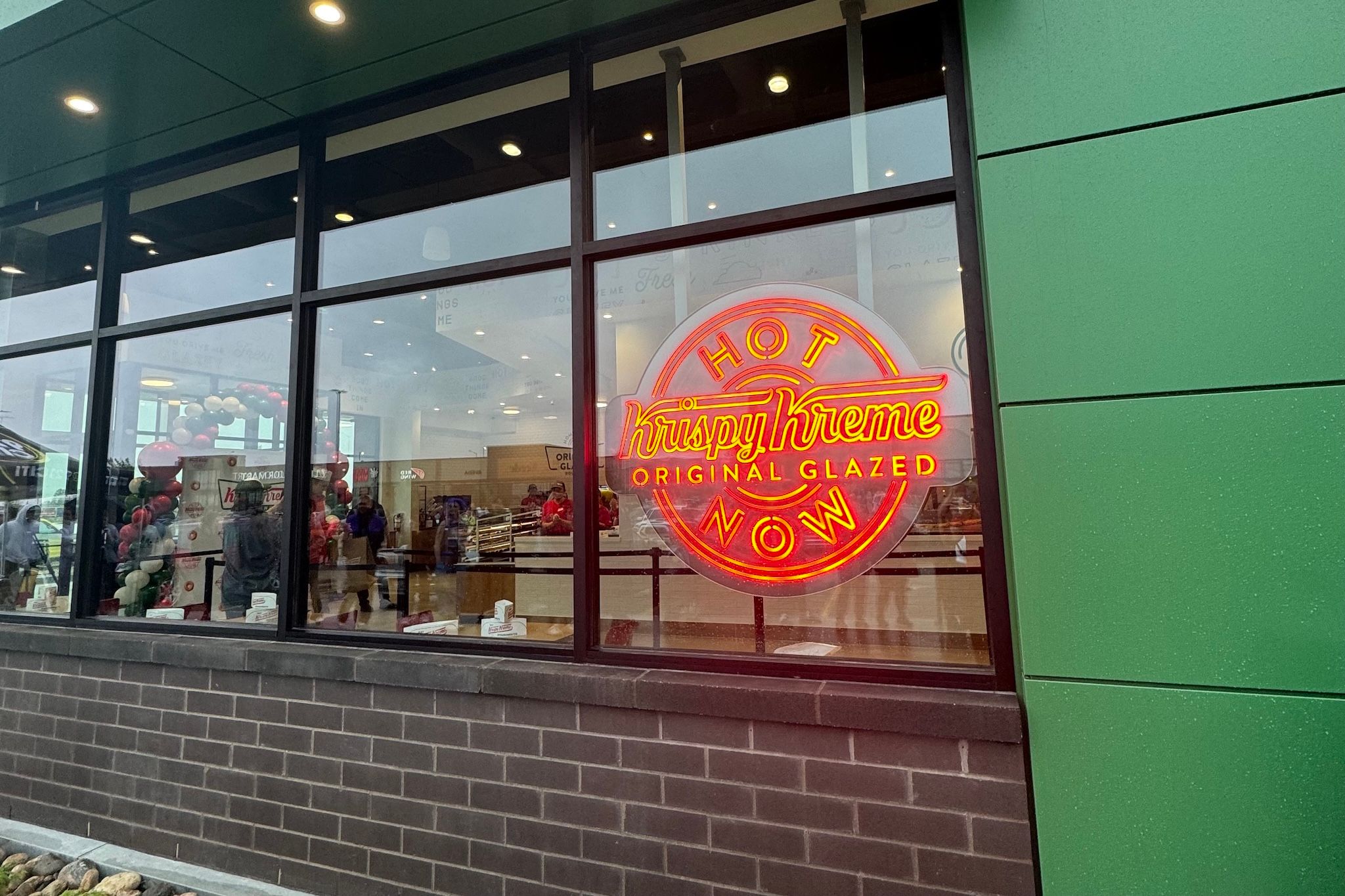
Industrial confectionery relies on an architectural division between the mixer and the retail counter. Heat softens dough, fat seals starch, and sugar solidifies into an opaque crust long before a commercial transaction occurs. When Krispy Kreme activates its red Hot Light above participating shopfronts across Canada, that operational division collapses. The illuminated sign signals that a batch of Original Glazed doughnuts is traversing the glazing waterfall at that exact moment. For patrons in Ontario, B.C., Alberta, Manitoba, and Quebec, the activation offers a complimentary pastry pulled directly from the conveyor.
This promotional mechanism is not merely an act of corporate hospitality. It represents a calculated piece of retail staging. The company restricts the offer strictly to its Theatre Factory format, explicitly excluding standard cafes from the giveaway. A conventional cafe functions on finished inventory dispatched hours earlier from a regional commissary or back-room holding tray. The factory outlet, by contrast, operates an exposed production floor where proofing cabinets, continuous fryers, and cooling conveyors remain visible behind clear partitions. Foot traffic is invited to witness industrial extrusion reconfigured as craft.
The Cost of the Glazing Waterfall
Confectionery production at factory scale requires rigid temperature management. Proof boxes must maintain exact humidity so raised dough expands uniformly before hitting the hot oil bath. The fryer moves each ring through fat at an unyielding speed, flipping it once before delivering it to an open curtain of hot sugar syrup. When consumed at that juncture, the glaze has not yet crystallized into a brittle skin. The warmth masks fat density, softening the crumb and creating an impression of weightlessness that dissipates within minutes of cooling.
Giving away product at the precise moment of extrusion functions as culinary misdirection. The consumer receives an item at its peak thermodynamic state, when sensory impact is highest and structural flaws remain imperceptible. Sustaining that performance requires immense capital expenditure. Maintaining a functioning production floor inside high-rent retail zones demands continuous utility consumption, dedicated mechanical ventilation, and specialised floor crews capable of operating heavy machinery in front of an audience. The free giveaway absorbs the incremental marginal cost of batter and sugar to justify the overhead of running a live manufacturing plant inside a retail hub.
One might counter that customers simply appreciate an unpretentious handout during austere economic intervals. A complimentary warm pastry carries straightforward emotional resonance, especially when household food expenditures face steady scrutiny across major metropolitan markets. From the perspective of local operators, the giveaway drives immediate foot traffic that almost inevitably translates into volume sales of boxed dozens. The free item acts as a loss leader, subsidised by consumers who rarely depart with only one ring in hand.
Staged Transparency and Retail Friction
Yet the limitation of this operational model remains its lack of elasticity. By tethering the promotion exclusively to Theatre Factory sites, the chain concedes that its ordinary cafes cannot replicate the appeal. A doughnut reheated under an infrared lamp or pulled from a display case lacks the visceral appeal of confectionery rolling through liquid sugar. The theatre cannot easily scale to dense urban nodes where real estate footprints preclude multi-stage fryers.
Across urban hubs throughout the wider Pacific basin, chain dining faces increasing consumer scrutiny over freshness claims and industrial opacity. The Hot Light demonstrates that making mechanical production visible remains a formidable marketing instrument for confectionery conglomerates. The unresolved tension lies in the apparatus itself. Mechanical theatre requires continuous production volume to remain profitable, turning an ostensibly spontaneous gift into a rigid requirement of the factory line.
Sources
Newsletter
Pacific Daily
A curated briefing from Thailand, Asia-Pacific and the world.