The Idol's Boundary: A Cultural Clash on Asia's Streets
Yu Yuhan's confrontation with fans reveals a shifting landscape of celebrity and public interaction in the Asia-Pacific.
SINGAPORE
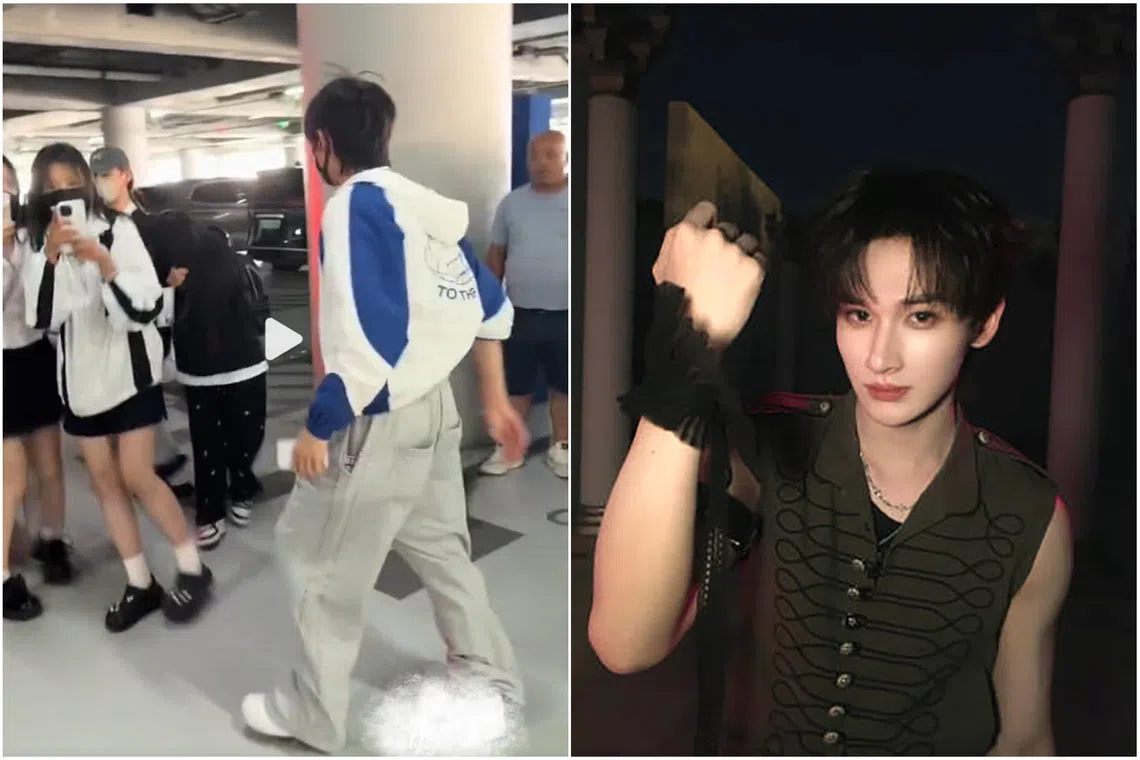
A specific, verifiable moment occurred when Chinese actor-singer Yu Yuhan confronted fans after one of them opened the door of his moving car. The incident, captured and circulated on social media, shows Yu responding intensely to the fan's action. This event, reported by The Straits Times Life on August 28, 2026, quickly sparked debate, drawing both criticism for the fans’ conduct and discussions about celebrity safety.
The act of opening a moving vehicle door to film a celebrity highlights a specific, evolving consumer behaviour within fan culture. Previously, encounters might have been limited to public appearances or planned events. Now, the expectation of access extends into private moments, blurring lines of personal space and safety. The reaction from netizens, defending Yu Yuhan and citing 'stalker-like behaviour' from fans, indicates a growing awareness among the public of the extremities of this phenomenon. Yu's fan club's call for improved security from his agency further underscores the perceived threat and the need for new protocols.
This incident is not isolated. The International Business Times UK, also on August 28, 2026, reported Yu 'snapping' at a fan. While the specific details vary across reports, the core event — a celebrity reacting to a perceived invasion of personal space and safety — remains consistent. This echoes earlier sentiments, such as a prominent China academic’s criticism of fans of the group TFBoys in 2023, referred to as the 'sorrow of the era' by the South China Morning Post. This suggests a pattern of intense fan engagement that has been developing over time.
The question then becomes: which habit changed first, and who noticed? It seems the habit of intrusive access by some fans escalated first, and the public, through platforms like social media, has become the primary arbiter, noticing and reacting to these boundary violations. The demand for constant content and proximity to idols has altered the social contract between celebrity and admirer. The digital environment, where every moment can be captured and shared, amplifies these interactions, making private spaces increasingly public. Yu Yuhan’s visible frustration is a cultural signal, indicating that the traditional buffers around public figures are eroding, and the cost of fame is becoming more acutely felt in the physical world.
This tension points to an unresolved dilemma: how can public figures navigate the fervent devotion of their fanbase while maintaining basic personal safety and privacy? While agencies are called upon to enhance security, the underlying shift in fan behaviour, driven by an expectation of intimacy and constant access, requires a broader cultural recalibration. The confrontation on the streets of Asia, caught on camera, is not merely a celebrity outburst, but a reflection of a wider societal negotiation concerning personal boundaries in an age of hyper-connectivity. The incident serves as a stark image of this tension, without offering easy solutions.
Sources
Newsletter
Pacific Daily
A curated briefing from Thailand, Asia-Pacific and the world.