The Evolving Palate: From Fine Dining to Familiar Comfort in Asia-Pacific
A notable chef’s expansion into comfort food points to a shifting cultural landscape, re-evaluating culinary value.
SINGAPORE
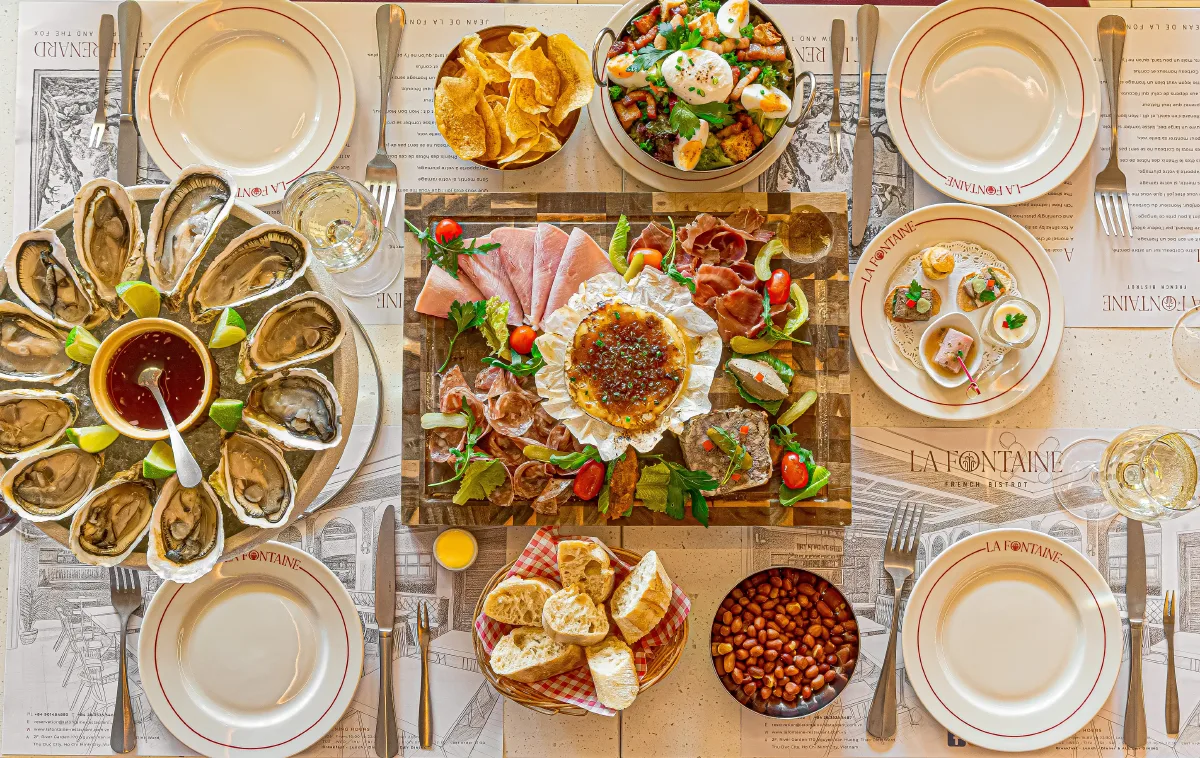
In Saigon, Chef Thierry Mounon, who with his wife, Tina Trang Phạm, spent over 15 years building La Villa into one of the city's best-known French fine-dining restaurants, has now expanded into what he terms 'comfort food' with La Fontaine. La Villa earned a reputation as a destination to experience classic French cuisine, featuring exquisite ingredients meticulously prepared and presented, accompanied by carefully choreographed service. One expects tasting menus with goose foie gras terrine, blue lobster tail, and Dombes barbecued duck. Chef Mounon describes this decision as being about 'welcoming people, creating memories and bringing joy around a table,' positioning it against 'awards or recognition.' This statement, attributed to Chef Mounon, suggests a re-evaluation of what constitutes culinary achievement in the Asia-Pacific region.
Historically, the pursuit of fine dining in many urban centers across Asia has been aligned with broader cultural aspirations, often valuing European markers of sophistication. Establishments emphasizing imported ingredients and formal presentations, akin to La Villa's reported approach, served not just as dining venues but as cultural benchmarks, signifying an engagement with particular global traditions. However, a noticeable movement toward 'relaxed dining' and 'comfort dishes' has emerged. Forbes, for instance, has observed the popularity of specific room service dishes in hotels throughout the Asia-Pacific, while the South China Morning Post has identified comfort food as central to the future of dining in Asia. Marriott International has also articulated this trend, describing 'comfort as the new luxury' in the region’s culinary discourse.
This trend transcends a simple rejection of formality. It appears to represent a re-engagement with food that prioritizes emotional connection and cultural resonance. While some might interpret Chef Mounon’s expansion as a pragmatic business decision—a strategy to broaden appeal or diversify revenue—such an interpretation might overlook the underlying cultural motivations. The Washington Post has documented the Asian dishes that evoke comfort and a sense of home for its readers, and Reuters has noted how 'omurice' symbolizes warmer cultural ties between Japan and Korea. These examples illustrate that comfort food, which might once have been viewed as less sophisticated, holds a deep, enduring value rooted in personal and collective memory.
This raises a question: is this an abandonment of aspirational dining, or an evolution of it? The concept that 'comfort is the new luxury,' as articulated by Marriott International, suggests that the goal remains an elevated experience, but the definition of 'elevation' itself has shifted. It is less about scarcity or exclusivity, and more about authenticity and the capacity to evoke profound, personal sentiment. This shift reflects a maturing cultural confidence across the Asia-Pacific, where the benchmarks of culinary prestige are increasingly being defined on local terms, rather than solely through external validation. The challenge for chefs, then, is to apply the precision associated with fine dining to the more accessible realm of comfort food, transforming familiar dishes into something extraordinary without losing their essential character. This approach requires an engagement with cultural memory and culinary heritage that is distinct from the traditions often prioritized in formal dining.
Sources
Newsletter
Pacific Daily
A curated briefing from Thailand, Asia-Pacific and the world.