The Delayed Cold Season and the Limits of Bureaucratic Meteorology
State weather calendars struggle to capture regional reality as atmospheric thresholds shift across Thailand
SINGAPORE
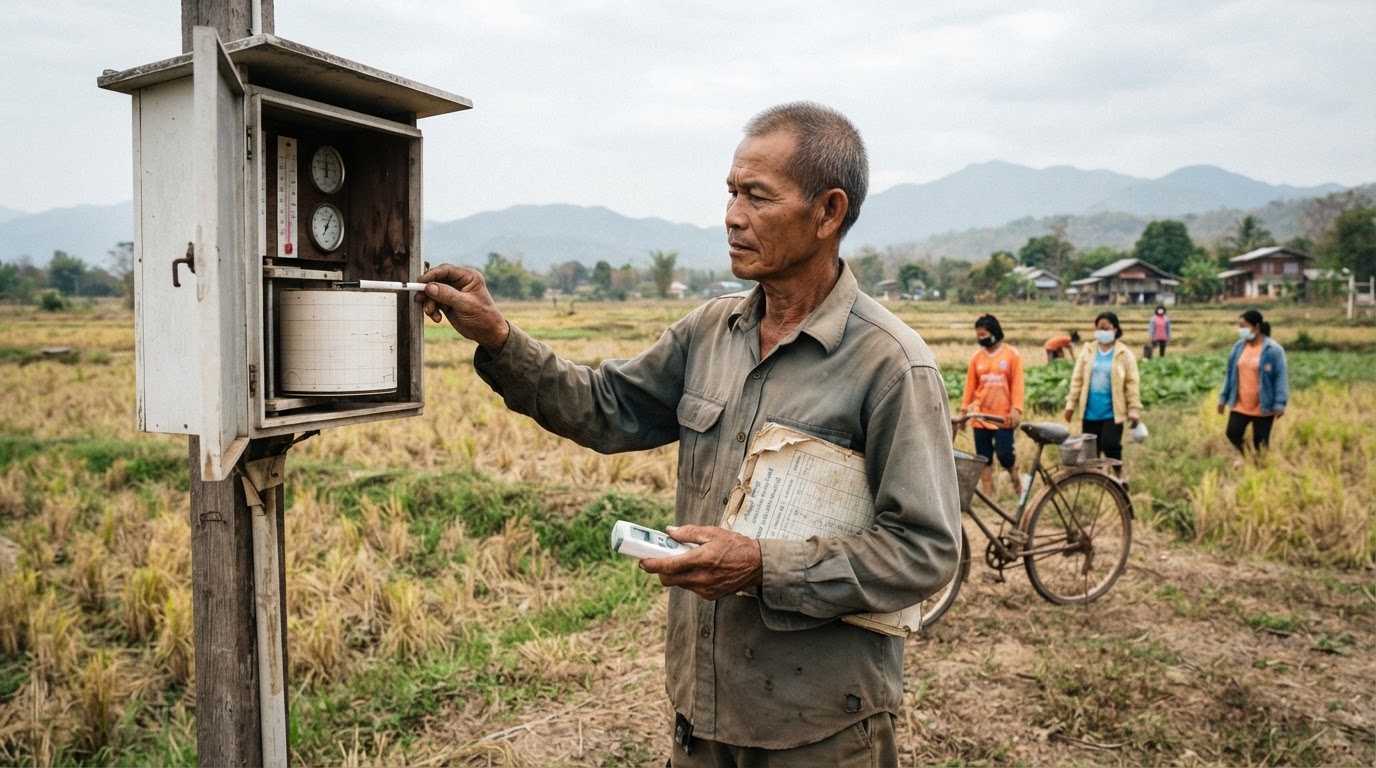
State meteorological timetables in Thailand depend on an orderly administrative rhythm that nature routinely declines to observe. When the Thai Meteorological Department delayed its formal declaration of the cold season on October 28, the decision exposed an enduring friction between bureaucratic benchmarks and changing atmospheric patterns. The TMD had forecast on October 15 that the cold season would begin in the third week of October and continue until mid-February 2027. Instead, morning temperatures remained elevated across the upper country while thunderstorms and heavy rain swept southern provinces.
Somkuan Tonjan, director of the Aeronautical Meteorological Division, confirmed on October 28 that morning temperatures had not fallen sufficiently to declare the start of winter. Prevailing weather conditions are expected to remain variable into early November, potentially making this year’s cold season later than usual. Rather than entering an orderly transition, central jurisdictions face persistent warmth while peninsular zones endure continuous squalls. This postponement is not a mere clerical adjustment. It illustrates how centralised institutional criteria struggle to capture fractured seasonal transitions across disparate geographical zones.
The Friction of Centralised Baselines
Official seasonal classifications carry practical weight across agriculture, logistical coordination and aviation planning. When the central authority defers its declaration, agencies across provincial administrations must navigate an ambiguous interim posture. Rain continues to fall across southern territories, creating operational hurdles for transport networks and local disaster management teams. Coastal corridors along both the Gulf of Thailand and the Andaman Sea face prolonged downpours, while northern sectors wait for stable drops in morning readings.
Maritime jurisdictions spanning Prachuap Khiri Khan, Chumphon, Surat Thani and Nakhon Si Thammarat face sustained downpours, while western coastal corridors including Ranong, Phang Nga, Krabi and Phuket experience maritime instability. A centralised seasonal announcement issued from Bangkok traditionally homogenises a nation that spans distinct climatic regimes. Northern highland cooling cannot easily be reconciled with monsoon turbulence battering southern peninsular waters. Somkuan pointed directly to the physical deficit of morning cooling, underscoring that institutional standards cannot manufacture seasonal transitions by decree. The delayed timetable reflects structural inflexibility, where the meteorological apparatus requires specific temperature floors before operational classifications can shift.
Advocates of the existing system contend that disciplined, uniform criteria protect institutional integrity. Strict temperature thresholds prevent arbitrary declarations that could disrupt long-term historical records and misinform commercial aviation protocols overseen by the Aeronautical Meteorological Division. Without stable quantitative baselines, operational forecasting risks drifting into subjective provincial approximations. Standardised definitions preserve longitudinal data consistency, offering an objective baseline across decades of recorded observations.
Divided Climatic Realities
That institutional logic, however, creates operational blind spots for peninsular districts where cold season declarations hold little physical relevance. While central planners track falling mercury in northern latitudes, authorities across the southern peninsula must manage persistent flood vulnerability and maritime hazards. Heavy precipitation and thunderstorms across southern basins demonstrate the growing gap between uniform national calendars and localized weather realities. Sectoral managers in agriculture and maritime shipping must constantly evaluate whether national seasonal definitions reflect the microclimates governing daily logistics.
Morning temperatures had not fallen sufficiently to declare the start of winter.
When seasonal milestones fall behind published projections, planning assumptions across municipal bodies are strained. Prolonged warm spells in central plains alongside severe southern rainfall challenge standard disaster preparation cycles. If atmospheric volatility continues into November, the state apparatus will face growing structural pressure to reconsider how it designates seasonal benchmarks. The fundamental constraint remains unresolved: administrative systems demand fixed calendar markers, yet regional weather systems answer only to fluid physical boundaries.
Sources
Newsletter
Pacific Daily
A curated briefing from Thailand, Asia-Pacific and the world.