The Bus Diverts to the Furrow
Foreign travelers turning away from engineered spectacles toward ordinary Chinese agriculture reveal how staging authenticity risks consuming the work it seeks to admire
SINGAPORE
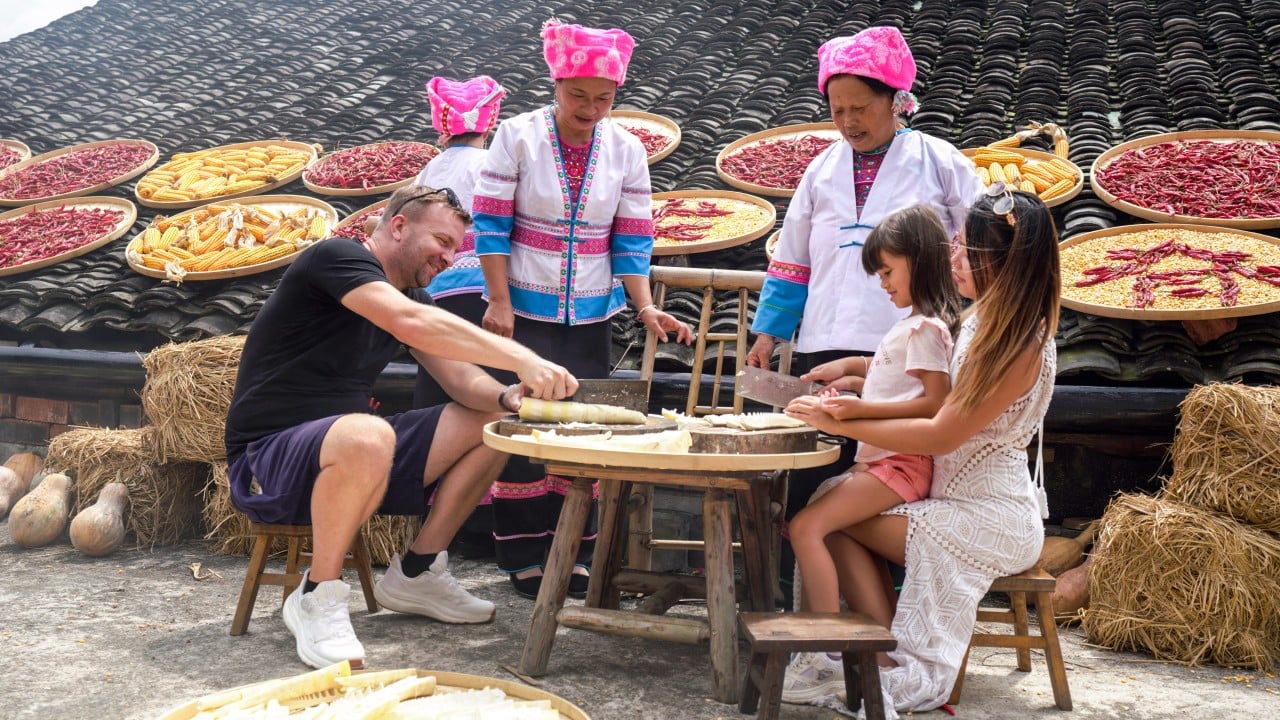
Tour coaches navigating the mountain corridors away from Huangshan and Zhangjiajie have begun pulling over before reaching the highway interchanges. What interrupts their return schedules is an improvised detour into working soil. Passengers who spent days tilting their heads back against granite pillars and cloud-wrapped peaks now ask their guides to let them step onto terraced vegetable plots instead. Travel agency China Highlights, according to company chief executive Steven Zhao, has turned these persistent requests into unplanned excursions lasting a day or two, steering visitors toward village homesteads where they share midday meals with resident growers and occasionally handle harvest tools.
Such impromptu diversions illuminate an uneasy fracture within Asian tourism. For decades, regional development authorities poured capital into elevating dramatic natural topography into hyper-regulated public theatres, complete with cable cars, paved boardwalks and ticketing turnstiles designed to process vast crowds efficiently. Yet the sheer perfection of those managed spectacles ultimately leaves foreign observers starved for domestic texture. Travelers cross hemispheres not merely to register geological drama, but to glimpse ordinary civilian continuity.
The Friction of Unrehearsed Ground
Curiosity about daily sustenance is understandable. Visitors want to observe how rural households organize storage sheds, ferment local condiments and sustain generational holdings away from provincial metropolises. Meeting a farmer over a kitchen table provides an immediate sense of scale that mountain vistas systematically deny.
Yet this pivot carries its own complications. Agriculture across rural China is neither a recreational backdrop nor an ambient performance waiting for foreign applause. Farming remains demanding, season-bound physical labor conducted under intense economic and climatic pressures. When urban tour groups step into active fields to briefly simulate field work, their presence introduces commercial entertainment into productive space. Farm households naturally recognize the cash income brought by day-trippers seeking lunch, but hospitality inevitably alters domestic routine.
The demand for agrarian reality risks transforming active village labor into another consumable tableau.
Skeptics of this critique will argue that farmstead visits represent an unvarnished social exchange. Proponents contend that direct contact between overseas visitors and rural residents circumvents corporate intermediaries, dispersing foreign expenditure into villages that standard tour routes bypass entirely. Extra revenue from providing lunches helps supplement unpredictable crop yields. On paper, everyone gains from the interaction.
Staging the Rural Everyday
That optimism overlooks what happens whenever tourism discovers unscripted space. What begins as an impromptu request rapidly formalizes into an organized itinerary. Agency operators standardize the stop, select photogenic plots, schedule meal intervals and coach village hosts on how to greet buses without disrupting the afternoon departure timetable.
At that point, the village ceases to be an unvarnished encounter and becomes a secondary stage set. Asia-Pacific destinations from northern Thailand to rural Japan have grappled with this precise trajectory, discovering that commercial attention tends to sanitize the very vernacular grit travelers arrived to witness. The foreign visitor seeks a brief reprieve from curated illusions, only to demand that working farmers accommodate their appetite for simplicity.
When the coach pulls up beside the furrows outside Zhangjiajie, it delivers spectators seeking proof of unvarnished life. The fields answer by accommodating their cameras and serving their lunches. Yet the soil itself remains indifferent to the transaction, demanding hard labor long after the bus engines rumble back toward the airport.
Sources
Newsletter
Pacific Daily
A curated briefing from Thailand, Asia-Pacific and the world.